Church
About Andrew Cusack
 Writer, web designer, etc.; born in New York; educated in Argentina, Scotland, and South Africa; now based in London.
 read more
News
Blogs
Reviews & Periodicals
Arts & Design
World
France
Mitteleuropa
Knickerbockers
Argentina
The Levant
Africa
Cape of Good Hope
Netherlands
Scandinavia
Québec
India
Muscovy
Germany
Academica
175 Years of St George’s Cathedral
ONE HUNDRED AND SEVENTY-FIVE years ago, at a time of great uncertainty in Europe, St George’s in Southwark was opened solemnly by Bishop Wiseman — writes the Cathedral Archivist Melanie Bunch. The ceremony was attended by thirteen other bishops in all their finery, of whom four were foreign. Hundreds of clergy of all ranks were in the procession and many of the Catholic aristocracy of England were present. The music was magnificent, the choir including professional singers.
Pugin’s neo-Gothic church was impressive but not finished, and it was not to be a cathedral for another four years. Dr Wiseman, who was both the chief celebrant and the preacher, was bishop of a titular see, as the Catholic dioceses of England and Wales did not yet exist. Nonetheless the opening marked a significant stage in the revival of the Catholic Church in this region. The spur had been the spiritual needs of the poor Irish who had long formed settled communities in parts of London and other cities. The plans for the church had been drawn up in 1839 – before the severity of the famine in Ireland, which began in 1845, could have been foreseen. Some had considered the size of the new church unnecessary, but it turned out to be providential, as immigration from Ireland to this locality and elsewhere was reaching a peak at this time.
The extraordinary turmoil in Europe that had started early in the year in Sicily could not be ignored. In February Louis-Philippe was dethroned in France. There was anxiety that revolution might cross the Channel. Pugin decided that he should obtain muskets to defend his church of St Augustine under construction in Ramsgate. Revolution spread to German and Italian states and countries under Austrian rule. For four days in late June, there was a brief and bloody civil uprising in Paris.
While Europe was ablaze, London was calm, and the opening went ahead. In his homily, Wiseman praised God for all his mercies to this country. From our perspective, we might have expected that he would have spoken about the dark days of persecution, or at least the struggles of the recent past to get such a large church built, constantly hampered by lack of funds. Rev. Dr Thomas Doyle, whom we honour as the founder of the Cathedral, was present and assisting at the Mass, but his courage, faith, and dogged persistence over many years were not acknowledged on this occasion.
We might remember that a Catholic event like this had not been witnessed in England since the Reformation, seemingly prompting Wiseman to take the opportunity to explain to the non-Catholics present that the ceremony and display of the Catholic Church came from a desire to show greater respect for God. To the foreign bishops he said that their presence proved the unity and diversity of the Church. At the end of his homily, Wiseman caused a sensation by reading out a letter from the Archbishop of Paris, Mgr Affre, regretting that he could not attend the opening. By then it was known that he had already died from wounds received on the barricades while he was trying to mediate with the rebels. Wiseman called him a martyr.
Among others who never saw the opening are some who served St George’s mission with Thomas Doyle at the earlier chapel in London Road. Three of them had died before their time, only a few years before, from diseases endemic among their flock. We remember them and all who have served the Cathedral with gratitude. At the time of the opening, St George’s was the largest Catholic church in London, and for the next fifty years was to be the centre of Catholic life in the metropolis. Much has changed since, including the rebuilding of the Cathedral, but we give thanks to Almighty God who continues to sustain it. (more…)
A Night Litany for London
Wanderers in central London who find themselves in the whereabouts of Piccadilly Circus or Soho of a Tuesday evening can avail themselves of the devotions offered by the Guild of Our Lady of Warwick Street.
Every week, the Rosary is said along with other prayers at this statue in Warwick Street Church. They conclude with the rather beautiful and moving ‘Night Litany for London’ imploring God’s mercy upon the many inhabitants of our capital city.
Its original form is believed to have been composed by the Rev’d H.A. Wilson, vicar of the Protestant parish of St Augustine in Haggerston. Msgr Graham Leonard — in the days when he was Anglican Bishop of London — also published a version through the Church Literature Association (a High Church body) with an introduction he wrote himself.
The version used at Warwick Street is included here:
OUR LADY of Warwick Street,
we plead before Thee
to present our prayers before the Throne of Grace
for all in this great city of London
who tonight need Thy merciful love and protection.
ON ALL who work tonight —— Lord, have mercy.
On the police, fire, and ambulance services —— Lord, have mercy.
On hospitals, doctors, and nurses —— Lord, have mercy.
On clergy and chaplains called out tonight —— Lord, have mercy.
On the homeless and destitute —— Lord, have mercy.
On all lost and vulnerable people —— Lord, have mercy.
On the lonely —— Lord, have mercy.
On the elderly —— Lord, have mercy.
On abused children —— Lord, have mercy.
On loveless marriages and broken homes —— Lord, have mercy.
On those who self-harm —— Lord, have mercy.
On the sick and suffering —— Lord, have mercy.
On the mentally ill —— Lord, have mercy.
On those undergoing operations —— Lord, have mercy.
On those who cannot sleep tonight —— Lord, have mercy.
On those who are depressed —— Lord, have mercy.
On those who misuse the internet —— Lord, have mercy.
On all prisoners and prison staff —— Lord, have mercy.
On all prostitutes and their clients —— Lord, have mercy.
On those addicted to alcohol and drugs —— Lord, have mercy.
On all immigrants feeling lonely and insecure tonight —— Lord, have mercy.
On all who live in fear —— Lord, have mercy.
On all victims of crime —— Lord, have mercy.
On those planning to commit a crime tonight —— Lord, have mercy.
On those who are driving tonight —— Lord, have mercy.
On all involved in accidents —— Lord, have mercy.
On those who are bereaved tonight —— Lord, have mercy.
On those for whom tonight will be their last on earth —— Lord, have mercy.
On those dying without the knowledge of Thy Love for them —— Lord, have mercy.
On those who are afraid to die —— Lord, have mercy.
On those tempted to suicide —— Lord, have mercy.
On the terminally ill —— Lord, have mercy.
On ourselves at our last hour —— Lord, have mercy.
ON BEHALF of all Londoners who today have said no prayers, let us say together:
Our Father …
Hail Mary …
℣. Most Sacred Heart of Jesus: ℟. Have mercy upon us. (thrice)
Celebrating Saint Nicholas in New York
As any fool knows, the great city of New York has as its patron and protector a great and holy saint, the wonderworker Nicholas of Myra (AD 270-343).
A great city and a great saint merit a great feast, and since 1835 the Society of Saint Nicholas in the City of New York has risen to the task of commemorating the holy bishop as well as rendering honour to our Dutch forefathers of old who founded New Amsterdam in the colony of New Netherland where the waters of the Hudson meet the Atlantic Ocean.
Blustering through the archives, it is rewarding to read of how this feast has been kept over the years.
This little snippet from The New York Times relays the St Nicholas Society’s feasting in 1877:
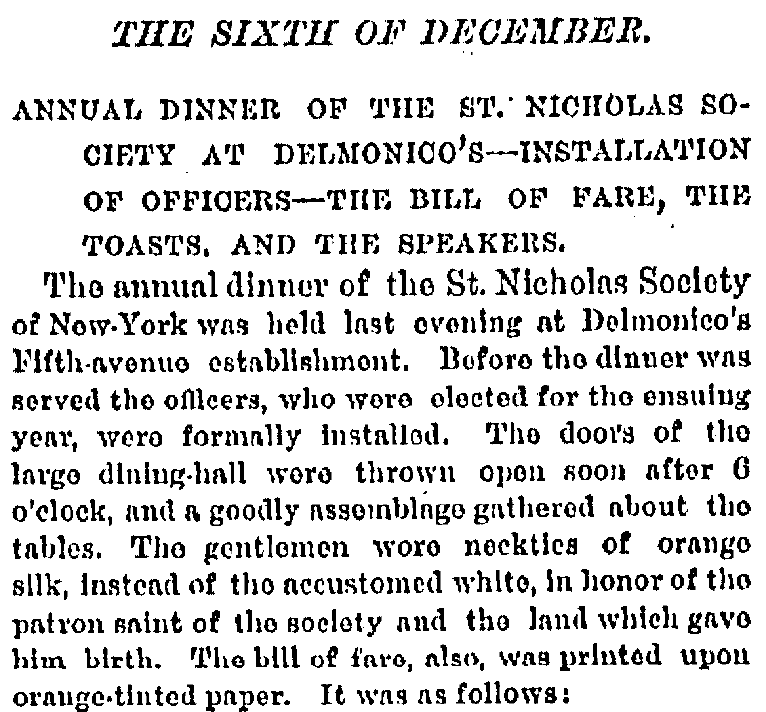
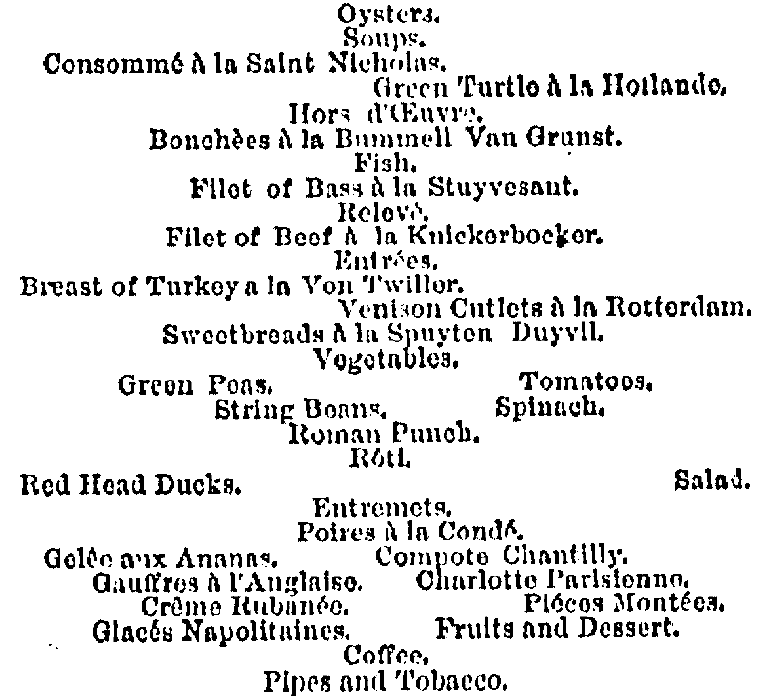
Sounds like quite a meal, but it was followed by toasts and responses appropriate to St Nicholas Day and to the city:
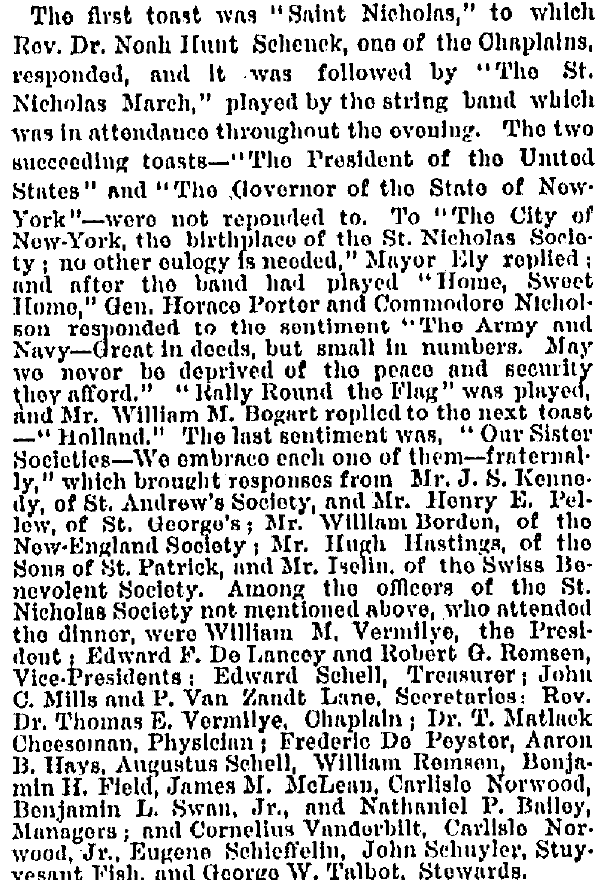
Just over a decade later in 1888, the Times again gives its report on what sounds like an amusing evening:
After an elaborate dinner had been discussed and as the coffee and long clay pipes were handed around, the old weathercock that Washington Irving gave the society was brought in and placed at its post of honor before the President, and the toast-making was begun. Austin G. Fox replied to the toast “Saint Nicholas,” and paid an eloquent tribute to the memory of W. H. Bogart of Aurora, N.Y., who had answered that sentiment at nearly every previous dinner.
The toast “The President of the United States” was drank standing and was lustily cheered. Ex-Judge Henry E. Howland made a witty response to “The Governor of the State of New-York,” touching upon every other imaginable subject but the one to which he was to respond, and James C. Carter responded to “Our City.” The Rev. Dr. J.T. Duryea spoke to “Holland,” and Warner Miller, in the absence of Gen. Sherman, replied to “The Army and Navy.” Joseph H. Choate made a characteristic reply to “The Founders of New-Amsterdam.”
The newspaper further relates that: “At the request of the St. Nicholas Society, Mayor Hewitt had flags displayed on the City Hall yesterday in honor of the festival of St. Nicholas, the patron of this city.”
In 1907, the Society’s members and guests marched into dinner at Delmonico’s two-by-two, preceded by a trumpeter and twelve servants “clad in the black and orange liveries of early Holland” escorting the newly elected president, Col. William Jay.
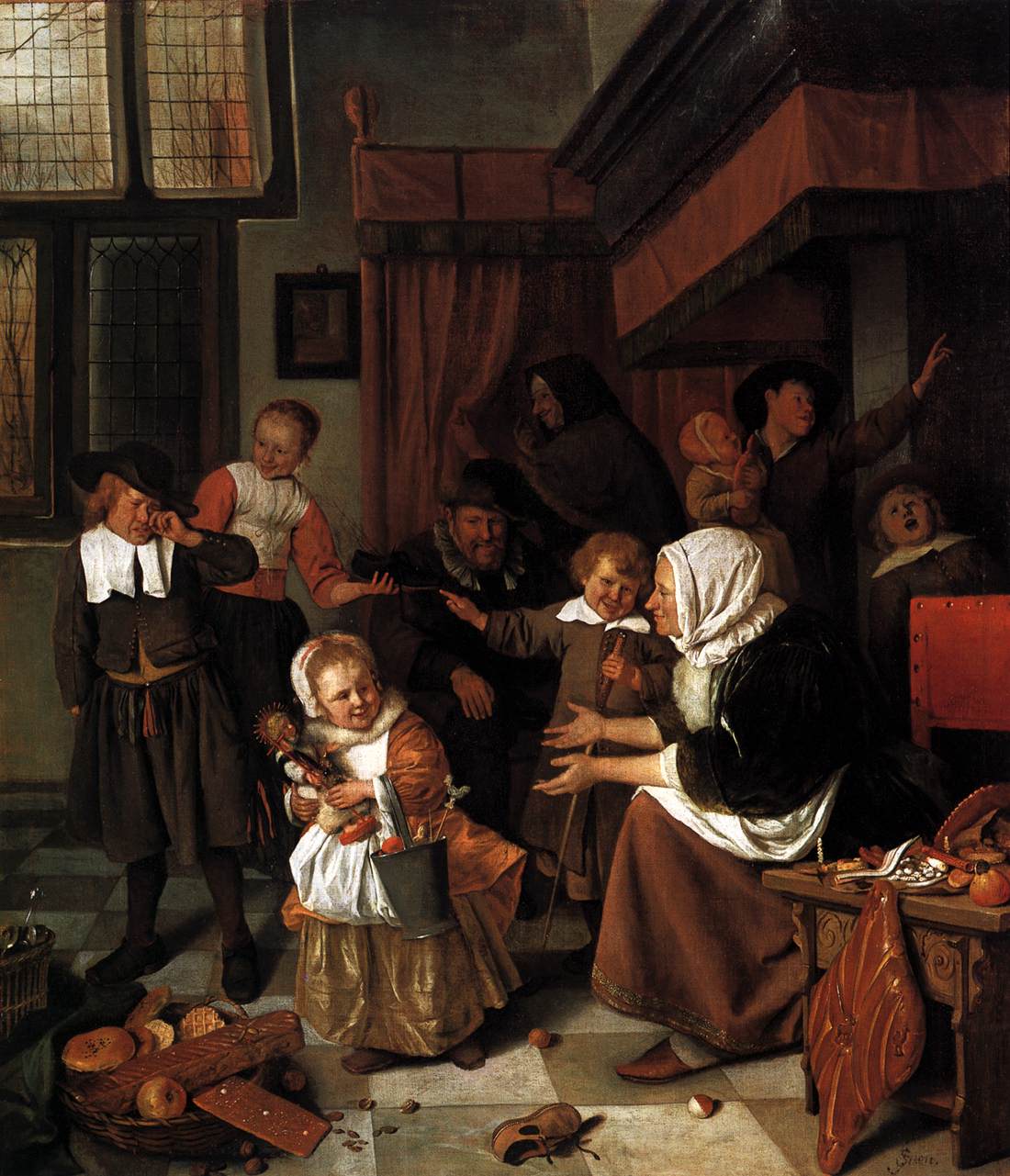
Another tradition of the evening kept each year was “the carrying round the great room of the bronze rooster that at one time surmounted the first City Hall built in New York by the Dutch in the seventeenth century”. The weathervane was presented to the Society by Washington Irving, its first Secretary, back in 1835. Some years the weathervane was oriented in turn to each speaker giving the response to the toasts accordingly.
Again, in 1907, one Dr Vandyke toasted the health of St Nicholas who “gladdens youth and makes the old seem young”. The Times relates:
“He explained that the long clay pipes which had been handed round to each guest was an old Dutch custom on St. Nicholas night. If a man got home with the pipe intact he was considered sober. Sad to relate, he said, it was the habit of those persons who had broken their own pipes to stand outside the tavern doors and break those of their more sober-minded brethren.”
While the St Nicholas Society has ancestral requirements for its membership, there are no such restrictions for the hospitable group’s guests. By the seventy-fifth anniversary of the Society in 1910, even we Irish we invited:
“William D. Murphy, who was called upon to give the toast of “Our City” said that he, an Irishman, was there at the feast for three reasons — first, because the Dutch founded the city; second, that the English took it away from them, and lastly, the Irish had it now.”
By 1919, New Yorkers were living in a changed world, with the war only just passed, and the dreaded Prohibition ever present. In that year, the Times reports that the speakers “expressed their opinions of Bolshevism, communism, and prohibition at their eighty-fourth annual dinner at Delmonico’s last night.”
Happily, these sons of Holland and devotees of Saint Nicholas kept his holy day festive despite the restrictions in place:
“Supreme Court Justice Victor J. Dowling, who was one of the speakers, expressed his thanks to the society for the Constitutional violations that had been provided for him.”
Lest you fear that the days (or nights) of celebrating this holy saint have faded into the folds of yesteryear, the Saint Nicholas Society of the City of New York is still in excellent health, and does not fail to keep the feast in accordance with the ways of its forefathers.
Indeed, the Society’s newsletter reported in 2018 that,
“Chief Steward Maximilian G. M. deCuyper Cadmus led the traditional procession of the Weathercock, which was raised high all around the room as members and guests energetically waved their napkins to generate a breeze that would waft him onto his perch near the lectern, facing east so as to crow out a warning in case of the approach of invaders from New England.”
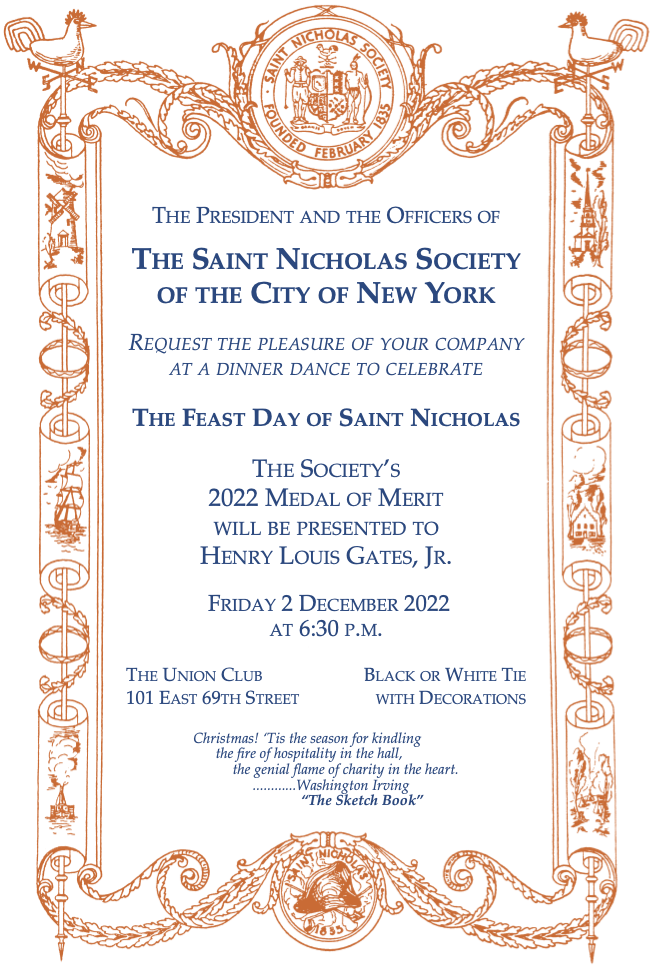
This year the Society celebrated at the Union Club, and presented its Medal of Merit to the Harvard professor Henry Louis Gates, Jnr.
Advent Missa Cantata at St George’s
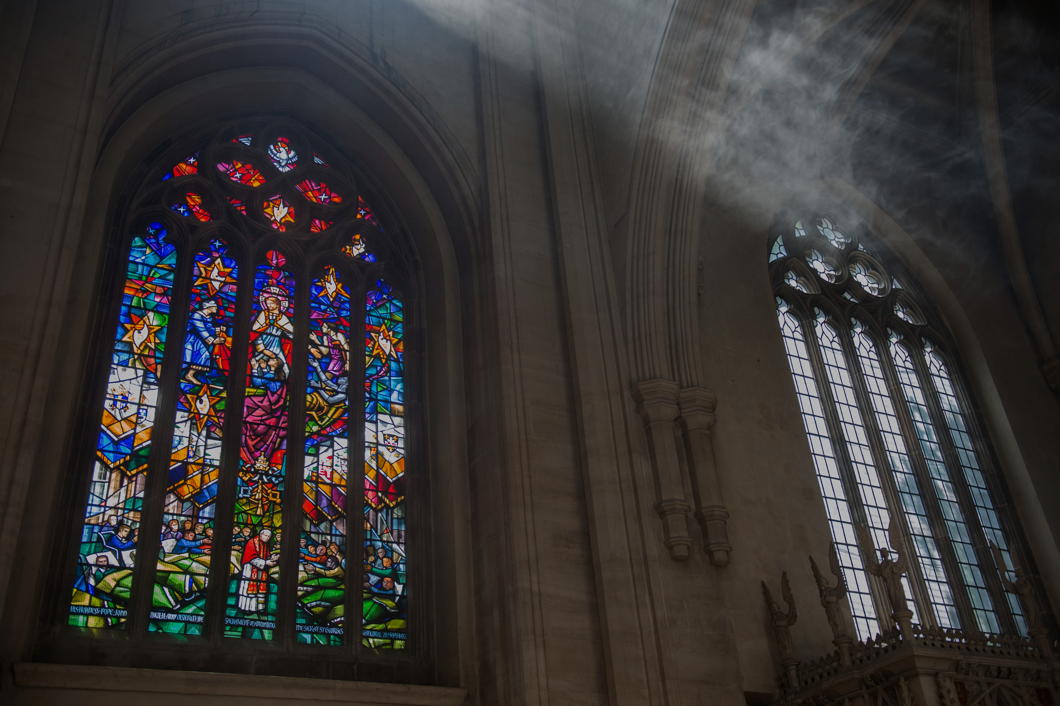
St George’s Cathedral
Lambeth Road, Southwark, London SE1 6HR
LAMBETH NORTH (Bakerloo)
ELEPHANT & CASTLE (Northern, Bakerloo)
Buses: C10, 360, 12, 453, 138, 53
A collection will be taken to defray the costs.
The Lady Chapel is to the right at the end of the north aisle of the Cathedral (on your right as you enter).
Earlier in the morning, as every Saturday at St George’s Cathedral, there will be Adoration of the Blessed Sacrament from 10:00 to 11:00 am, during which time Confessions will be heard.
St Margaret Relic Heads to St Andrews
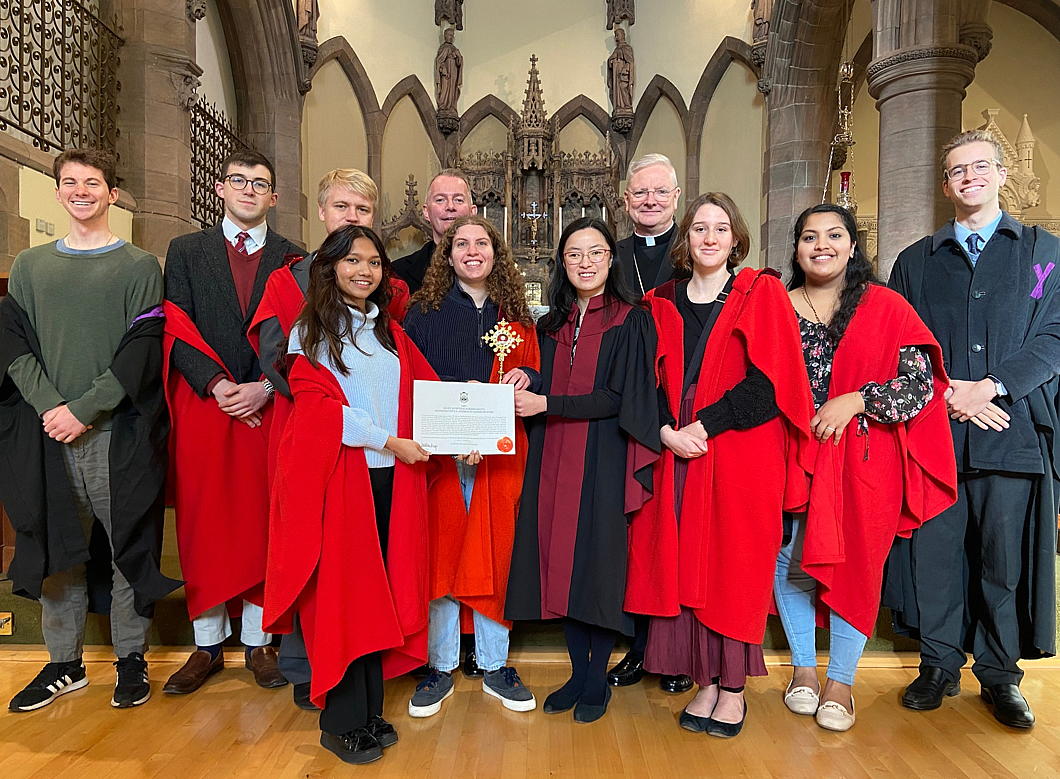
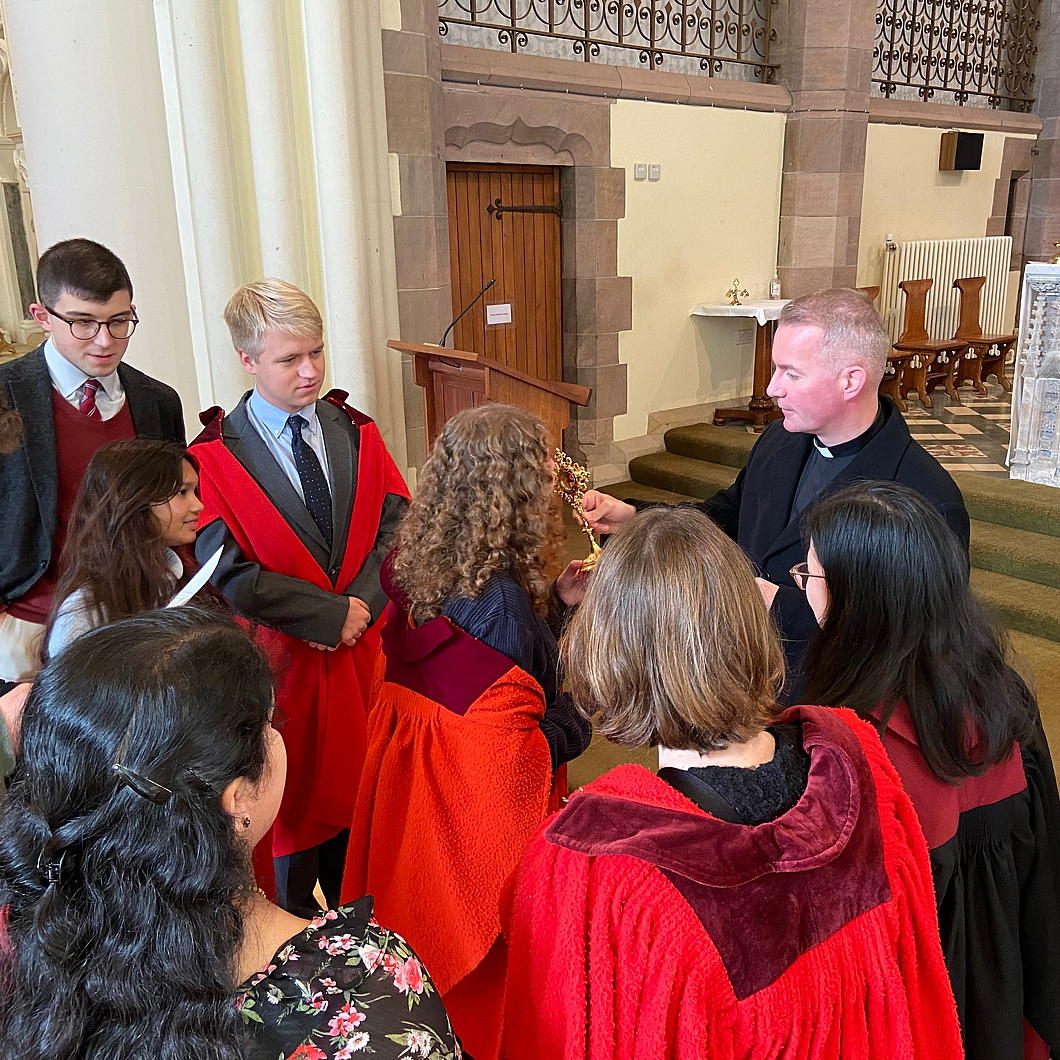
Students from St Andrews University have accompanied their Catholic chaplain to receive a relic of St Margaret of Scotland from the Archbishop of St Andrews & Edinburgh, Dr Leo Cushley.
The relic was put in the care of Canmore, the Catholic chaplaincy at St Andrews, whose chapel is dedicated to the Hungary-born English princess who became Scotland’s saintly queen.
When the relic in St Margaret’s Church in Dunfermline — the country’s royal centre in the twelfth and thirteenth centuries — were being removed from their reliquary the piece of bone fragmented.
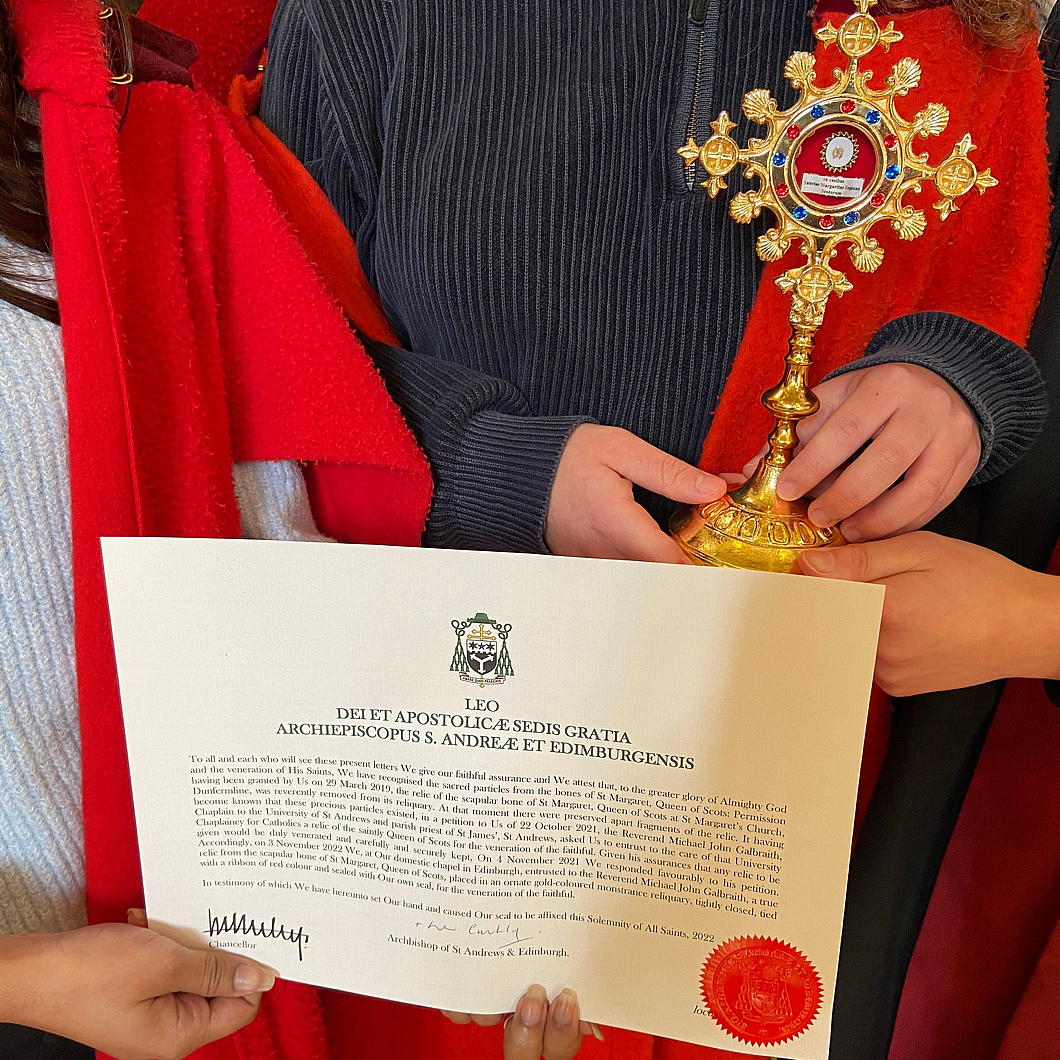
The Archdiocese decided to make this an opportunity for the relics of the royal saint to be distributed further.
This relic of St Margaret will remain in Canmore where it will be available for veneration by students and other visitors.
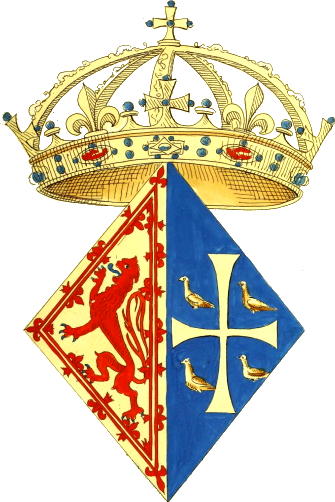
SAINT MARGARET
QUEEN OF SCOTLAND
pray for us
LMS Quarterly Mass at St George’s
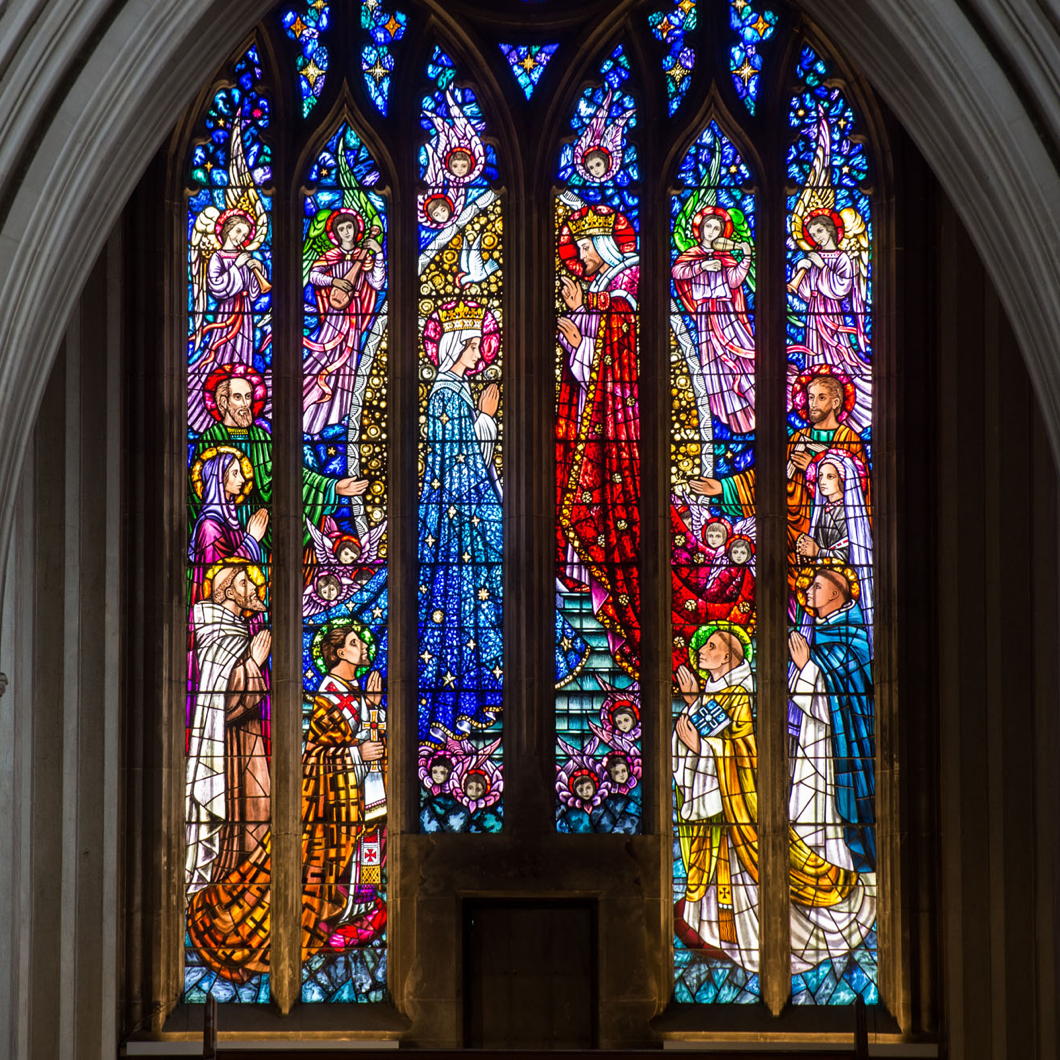
the regular quarterly Extraordinary Form Mass organised by the Latin Mass Society of England & Wales
will take place at
The Lady Chapel is to the right at the end of the north aisle of the Cathedral (on your right as you enter).
Earlier in the morning, as every Saturday at St George’s Cathedral, there will be Adoration of the Blessed Sacrament from 10:00 to 11:00 am, during which time Confessions will be heard.
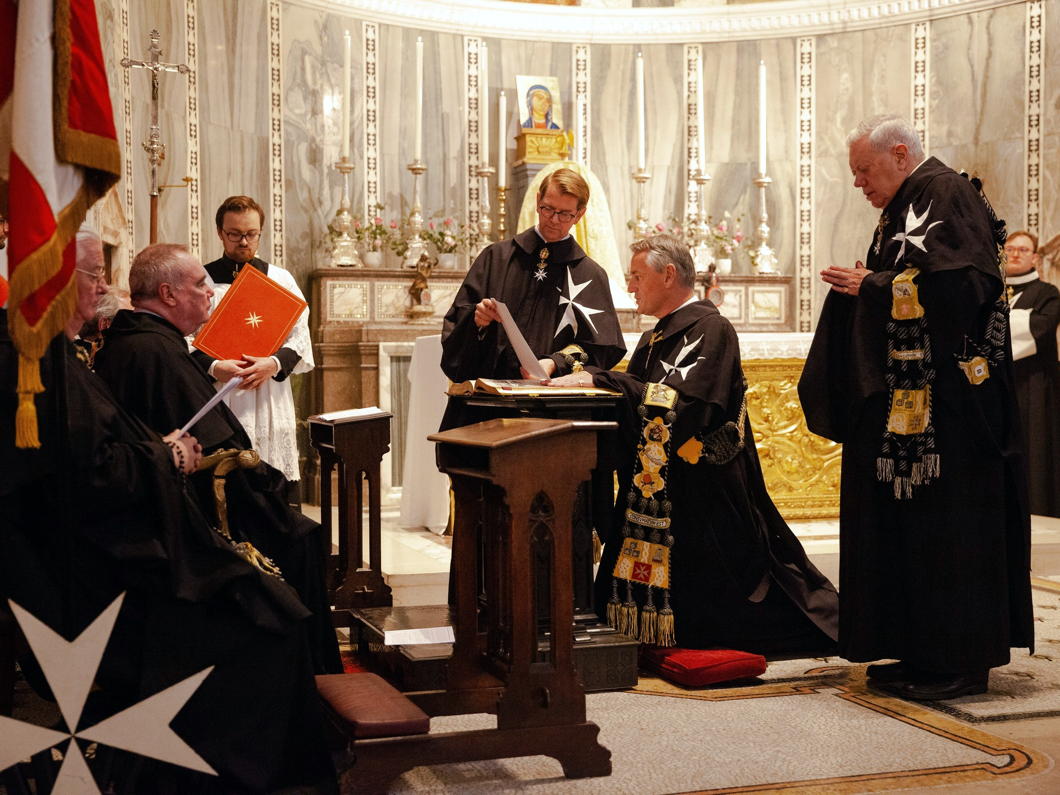
The Installation of the Grand Prior of England
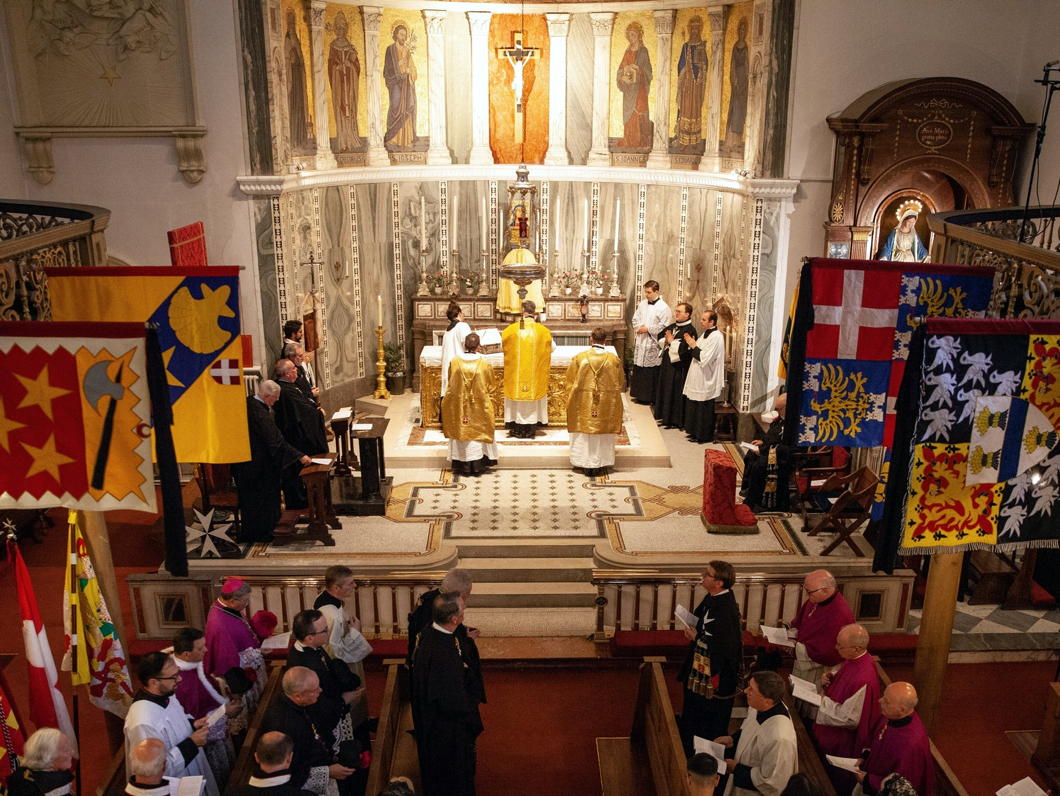
All photos © Grand Priory of England
Msgr John Armitage gave this sermon on the occasion.
“Brethren, we know that in everything God works for good with those who love him, who are called according to his purpose.”
In a world that seeks fulfilment by seeking what I want, the Church is the witness, that the good we encounter in our world, is the result of the God who works for this good through those who love him, for the whole of creation is called according to his purpose. Only love can give our lives meaning and purpose, and our true fulfilment is a consequence of not doing what I want, but seeking, sharing, and doing what we need, building the common good of all humanity. The Church has its fair share of those of us who do what we want, but our Order has been greatly blessed by those whose lives had been dedicated to building up the body of Christ, living witnesses of what we need, these people we call saints.
Our founder Blessed Gerard, was known by his contemporaries as “the humblest man in the East, a servant of the poor, devoted to pilgrims, of simple appearance, but shining forth with his noble heart.” In the darkness of 1941 Pope Pius XII in an address to the Order, explained the true meaning of nobility:
“In these poor, these orphans these wounded these lepers, lie you own title deeds of nobility, received at Bethlehem from the King of Kings who being rich became poor, that by his poverty you might be rich.”
In every moment in time there is a grace to be found, and the history of the Church shows us that it is in the darkest moments that God’s grace is most profound. “For where sin increased, grace increased all the more.” (Romans 5:20)
When Pope Gregory the Great sent St Augustine to evangelise the pagan English, Rome was a dark and dangerous place, the Roman Empire was collapsing, the barbarians were at the gates, plague was rife, yet the successor of Peter sent a frightened monk to the edge of a crumbling empire. Pope Gregory understood the wisdom of the modern saying “Better to light one candle than to curse the darkness.”
Augustine built a monastery, it was the spiritual foundation, lighting the flame of faith for his companions to spread the Good News in a dark and dangerous land. All works of the Gospel must be based on firm spiritual foundations which from time to time must be renewed. (more…)
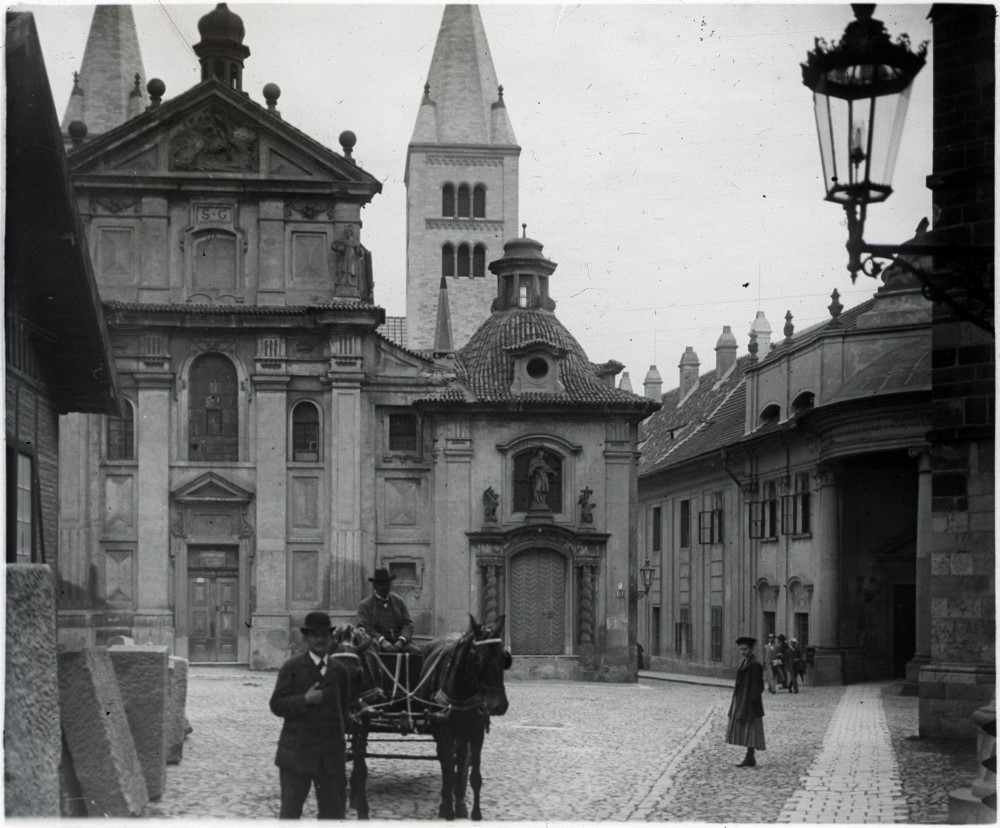
St George’s Basilica, Prague Castle
Corpus Christi
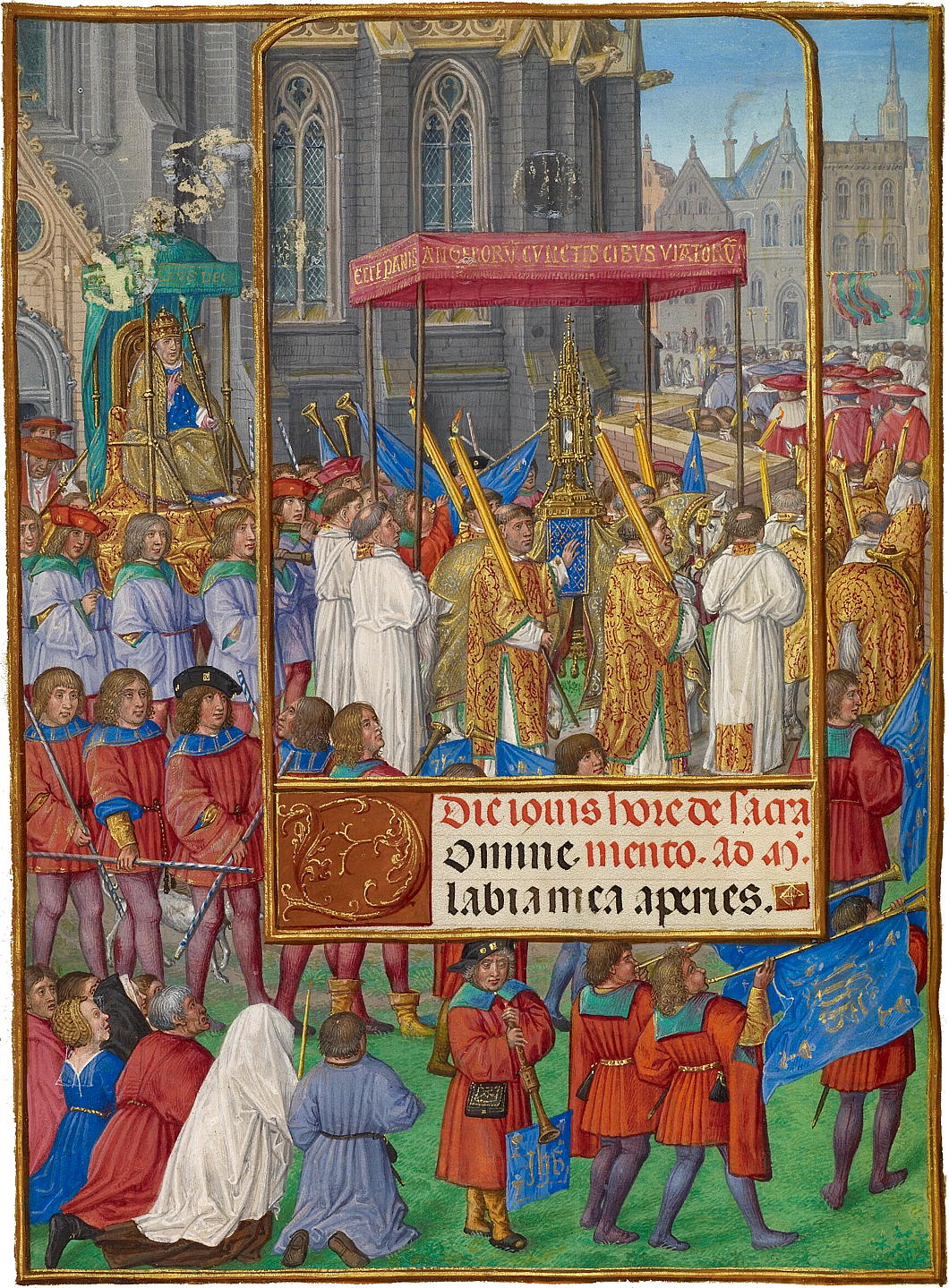
The Master of James IV of Scotland, Flemish c. 1541; Getty Museum
Thomas More’s London
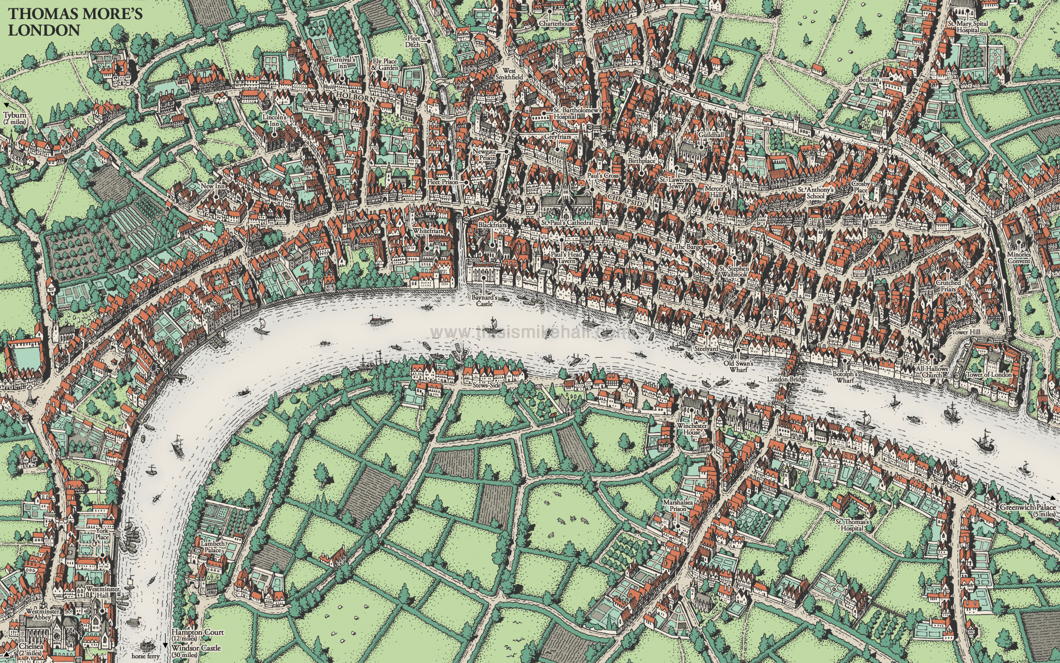
There are almost as many Londons as there are Londoners. There’s Shakespeare’s London, Pepys’s London, Johnson’s London — even fictional characters like Sherlock Holmes have their own London.
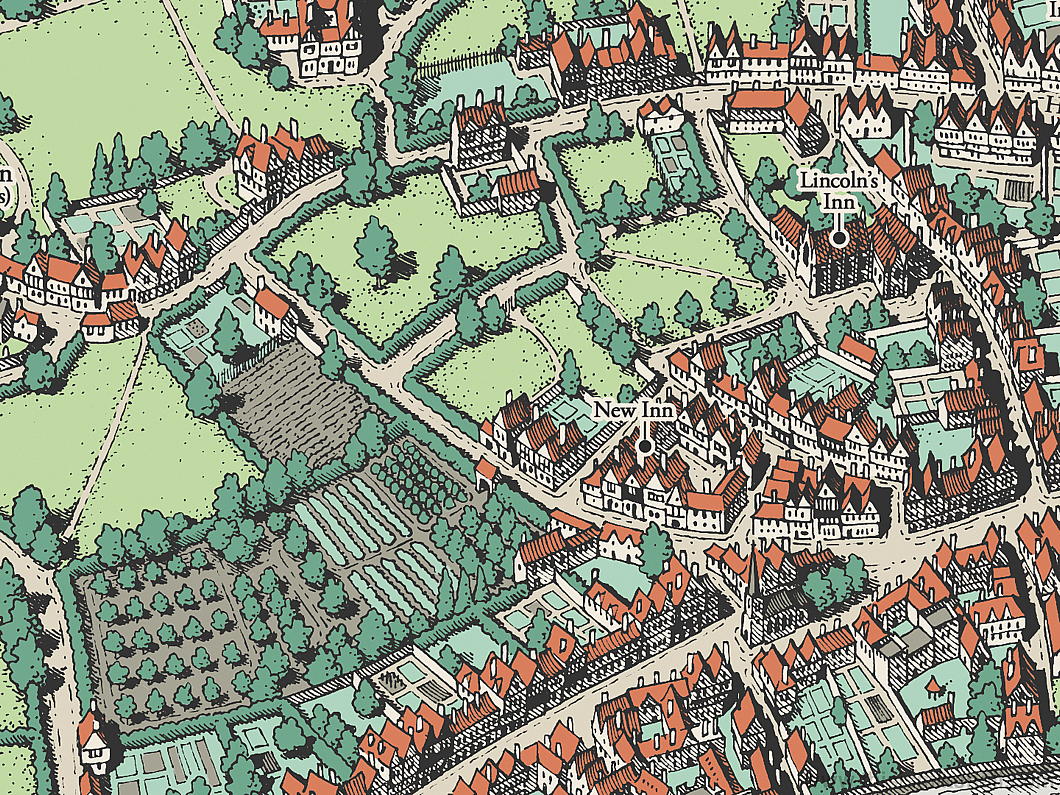
The city of Saint Thomas More takes form in a representation made by the excellent map designer Mike Hall, Harlow-born but now based in Valencia.
This map was commissioned from Hall by the Centre for Thomas More Studies in Texas and the designer based the view and the colour scheme on Georg Braun and Frans Hogenberg’s map of London from their 1617 Civitates Orbis Terrarum
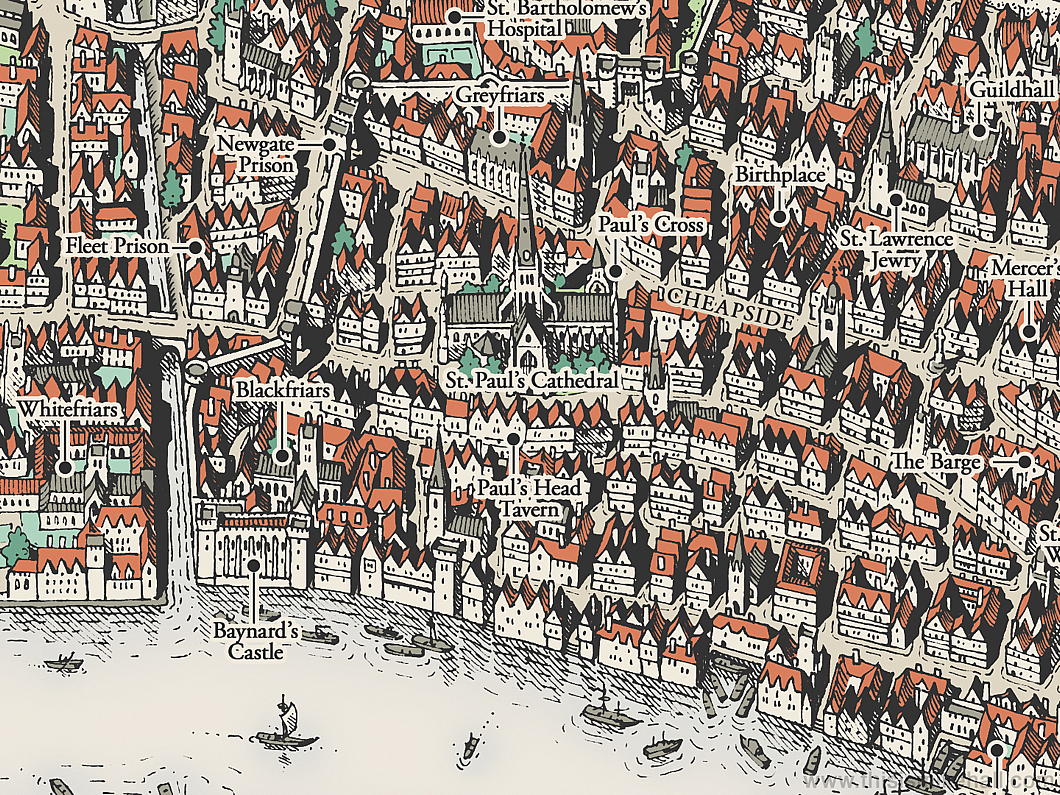
From his birthplace in Milk Street to the site of his execution, all the sites from the great points of More’s life are here in this map.
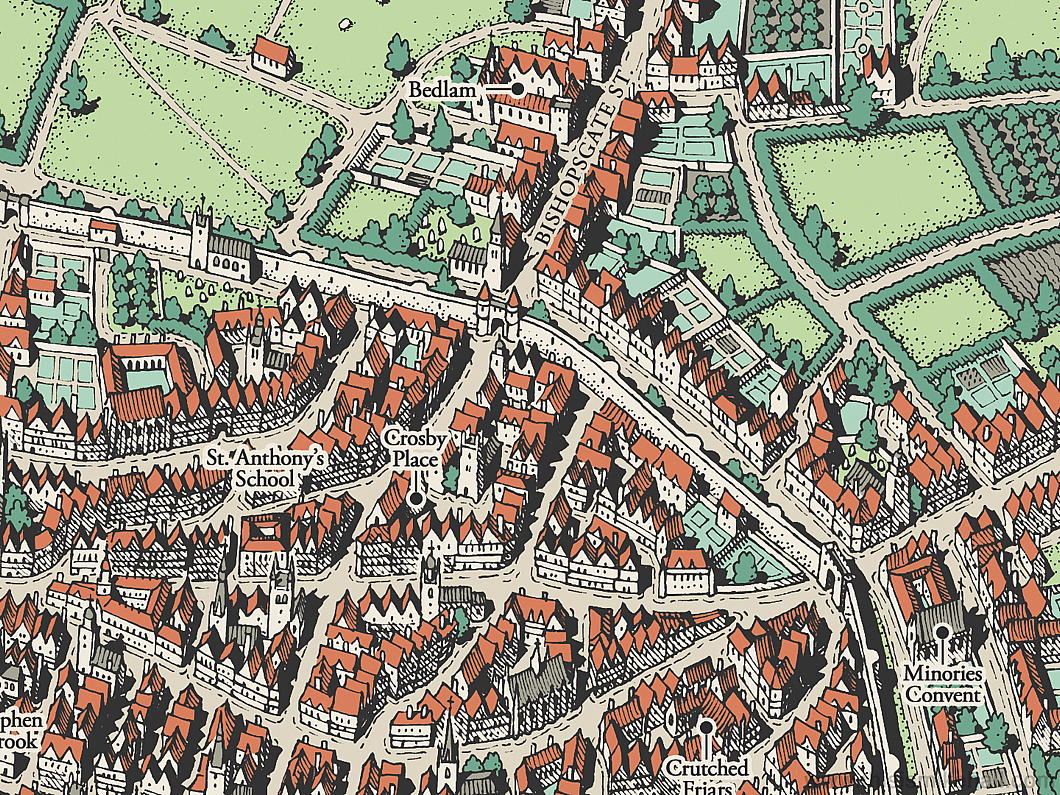
The future Lord Chancellor was educated at the school founded by the Hospital Brothers of Saint Anthony, one of the best in the City of London, and when he finished at Oxford returned to London to study law at New Hall and Lincoln’s Inn.
Crosby Place, the house that he bought in 1523 is not far from St Anthony’s School though its surviving remnant was moved brick by brick to Cheyne Walk in 1910 — a site close to More’s Chelsea residence of Beaufort House.
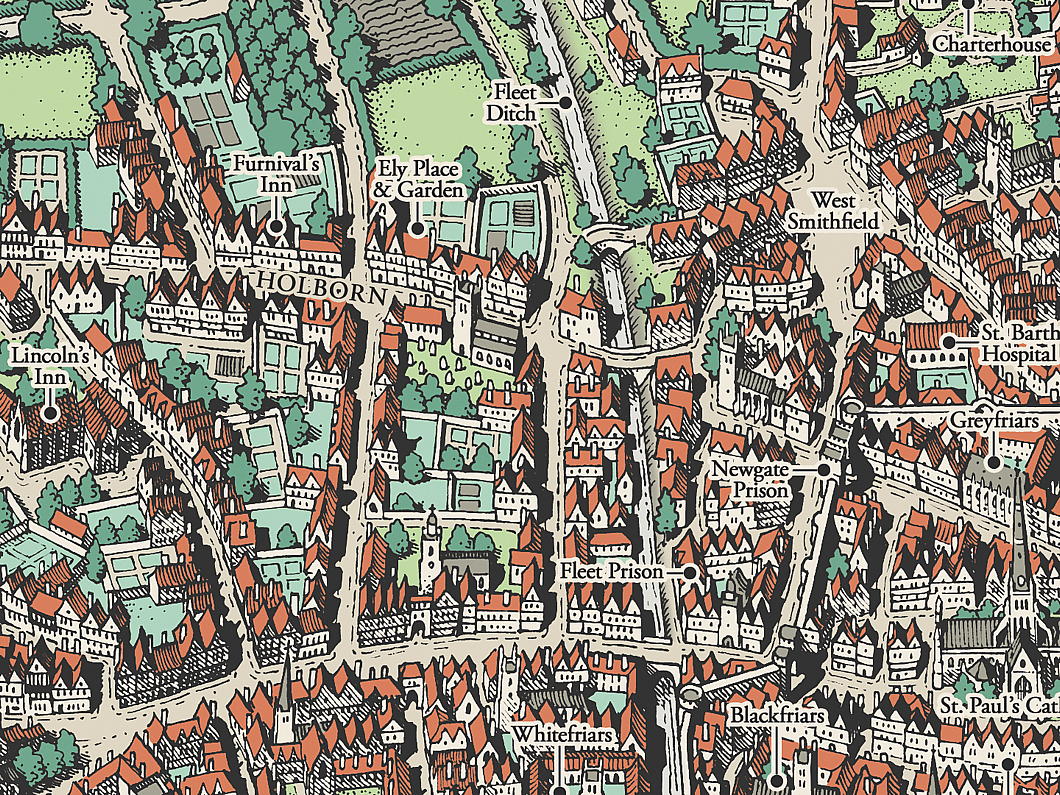
The chapel of Ely Place — town palace of the Bishop of Ely — still survives as St Etheldreda’s, the only mediæval church in London now in use as a Catholic parish.
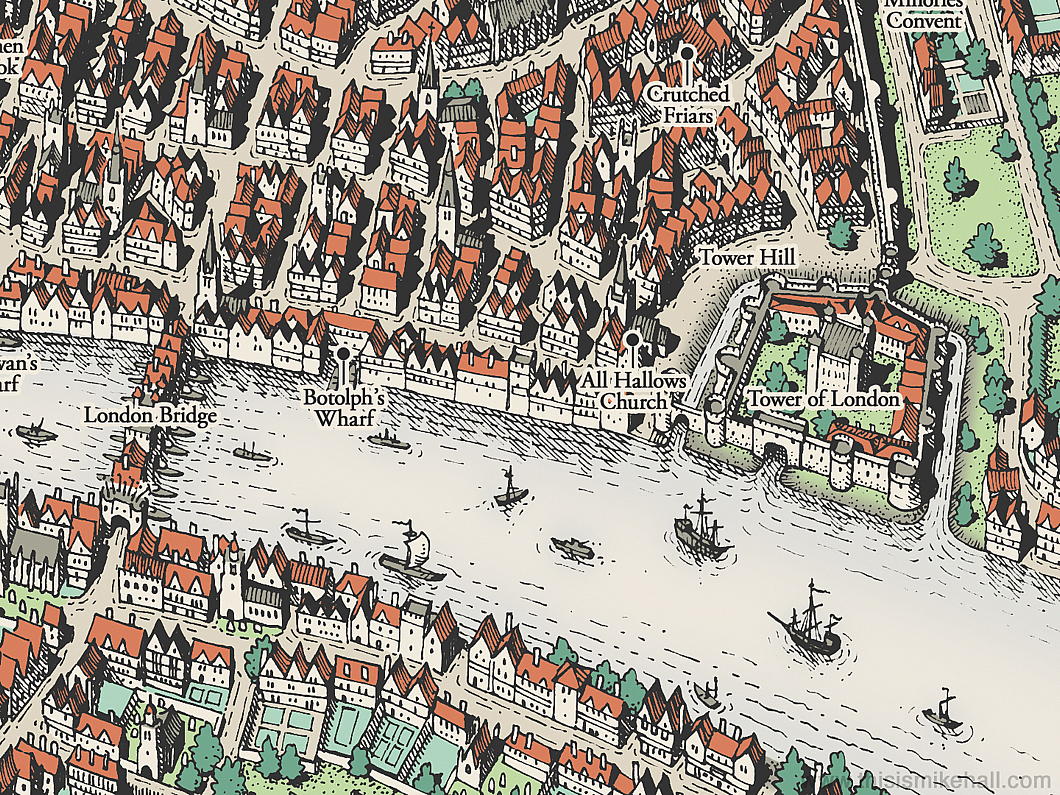
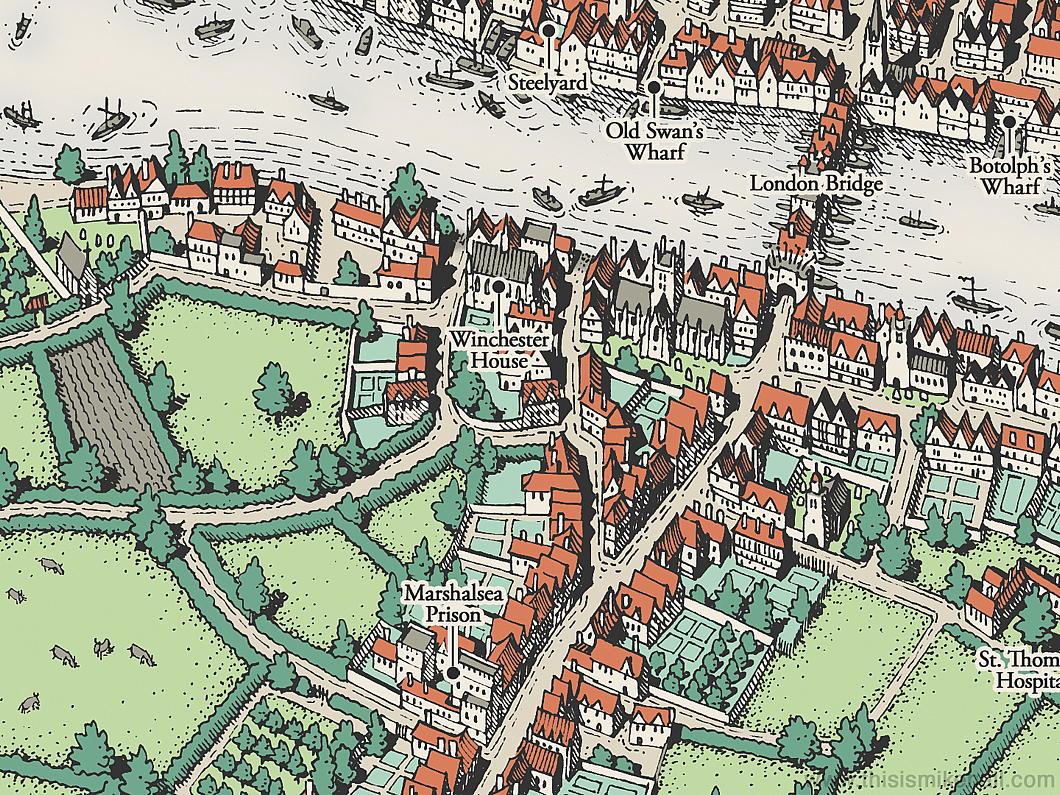
God’s own Borough of Southwark gets a look in as well, with the Augustinian priory of St Mary Overs (now the Protestant cathedral of Southwark) and the town palace of the bishops of Winchester. Remnants of the great hall of Winchester Palace remains standing to this day.
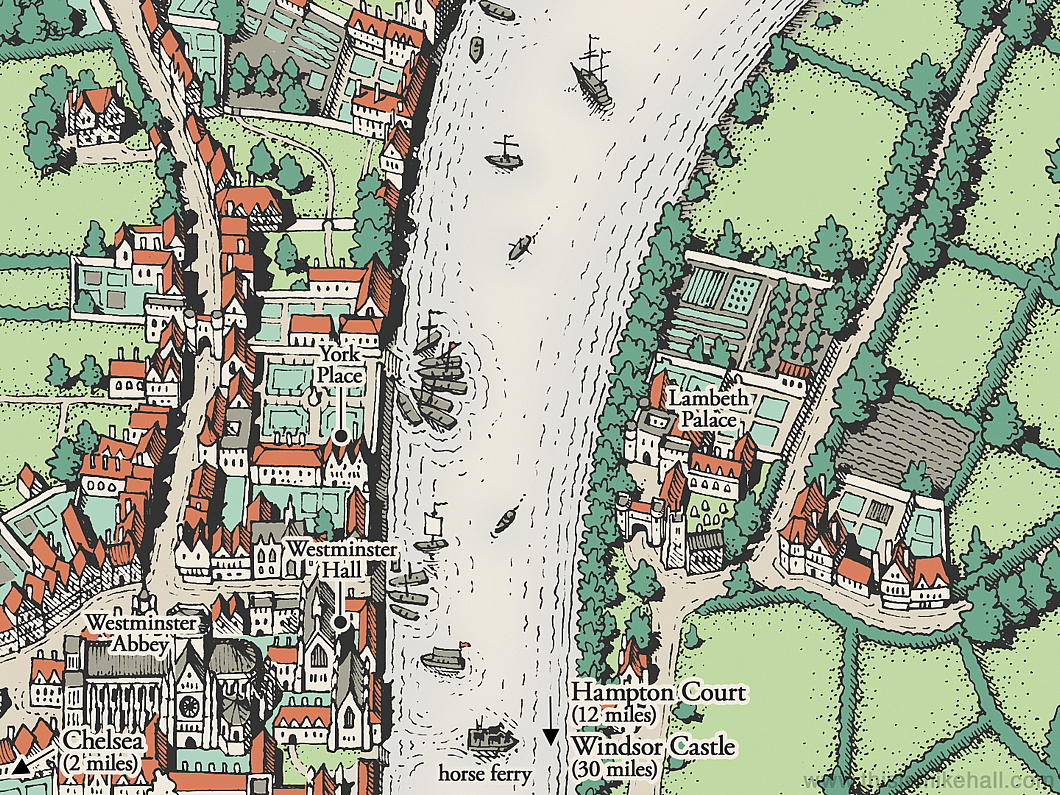
As is the mapmaker’s privilege, Mr Hall has taken some liberties: in order to fit Lambeth Palace — the residence of the Archbishop of Canterbury (and Primate of All England) he’s shifted it a bit north of its actual spot.
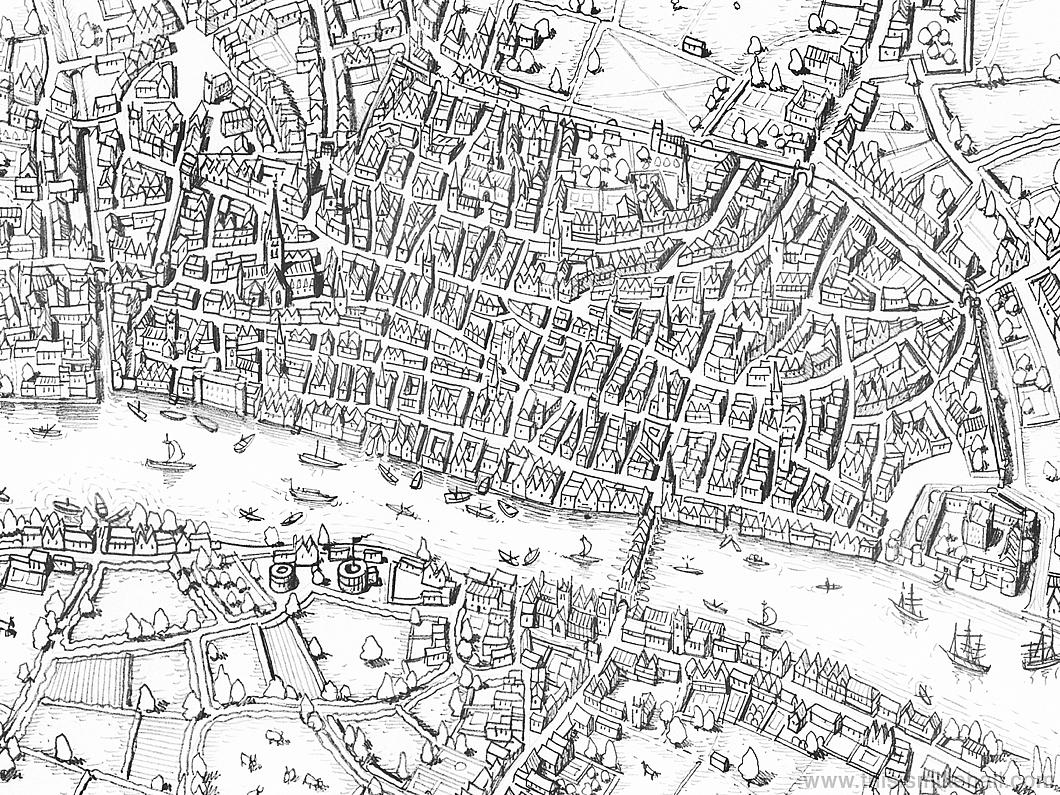
I wish he’d kept the Rose and Globe theatres which he included in his initial sketch for the map — Southwark was the theatre district of its day.
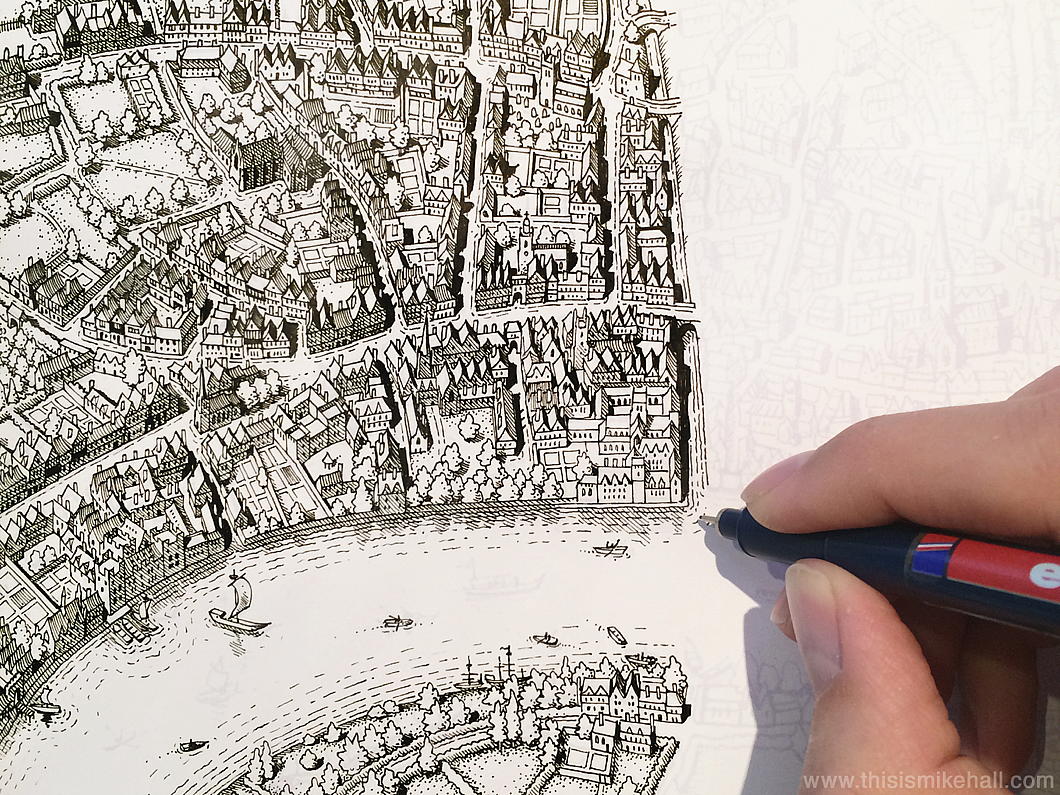
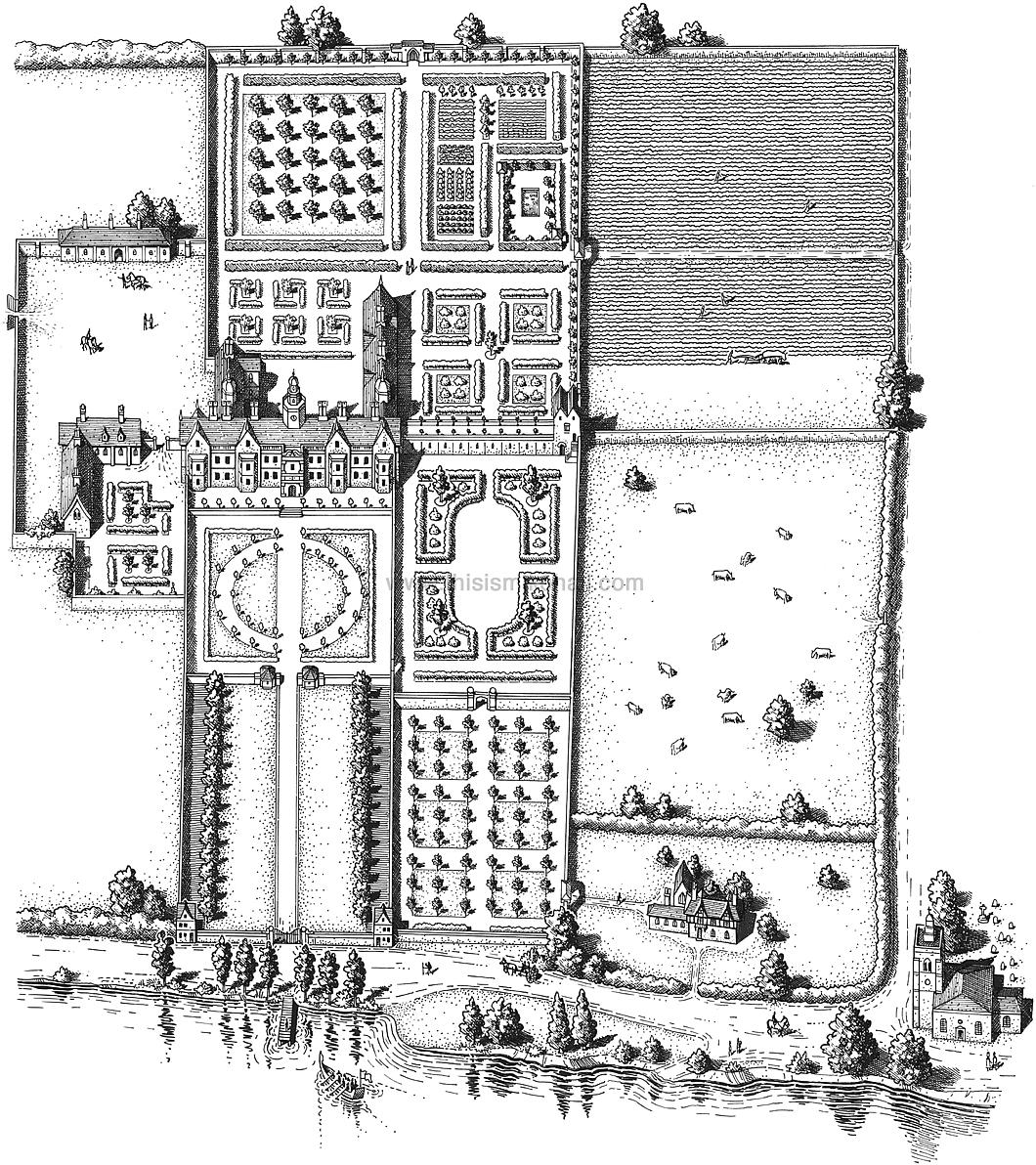
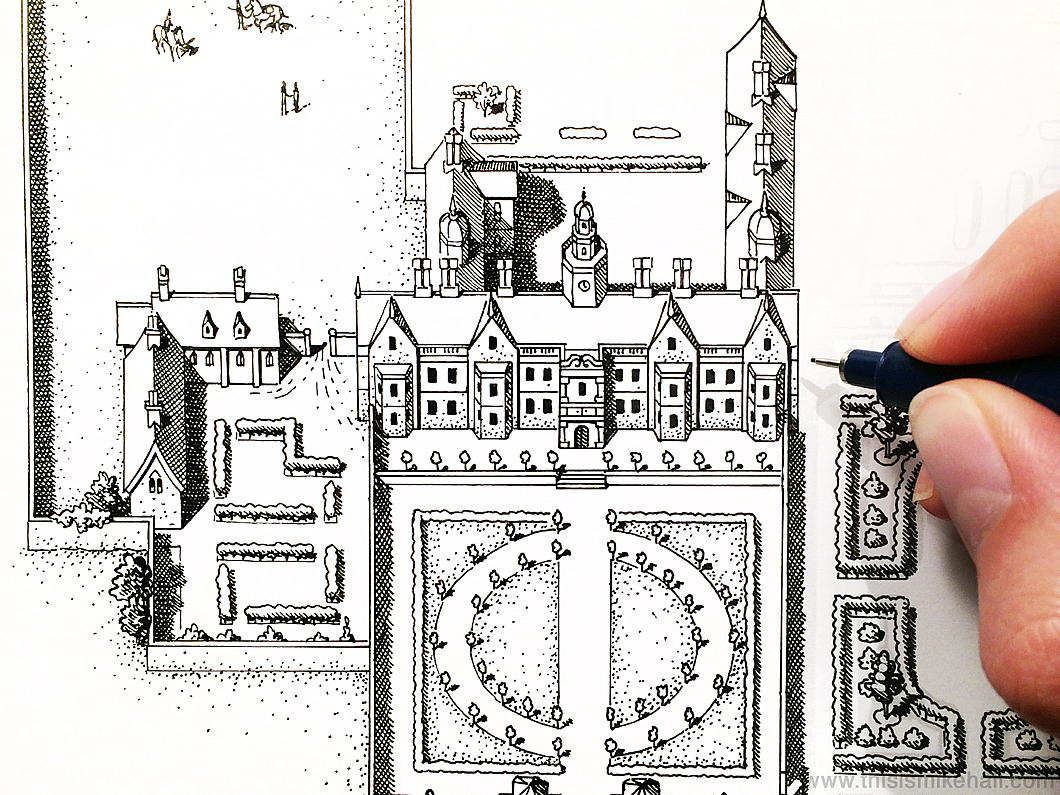
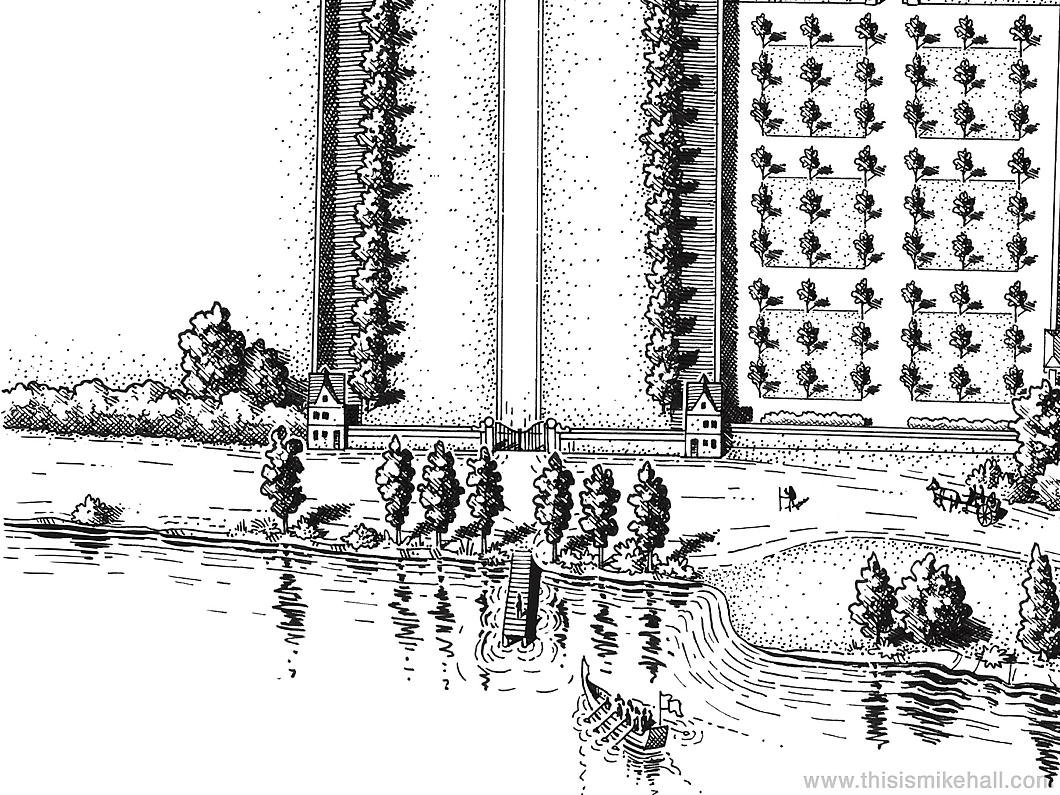
Hall also completed a sketch of Beaufort House as it would have appeared during St Thomas More’s lifetime. The house was demolished in 1740, and today’s Beaufort Street runs the line of the main drive leading up to it.
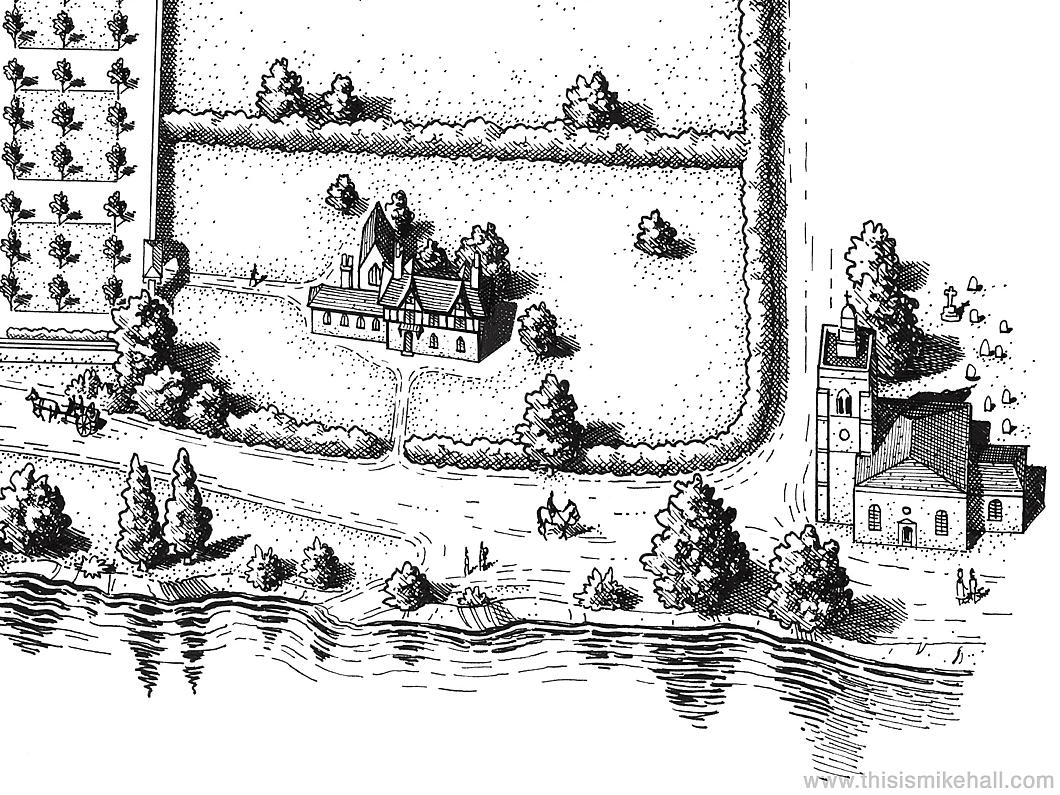
The Church of All Saints at Chelsea (now known as Chelsea Old Church) is at the bottom of the sketch and is where the More family burial vault is. His severed head is believed to be entombed there to this day.
Lady Day 2022
The Feast of the Annunciation — “Lady Day in Lent” to distinguish it from the Assumption which is “Lady Day in Harvest” — was for much of Christendom the first day of the new calendar year and remains one of the traditional Quarter Days of England.
Eleanor Parker — aka “A Clerk of Oxford” — explains here why Lady Day is so important:
It was both the beginning and the end of Christ’s life on earth, the date of his conception at the Annunciation and his death on Good Friday.
To underline the harmony and purpose which, in the eyes of medieval Christians, shaped the divinely-written narrative of the history of the world, 25 March was also said to be the date of other significant events: the eighth day of Creation, the crossing of the Red Sea, the sacrifice of Isaac, and other days linked with or prefiguring the story of the world’s fall and redemption.
The date occurs at a conjunction of solar, lunar, and natural cycles: all these events were understood to have happened in the spring, when life returns to the earth, and at the vernal equinox, once the days begin to grow longer than the nights and light triumphs over the power of darkness.
The last time I wrote about today’s feast I also pointed out it’s also the reason why many English pubs are called ‘The Salutation’.
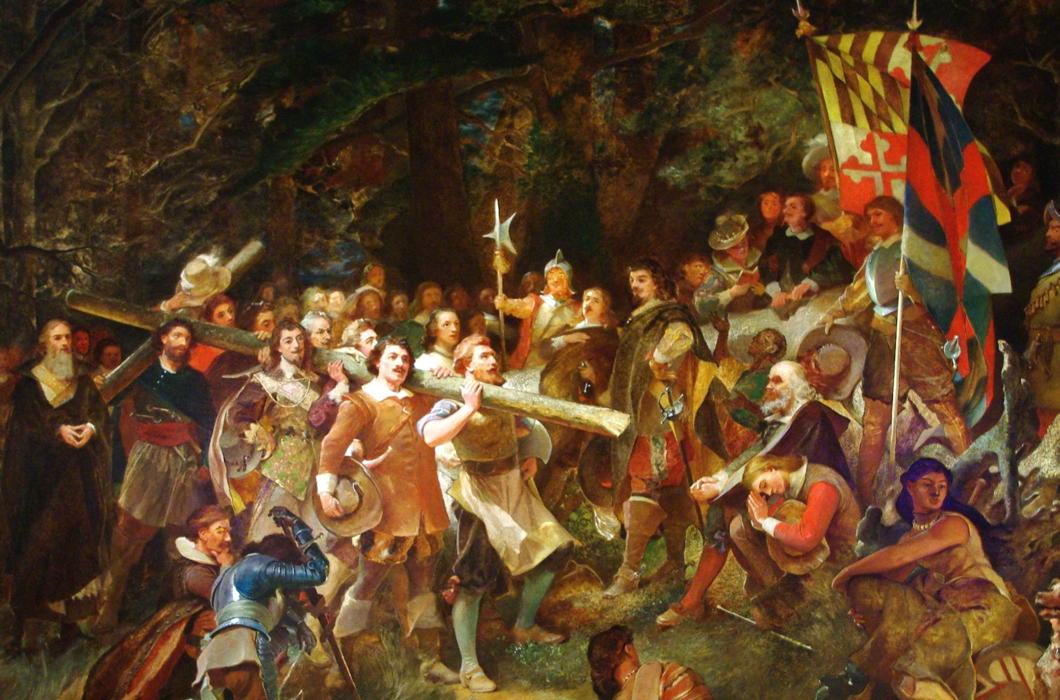
It was also on this day in 1654 that the English Catholic colonists aboard the Ark and the Dove arrived in the New World and founded the city of Saint Mary in Maryland, as depicted in the painting above.
Thus the Feast of the Annunciation is officially recognised as the State Day of Maryland.
The cause of all this joy is related best in the Gospel according to St Luke:
AND IN THE SIXTH MONTH, the angel Gabriel was sent from God into a city of Galilee, called Nazareth, To a virgin espoused to a man whose name was Joseph, of the house of David; and the virgin’s name was Mary.
And the angel being come in, said unto her: Hail, full of grace, the Lord is with thee: blessed art thou among women.
Who having heard, was troubled at his saying, and thought with herself what manner of salutation this should be.
And the angel said to her: Fear not, Mary, for thou hast found grace with God.
Behold thou shalt conceive in thy womb, and shalt bring forth a son; and thou shalt call his name Jesus.
He shall be great, and shall be called the Son of the most High; and the Lord God shall give unto him the throne of David his father; and he shall reign in the house of Jacob for ever. And of his kingdom there shall be no end.
And Mary said to the angel: How shall this be done, because I know not man?
And the angel answering, said to her: The Holy Ghost shall come upon thee, and the power of the most High shall overshadow thee. And therefore also the Holy which shall be born of thee shall be called the Son of God.
And behold thy cousin Elizabeth, she also hath conceived a son in her old age; and this is the sixth month with her that is called barren: Because no word shall be impossible with God.
And Mary said: Behold the handmaid of the Lord; be it done to me according to thy word. And the angel departed from her.
The Nicolaasjaar
Catholic Amsterdam Proclaims a Year of Saint Nicholas
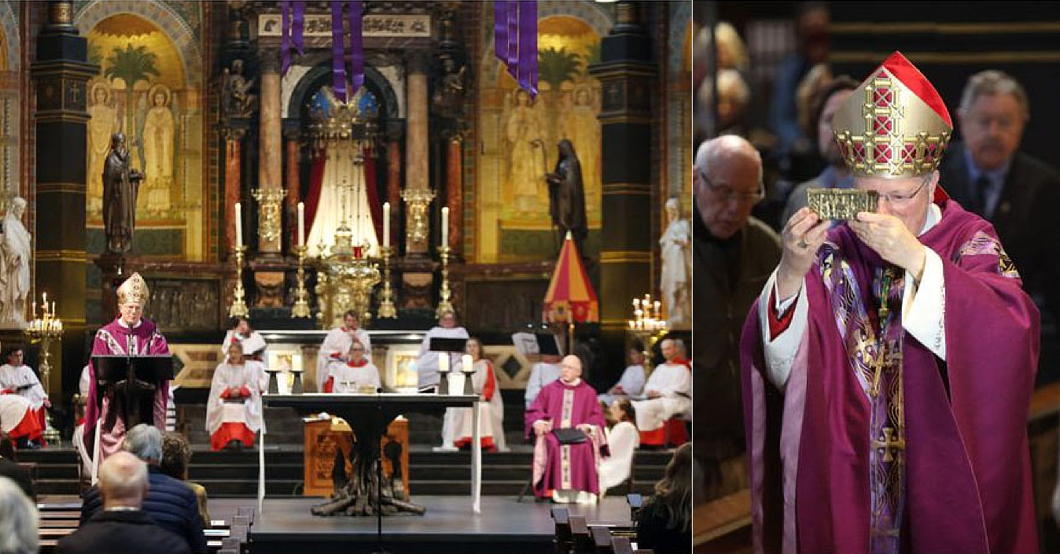
A TINY RELIC of Saint Nicholas the Wonderworker has provided an excuse for Amsterdam Catholics to organise a whole year of festivities dedicated to the holy man and his legacy. The Basilica of St Nicholas stands just across from Centraal Station, gateway to the Dutch capital for so many visitors, and the parish has received as a gift the relic from the Benedictine abbey of St Adalbert’s in Egmond.
The tiny sliver of St Nicholas’s rib was enshrined in the Basilica at a special Mass opening the Nicolaasjaar on the eve of the saint’s feast in December. Bishop Jan van Burgsteden presided and prayers were also offered for HKH Princess Catharina-Amalia whose eighteenth birthday fell days later on 7 December.
The opening of the year met with wide coverage in the media, with even the website of the city proclaiming “There will always be a bit of Sinterklaas in Amsterdam from now on”.
“Saint Nicholas is really coming to Amsterdam now,” deacon Rob Polet told the evening news on Dutch television, “and here he will stay”.
“From the Friesch Dagblad to the Nederlands Dagblad, from Trouw to De Telegraaf: hardly any newspaper wanted to miss it,” the parish reports. “De Stentor, the Eindhovens Dagblad, the Zeeuwse PZC, and many other titles spread the news of St Nicholas. NRC Handelsblad and Het Parool even used it twice.”
Helena at Bethlehem
He sent along this passage from Waugh’s novel Helena in which the saint (and mother of the Emperor Constantine) arrives at Bethlehem, the city of Our Saviour’s birth, on the very feast of the Epiphany. She addresses the Magi in prayer.
“Like me,” she said to them, “you were late in coming. The shepherds were here long before; even the cattle. They had joined the chorus of angels before you were on your way. For you the primordial discipline of the heavens was relaxed and a new defiant light blazed among the disconcerted stars.
“How laboriously you came, taking sights and calculations, where the shepherds had run barefoot! How odd you looked on the road, attended by what outlandish liveries, laden with such preposterous gifts!
“You came at length to the final stage of your pilgrimage and the great star stood still above you. What did you do? You stopped to call on King Herod. Deadly exchange of compliments in which there began that unended war of mobs and magistrates against the innocent!
“Yet you came, and were not turned away. You too found room at the manger. Your gifts were not needed, but they were accepted and put carefully by, for they were brought with love. In that new order of charity that had just come to life there was room for you too. You were not lower in the eyes of the holy family than the ox or the ass.
“You are my especial patrons,” said Helena, “and patrons of all late-comers, of all who have had a tedious journey to make to the truth, of all who are confused with knowledge and speculation, of all who through politeness make themselves partners in guilt, of all who stand in danger by reason of their talents.
“Dear cousins, pray for me,” said Helena, “and for [the generally believed still unbaptized Emperor Constantine] my poor overloaded son. May he, too, before the end find kneeling-space in the straw. Pray for the great, lest they perish utterly. And pray for… the souls of my wild, blind ancestors…
“For His sake who did not reject your curious gifts, pray always for the learned, the oblique, the delicate. Let them not be quite forgotten at the Throne of God when the simple come into their kingdom.”
The St George’s Crucifix
A little bit goes a long way at Southwark’s Catholic cathedral
One of the privileges of living in St George’s Fields on the western marches of Southwark is the presence of St George’s Cathedral: the Catholic mother church for London south of the Thames, and indeed all the way out to Kent and the English Channel.
London’s two cathedrals match one another well. Both serve congregations that are incredibly diverse. At Westminster you are just as likely to find a peer of the realm as a Filipino cleaner. St George’s has an earthier mix, much populated by pious Africans of great dignity, young people, old people, and all the odd bits and bobs who give this part of London its welcoming character.
St George’s is a beautiful cathedral as well. Not without its flaws: the tower is unbuilt, the flooring is too bright and too cheap, and the sanctuary needs some ordering. But never let the perfect be the enemy of the good. The Cathedral took a direct hit from a German firebomb during the war, and — despite the immense loss of most of the Pugin ornamentation and decoration — architect Romilly Craze’s postwar re-building was an immense improvement on Pugin’s original design which that great architect had never really been satisfied with.
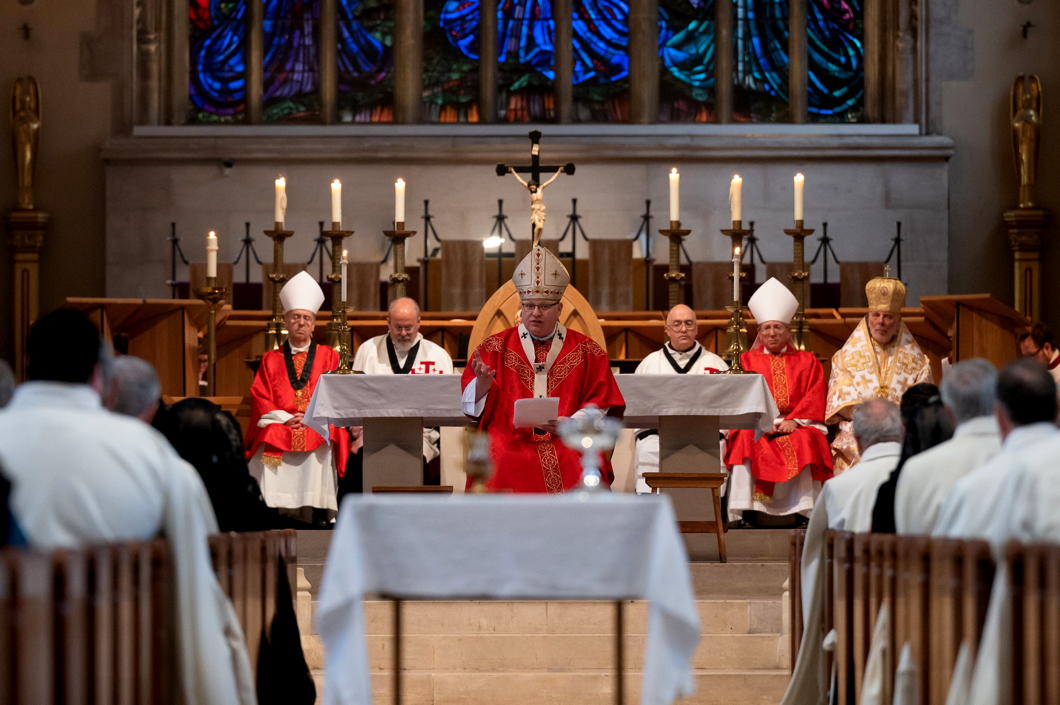
A reordering of the sanctuary as late as 1989 very much reflected the ideas of a decade or two earlier. The altar was brought forward into the nave, with the bishop’s throne the focus of attention and the choir shoved behind it. To avoid the visual distraction of the choirmaster, an metal installation with textile hangings stood behind the throne (colloquially known as “the towel rack”).
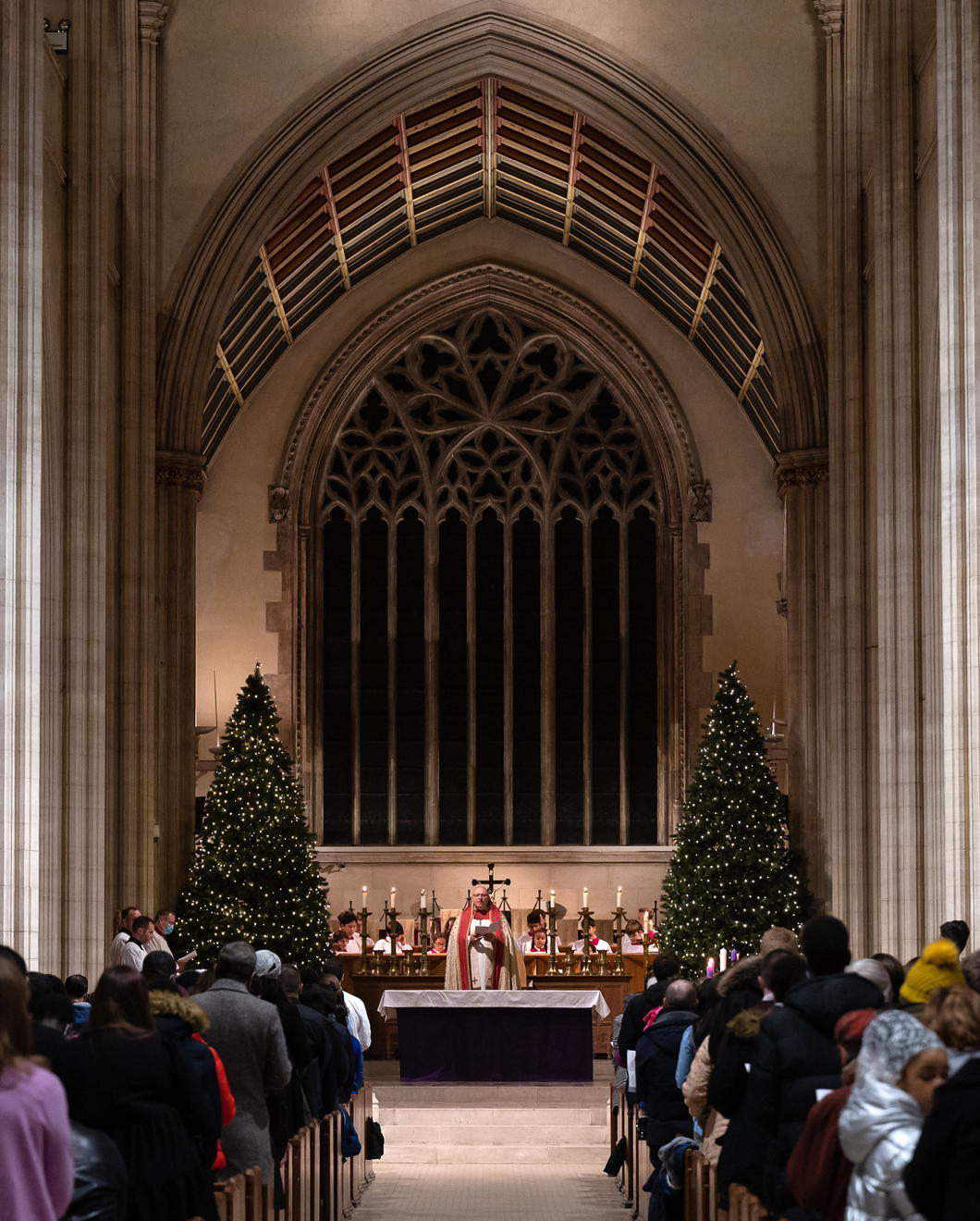
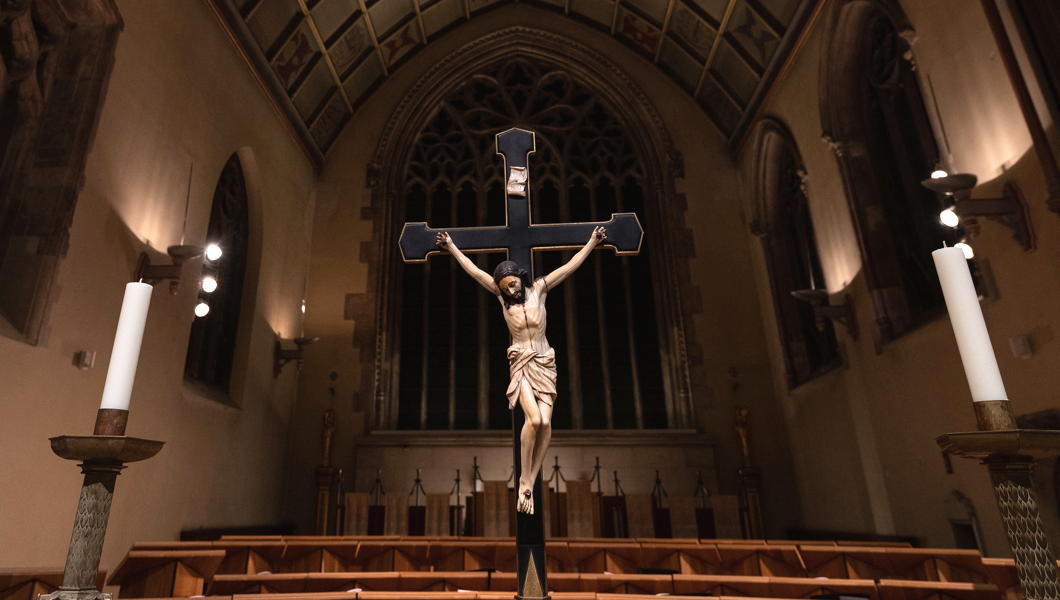
Luckily the crucifix and “big six” candlesticks from the 1958 re-consecration were found hidden away. Last month they were restored atop a short retable behind the cathedra and this small change has helped immensely in providing a more prayerful atmosphere and a stronger visual focus to the cathedral.
The photos above and below are from the Cathedral’s Advent Carol Service.
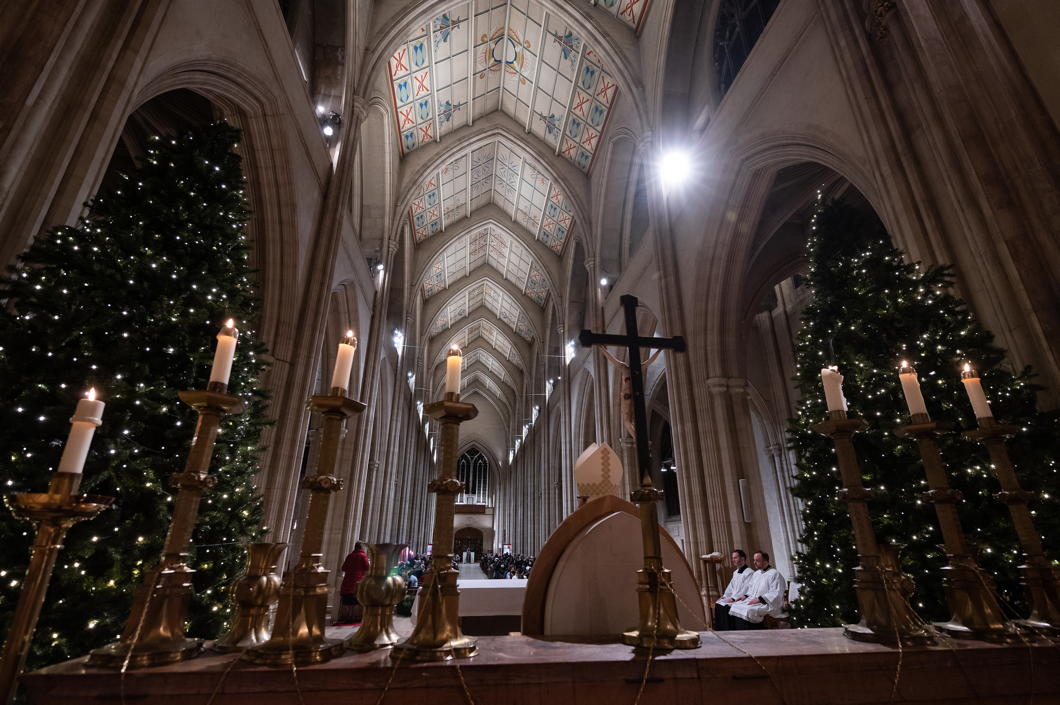
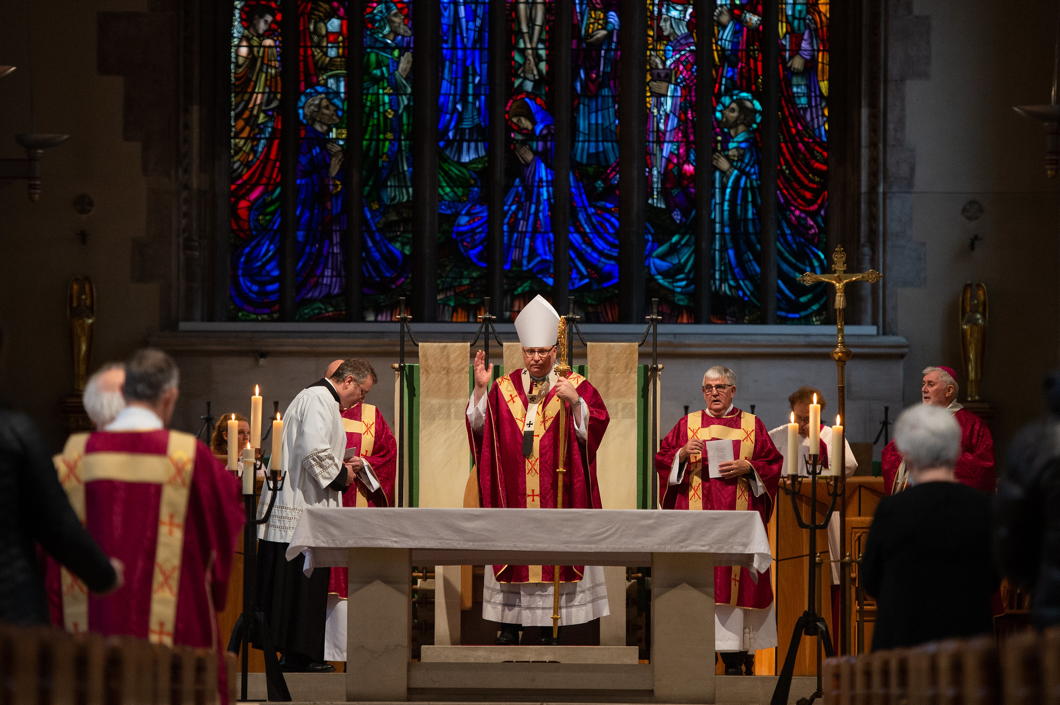
The contrast between before (above) and after (below) is subtle but effective.
The Saints are Glad
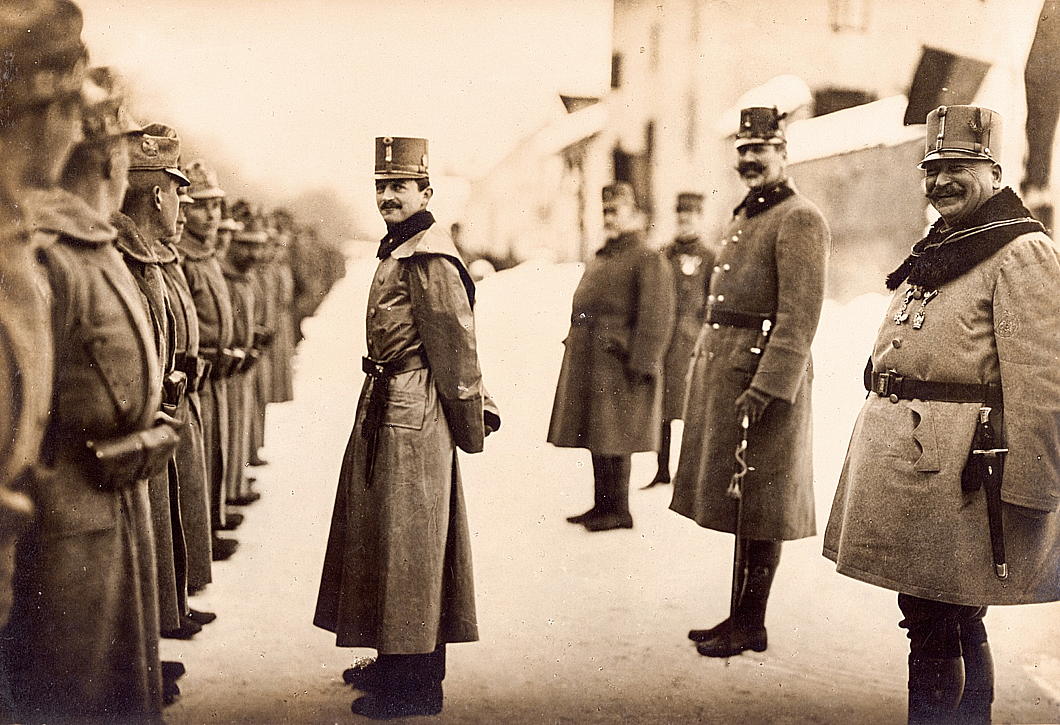
I love this photo of Blessed Charles — here still the heir to the throne — inspecting Austro-Hungarian troops in the Südtirol in 1916.
On the far right of the photograph, Gen. Franz (Ferenc) Rohr von Denta, commander of the Royal Hungarian Army, beams with a massive grin. He looks like a bit of a character.
Next to him is Archduke Eugen, the last Hapsburg to serve as Hoch- und Deutschmeister of the Teutonic Order, which in 1929 was transformed into a priestly religious order.
Franz Joseph would die just months after this photograph was taken.
His grand-nephew and successor Charles would be the last Emperor of Austria, Apostolic King of Hungary, and King of Bohemia — amongst the myriad other titles — to reign (so far).
Christmas 2021

Benedict of Palermo
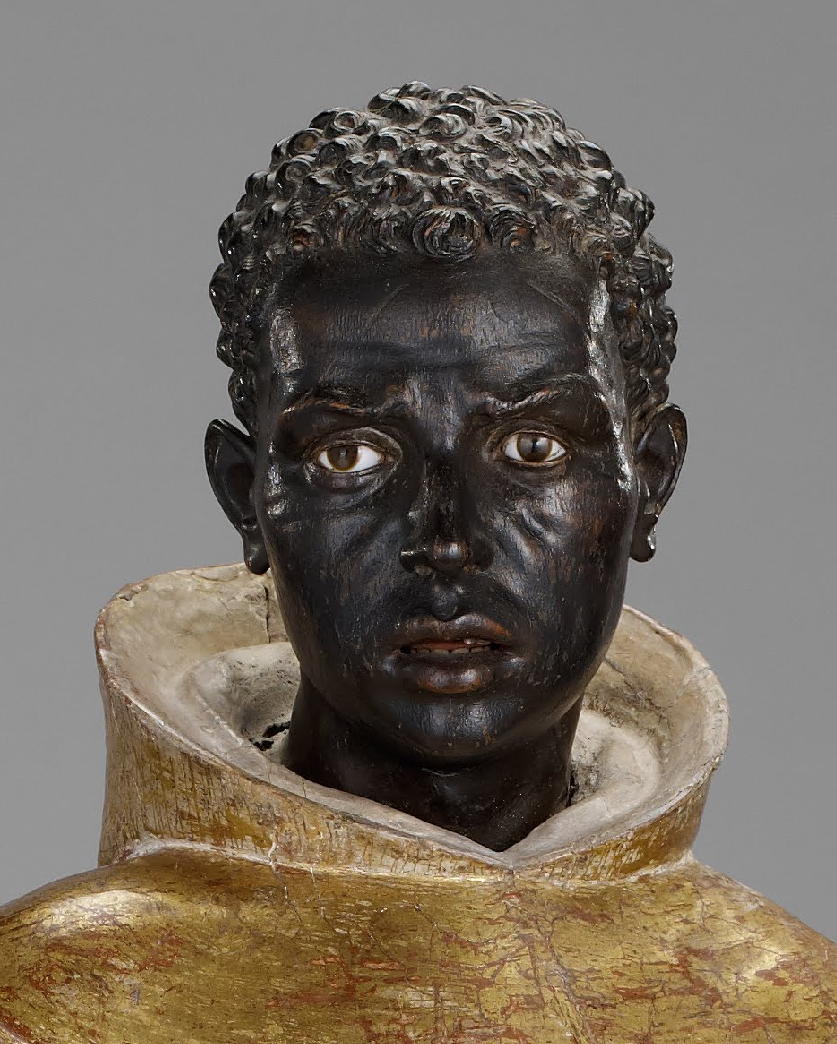
The island of Sicily is a cross-section of the numerous kingdoms and empires which have ruled and inhabited it from the Phoenecians down to the present day. During the Norman conquest of the island — those Normans did get around — many Lombards came to help secure the Normans’ rule over the existing Sicilians who were mostly Greek and Arab. The Gallo-Italic dialect of those Lombards is still spoken in a few towns and villages speckled across the island and the settlements they founded are known as the Oppida Lombardorum.
In one such Lombard town, San Fratello, in the 1520s a son was born to an enslaved couple named Cristoforo and Diana whose piety was so highly regarded that their master granted this first-born son, Benedetto (Benedict), his freedom from birth.
From his earliest days Benedict was prone to solitude to the extent that he was mocked by his peers, in addition to being insulted frequently for his black skin. As a teenager he left the family home and became a shepherd but gave whatever he could to help the poor and those even less fortunate than him.
Discerning the call to solitude, Benedict entered the hermitage of Santa Domenica in Caronia but his reputation for holiness was such that the pious people of the island began to visit him and implore him for his prayers and miracles.
Accompanied by another member of the community, Benedict fled to other places around the island, offering great and severe penances in reparation for the sins of humanity, but no matter where he went within days the faithful had found out and pestered him.
When the founder of the hermetic community at Santa Domenica died, the brothers elected Benedict his successor, despite his lack of education and illiteracy. Benedict returned to lead the community until it was abolished in 1562 by the reforms of Pope Pius IV who urged independent groups of Francis-inspired hermits to regularise themselves into existing Franciscan orders.
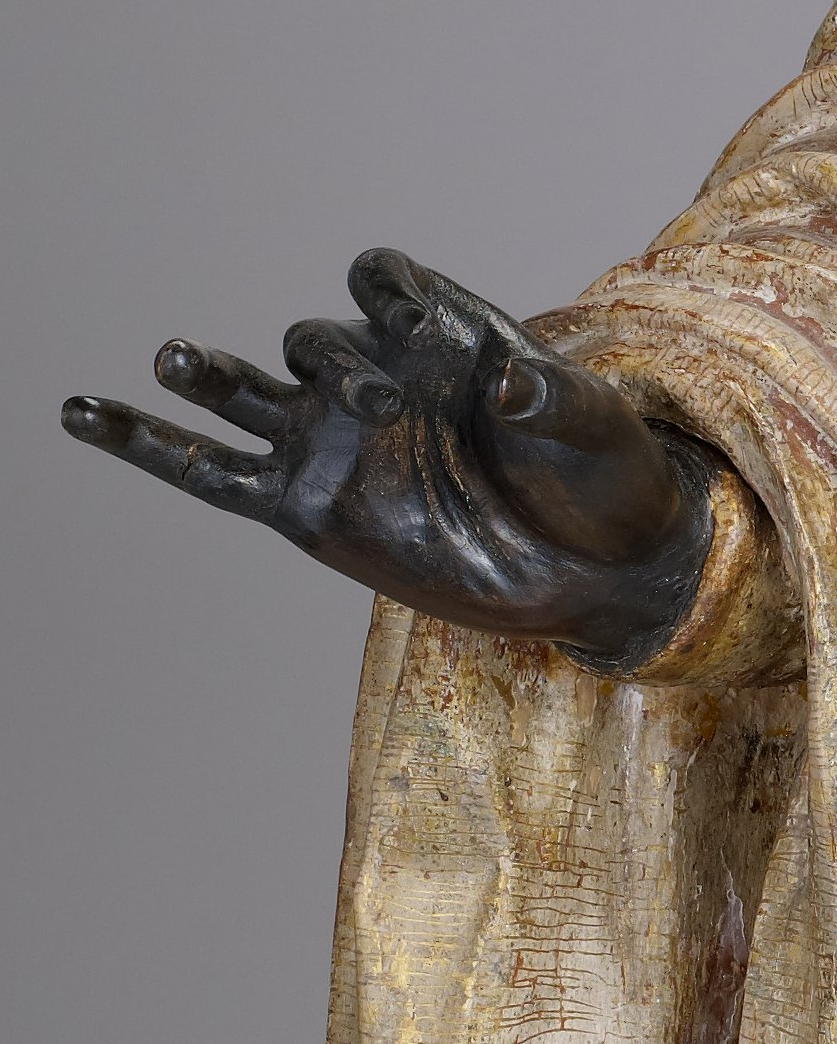
Benedict went first to a Franciscan friary in Giuliana before settling into that of Santa Maria di Gesù in Palermo, the primary city of Sicily. Having been a superior of his old community, Benedict arrived at the Palermo community as a simple cook but even here his piety and talents were recognised. He was first put in charge of the novices and then, in 1578, his confrères elected him their custos or superior though he was only a brother rather than a priest.
He was known as a miracleworker across the island, but it was not only the poor, the sick, and the destitute who flocked to Benedict to seek his help. Theologians and men of learning came to visit this humble and uneducated friar. Even the viceroy of the island was known to take his counsel on important affairs of state.
In his later years, Benedict returned to being the cook of the friary until his death in April 1589. By that time the whole island of Sicily — Greeks, Arabs, Latins, all — revered this poor, humble, and unlettered friar.
Sicily’s ruler, King Philip III of Spain, ordered a magnificent tomb to be built to house Benedict’s remains in the friary of Santa Maria di Gesù, and in death his cult spread far beyond the island.
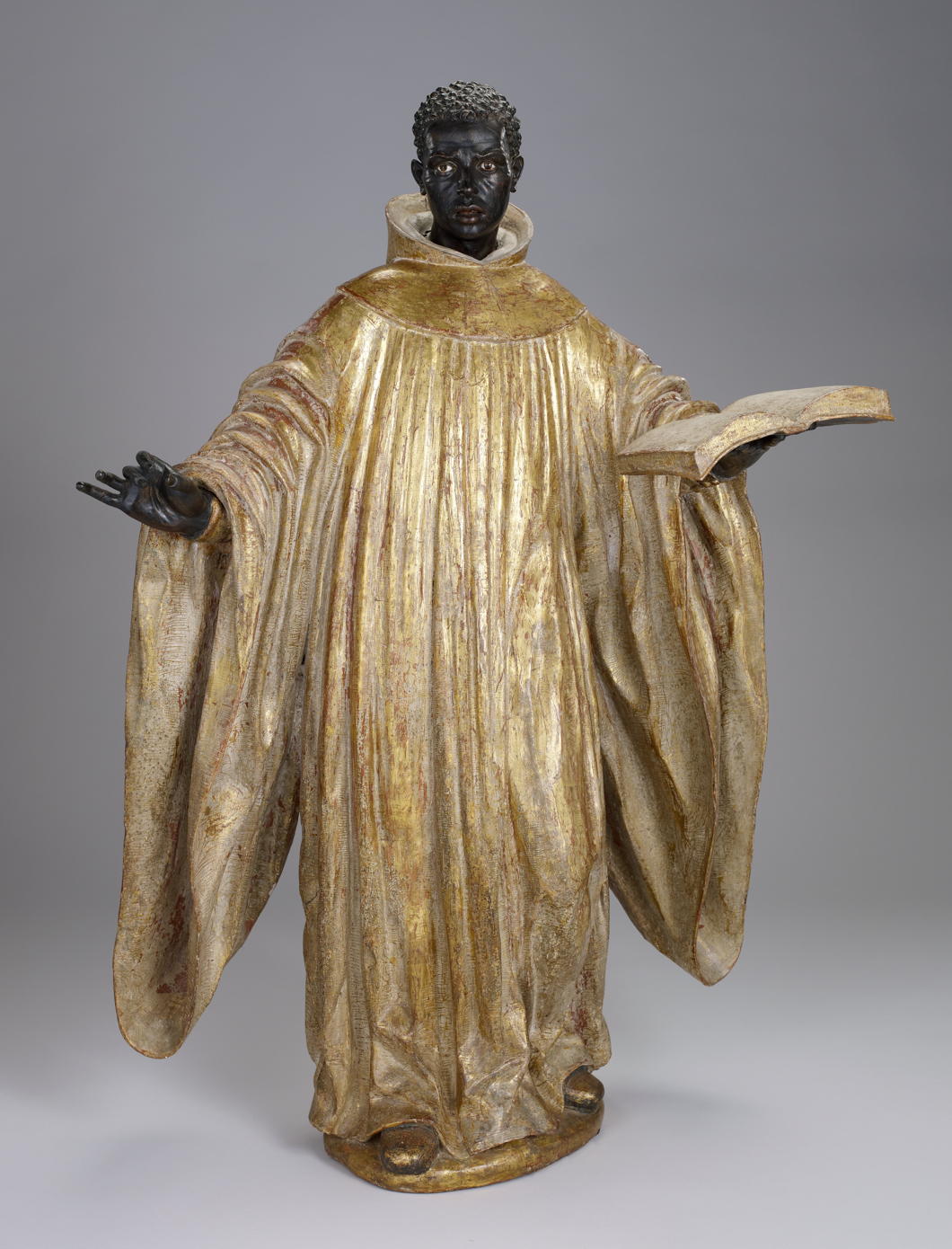
St Benedict of Palermo — or Benedict the Moor — was beatified by Benedict XIV in 1743 and canonised by Pius VII in 1807. Over the centuries, many non-white Christians came to implore his intercession and he became particularly popular among natives and mixed-race peoples in South America, in Africa itself, and amongst African-Americans in the United States.
This statue is believed to be the work of the Sevillian sculptor José Montes de Oca and was carved in the 1730s. Long in a private collection in Milan, since 2010 it has formed part of the collection of the Minneapolis Institute of Art.
Romes that Never Were
When the splendidly named Saint Sturm – Sturmi to his friends, apparently – founded the Benedictine monastery of Fulda in A.D. 742 we can presume he had no idea that the magnificent church eventually erected there (above) would one day be considered for housing the Supreme Pontiff of the Universal Church.
Rome, caput mundi, is ubiquitously acknowledged by all Christian folk as the divinely ordained location for the Papacy, but this has not always been acknowledged in practice. Most memorable is the “Babylonian Captivity” of the fourteenth century when the papal court was based at the enclave of Avignon surrounded by the Kingdom of Arles. The illustrious St Catherine of Siena was influential in bringing that to an end.
Since the return from Avignon the Successor of Peter has prudently been keen to stay in Rome, but various crises over the past two centuries have seen His Holiness shifted about. General Buonaparte successively imprisoned Pius VI and Pius VII while he made to refashion Europe in his likeness, and the later slow-boil conquest of the Italian peninsula by the Kingdom of Sardinia caused much worrying in the courts of the continents as well.
In 1870, the Eternal City fell to the troops of General Cadorna, and while the Vatican itself was not violated it was widely assumed the papacy could not stay in Rome. Pope Pius IX evaluated several options, one of them seeking refuge from – of all people – the Prussian king and soon-to-be German emperor Wilhelm I.
Bismarck, no ally of the Church, but shrewd as ever, was in favour of it:
I have no objection to it — Cologne or Fulda. It would be passing strange, but after all not so inexplicable, and it would be very useful to us to be recognised by Catholics as what we really are, that is to say, the sole power now existing that is capable of protecting the head of their Church. …
But the King [Wilhelm I] will not consent. He is terribly afraid. He thinks all Prussia would be perverted and he himself would be obliged to become a Catholic. I told him, however, that if the Pope begged for asylum he could not refuse it. He would have to grant it as ruler of ten million Catholic subjects who would desire to see the head of their Church protected. …
Rumours have already been circulated on various occasions to the effect that the Pope intends to leave Rome. According to the latest of these the Council, which was adjourned in the summer, will be reopened at another place, some persons mentioning Malta and others Trent.
Bismarck mused to Moritz Busch what a comedy it would be to see the Pope and Cardinals migrate to Fulda, but also reported the King did not share his sense of humour on the subject. The advantages to Prussia were plain: the ultramontanes within their territories and throughout the German states would be tamed and their own (Catholic) Centre party would have to come on to the government’s side.
In the end, of course, the Pope decided to stay put in Rome and became the “Prisoner of the Vatican”, surrounded by an awkward usurper state that made attempts at friendship without betraying its hopes for legitimising its theft of the Papal States. It was the diplomatic coup of the Lateran Treaty in 1929 that finally allowed both states to breathe easy and created the State of the City of the Vatican, an entity distinct from but subservient to the Holy See of Rome.
The Second World War brought its own threats to the Pope’s sovereignty, and the wise and cautious Pius XII feared he might be imprisoned by Hitler just as his predecessor and namesake had been by Buonaparte. Pius was determined the Germans would not get their hands on the Pope and so signed an instrument of abdication effective the moment the Germans took him captive. He would have burnt his white clothing to emphasise that he was no longer the Bishop of Rome.
The record is not yet firmly established but it is rumoured that the College of Cardinals was to be convened in neutral Éire to elect a successor. One wonders where they would have met. The Irish government would undoubtedly have put something at their disposal — Dublin Castle perhaps? Despite the whirlwind of war, the election of a pope in St Patrick’s Hall would have warmed the cockles of many Irish hearts.
But what then? Ireland’s neutrality would have been useful but a German violation of the Vatican’s territory would have been grounds for open, though obviously not military, conflict. Further rumours, also totally unsubstantiated, had it that the King of Canada, George VI, quietly had plans drawn up for offering the Citadelle of Quebec to the Pope to function as a Vatican-in-Exile. Others claim it wasn’t until the 1950s that Quebec was investigated as a possibility by the Vatican in case Italy went communist, as was conceivable.
So Cologne, Fulda, Malta, Trent? None of these plans ever occurred, thank God.
And what about England? Why not? The court of St James and the Holy See, despite obvious and significant differences, enjoyed close relations and overlapping interests in many particular circumstances from the Napoleonic wars until present. Pius IX had put feelers out to Queen Victoria’s minister in Rome, Lord Odo Russell, in 1870 but the British ambassador more or less told him of course the Pope would be welcomed in England but don’t be silly, the Sardinians would never conquer Rome.
One imagines the British sovereign would grant a palace of sufficient grandeur to the exiled Pontiff. Hampton Court would do the job. It’s far enough from the centre of London but large enough to house a small court and the emergency-time administration of the Holy Roman Church. Would the ghost of Cardinal Wolsey plague the Princes of the Church?
Thanks be to God, we’ve never had cause to find out. At Rome sits the See Peter founded and so it looks to remain. Ubi Petrus, ibi ecclesia.
Wardour
The news from the West Country is that Jasper Conran OBE is selling up his place in Wiltshire, the principal apartment at Wardour Castle.
Wardour is one of the finest country houses in Britain, designed by James Paine with additions by Quarenghi of St Petersburg fame. It was built by the Arundells, a Cornish family of Norman origin, but after the death of the 16th and last Lord Arundell of Wardour the building was leased out and in 1961 became the home of Cranborne Chase School.
A friend who had the privilege of being educated there confirms that Conran’s assertion of Cranborne Chase being “a school akin to St Trinian’s” was correct, and tells wonderful stories of the girls’ misbehaviour.
Alas the modern world does not long suffer the existence of such pockets of resistance, and the school shut in 1990. The whole place was sold for under a million to a developer who turned it into a series of apartments, for the most part rather sensitively done, if a bit minimalist.
The real gem of Wardour, however, is the magnificent Catholic chapel which is owned by a separate trust and has been kept open as a place of worship. Richard Talbot (Lord Talbot of Malahide) chairs the trust and takes a keen interest in the chapel and the building. I was down there the Sunday the chapel re-opened for public worship after the lockdown and Richard was there making sure all was well.
Those interested in helping preserve this chapel for future generations can join the Friends of Wardour Chapel.
Msgr Antony Conlon
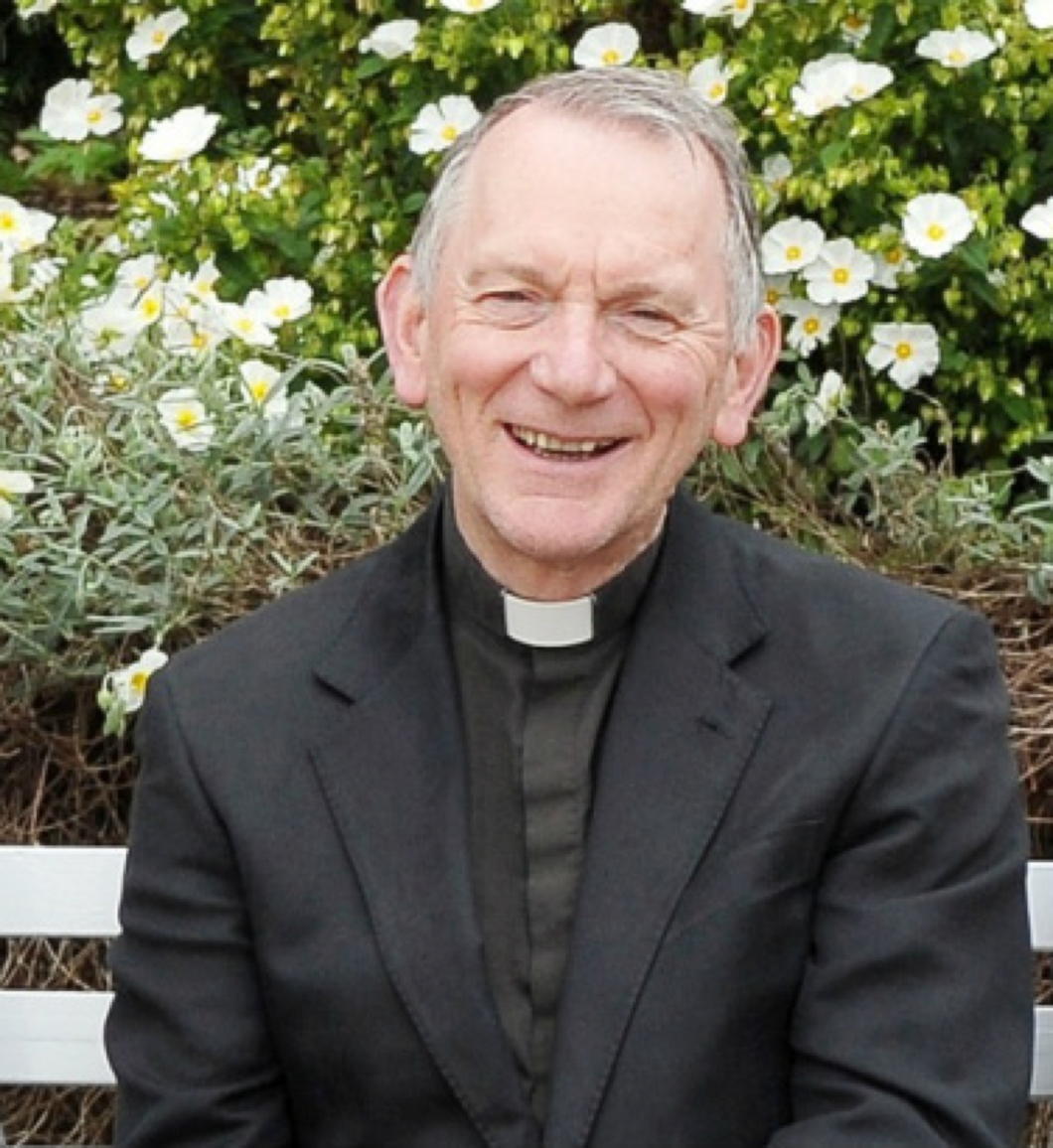
IN PREPARING these notes the same response was given by many of Dr Antony Conlon’s friends – “I’ve got lots of stories, but they’re not really suitable for an obituary”. This is in itself an obituary, as it sums up Antony Conlon’s profound sense of fun and friendship; without ever being in the slightest scandalous, yet often hilarious, anecdotes of him are intensely personal. One of his informal nicknames among many of his friends in conversation (more about the other one later) was ‘our mutual friend’ – one knew immediately who was meant, and it reflects his wonderful ability to bring his friends together; there was nothing solitary about Antony Conlon, he lived through and for people.
This quality of openness, while sometimes misunderstood by those who seek clerical detachment in their priests, was an essential part of his priesthood, one which made him deeply pastoral at all times in the everyday world. There was no ‘off-duty Conlon’, even in his lightest moments the same priestly and paternal respect for others was always there, which, paradoxically, attracted non-Catholics to him so readily. His educated and amusing conversation on the widest spectrum of subjects, rarely ‘churchy’, opened the door to everyone.
As one friend said recently, there was never a telephone call, however serious or sad the initial subject, which at some point did not descend (ascend?) to peals of childlike laughter. Even his well-known indignation and fury with those people and institutions he did not agree with (usually because they were opposed to the traditions of the Church or another firmly-held principle) for all their bluster, and the occasional swear-word, were never unkind, and never quite lost sight of human absurdity. (more…)
Search
Instagram: @andcusack
Click here for my Instagram photos.Most Recent Posts
- Brunel’s Unbuilt Capitol February 3, 2026
- Cricket at Fordham January 27, 2026
- Palacio Barolo Revisted January 14, 2026
- Learning to Love Liguria January 14, 2026
- Crux Alba No. 2 January 13, 2026
Most Recent Comments
Book Wishlist
Monthly Archives
Categories