Church
About Andrew Cusack
 Writer, web designer, etc.; born in New York; educated in Argentina, Scotland, and South Africa; now based in London.
 read more
News
Blogs
Reviews & Periodicals
Arts & Design
World
France
Mitteleuropa
Knickerbockers
Argentina
The Levant
Africa
Cape of Good Hope
Netherlands
Scandinavia
Québec
India
Muscovy
Germany
Academica
A Monastery Rises in Oklahoma

I REMEMBER HEARING about the foundation of Clear Creek Monastery some years ago. A small handful of monks from Fontgombault in France, the king of the traditionalist abbeys, were sent to found a Benedictine community in the hills of Oklahoma, devoted to the Old Mass. I saw the splendid and very traditional plan drawn up for a church and residence and thought to myself: “Wouldn’t it be nice if that actually came to fruition”. Well, I’m happy to say it actually did, and the handful of traditional Benedictines (completely in communion with Rome and the Bishop of Tulsa) have grown and are apparently thriving. They’ve even completed the crypt of their church and the monastery building. (more…)
The Red Mass
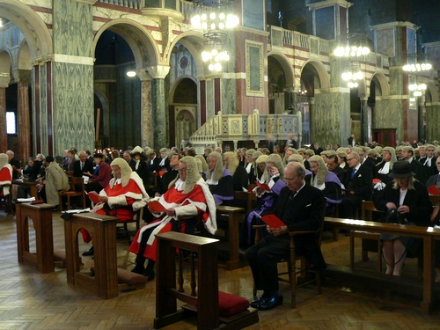
THE RED MASS is an ancient tradition which marks the beginning of the legal session every year. It takes its name from the red vestments used for a Mass of the Holy Ghost, invoking God’s protection over the judges, lawyers, and officials as they duly practice the law. Msgr. Langham, the Administrator of Westminster Cathedral, was kind enough to post a few pictures of the Red Mass offered at the Mother Church of Catholic England on the splendid cathedral weblog. A similar service is held at Westminster Abbey for the Protestant officials of the law.
Mythbusting on Facebook

Anyone who’s on Facebook and has all the right ideas must join the group “Elizabeth I: Heretic, Usurper, Tyrant”.
The Church Resurgent
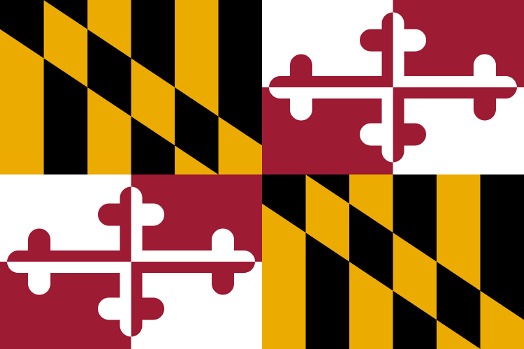
THE CATHOLIC COLONY of Maryland was first planted in 1634 at St. Mary’s, which became the first capital city of the Calvert family’s palatinate. The attempt to run Terra Mariae as a Catholic feudal state was continually frustrated by a number of fiery Protestant settlers, who eventually broke out into open rebellion in the 1650s while the Civil Wars raged back in England. Happily, Cecil Calvert, 2nd Baron Baltimore, sent out an army under Gov. William Stone to restore order to the colony, but was defeated by the Puritan force in March, 1655 at the Battle of the Severn. During the Puritans’ persecution of the Church, all the Catholic churches in Maryland were destroyed, and in 1667 a new ecclesiastical edifice was raised in St. Mary’s: the Brick Chapel.
Corpus Christi Church
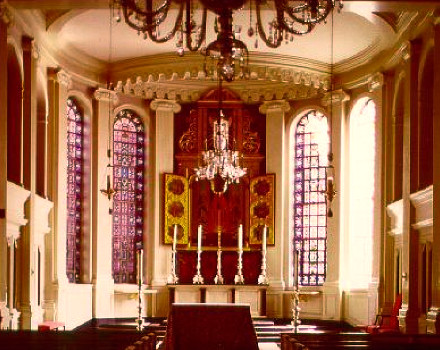
Corpus Christi Church, West 121st Street, New York: perhaps my favorite Catholic church interior in all New York, and one which simply cries out for a traditional Mass. (more…)
Only the Church stood
Being a lover of freedom, when the revolution came in Germany, I looked to the universities to defend it, knowing that they had always boasted of their devotion to the cause of truth; but, no, the universities immediately were silenced. Then I looked to the great editors of the newspapers whose flaming editorials in days gone by had proclaimed their love of freedom; but they, like the universities, were silenced in a few short weeks. …
Only the Church stood squarely across the path of Hitler’s campaign for suppressing truth. I never had any special interest in the Church before, but now I feel a great affection and admiration because the Church alone has had the courage and persistence to stand for intellectual truth and moral freedom. I am forced thus to confess that what I once despised I now praise unreservedly.
Missal Mania

Baronius Press have reported a doubling in their sales of missals for the old Mass, or the “extraordinary form” as we are to call it now, since the release of the motu proprio Summorum Pontificum. Readers will be shocked to hear that I am actually a reactionary (however accidentally) because I only have a 1960 missal, not the 1962 missal which is the actual missal used at traditional masses. However, I would not object if anyone would like to gift me a brand spanking new 1962 daily missal from Baronius Press. The perfect gift for young Catholics: St. Nicholas Day is just around the corner! (Alright, over two months away, but still…).
Baronius Press are also coming out with the Little Office of the Blessed Virgin Mary, which has received an Imprimatur and will be available from sometime in October.
The Old Archbishop’s Palace, New Orleans
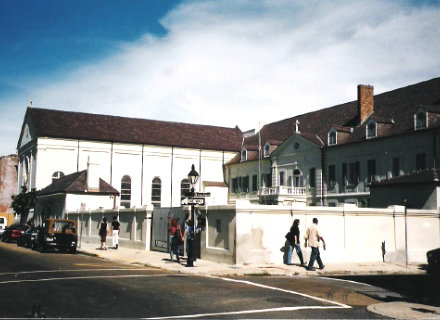
BUILT IN 1745, the Old Archbishop’s Palace in New Orleans is believed to be the oldest building in the entire Mississippi Valley. The building has gone through a number of ecclesiastical uses through the centuries, originally constructed to French plans for the Ursuline sisters who came to foster the Christian faith in la Louisiane. On the corner of Chartres Street and Ursulines Avenue in western corner of the Vieux Carré, the Convent survived the Great Fire of 1788, along with the neighboring barracks and Royal Hospital. The Ursuline nuns took orphans into their care here, and educated the daughters of the city’s elite and of the local plantation owners (among them Baroness Pontalba), as well as organizing special handiworks classes for Indian and Negro girls. And it was in the Chapel of the Convent that the Ursuline nuns kept vigil during the Battle of New Orleans in 1815, praying ceaselessly for the salvation of New Orleans from destruction. This great event was attributed to the Blessed Virgin, and Notre Dame de Bon Secours (Our Lady of Prompt Succour) was adopted as the patron of the city and diocese of New Orleans and the state of Louisiana. (more…)
Nederlands Dagblad
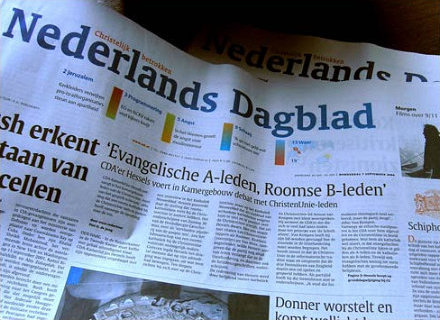
ONE ENVIES the Dutch for having a quality, serious Christian daily newspaper, Nederlands Dagblad (“Netherlands Daily”), even if it is Protestant-run and -oriented. A daily newspaper since 1967, ND currently has a circulation of 33,000. The circulation has been increasing in the past few years, reportedly among non-Christians who desire an alternative perspective from that of the mainstream newspapers. Could not the same be replicated in America, perhaps even on a Catholic basis?
BASMOM Appeal for Peru
I received the following via e-mail this morning:
 You will have read about the terrible earthquake that recently struck Peru. Over 40,000 homes have been destroyed or seriously damaged, 20 hospitals destroyed or damaged and over 1,500 people killed or wounded. A state of emergency has been declared in the region; and the local authorities are struggling to help all those affected.
The Peruvian Association of the Order of Malta has already started its relief activities with teams of doctors and paramedics on the ground tending to victims of the earthquake. The Association is preparing to bring relief goods into the disaster area and is working with local parishes to distribute them in the most effective way. The longer-term challenge will be to rehabilitate those affected.
The greatest need now is for medical supplies, foodstuffs and the wherewithal to start rehabilitation. Much of this is best bought locally. The Order worldwide is now launching an appeal to help our Peruvian Association by sending money that will enable them to continue the work that it has already started. The British Association is determined to contribute to this effort; and we are therefore writing to ask you for your help.
Please consider donating to this very urgent and worthwhile cause. Your money will go directly to help those who have lost everything in this earthquake: as an organization of volunteers, the Order incurs only minimal overheads.
You can donate online through our website, where you can stay up-to-date on the progress we are making, or by sending a cheque made payable to BASMOM Foreign Aid Service. If you are a UK taxpayer and complete the GiftAid form below, we can also reclaim the tax on your donation.
We thank you for any donation you can make.

Salve Regina
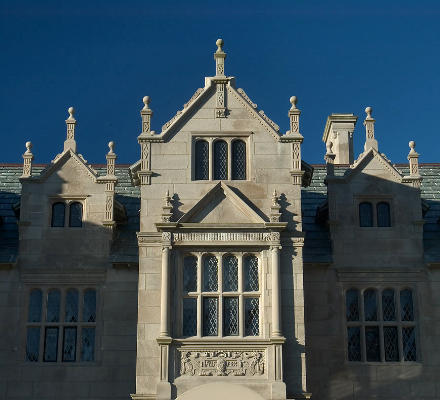
ONE OF THE MORE unfortunate aspects of the twentieth century was the decline of the country house in the British Isles and North America during the post-war period. Innumerable homes of great history and beauty were lost to the wrecking ball and the developer’s avarice. Newport, the former capital of the Colony of Rhode Island and Providence Plantations, became a summer capital to many of America’s well-to-do during the so-called “gilded era”. (It was avowed then that the highest level of society was determined by those whom Mrs. Vanderbilt could fit in the great hall of her Newport house). While many of the great homes of Long Island fell to ruin after the war, and the legendary Meadowbrook Hunt dissolved, many of the best Newport homes found a welcome new role under the wings of Salve Regina University, the city’s Catholic university. The decline of these great houses and the ascent of Salve Regina proved a quite fortunate coincidence, and has inspired the university to start one of the first academic programs in historical preservation and restoration. These great summer ‘cottages’ now house lecture halls, seminar rooms, academic offices, dormitory space, and a Catholic chapel. They are appropriate surroundings for Western civilization to be passed on to the next generations. (more…)
CNN Comes to St Agnes
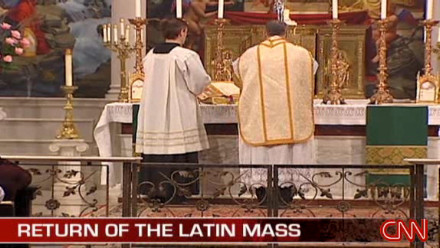
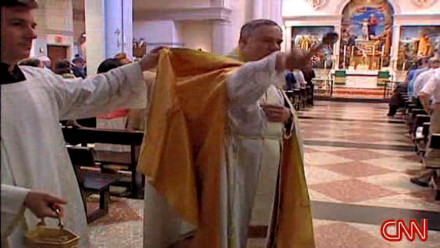
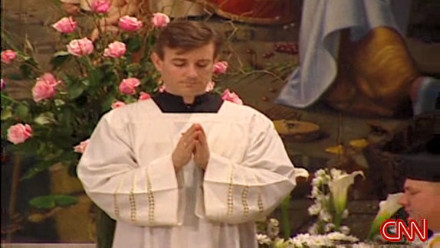
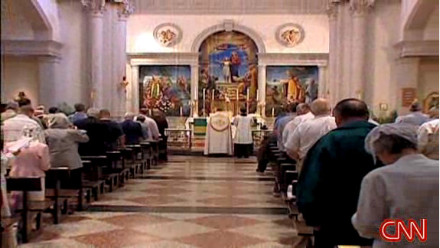
A month or so ago, Ms. Delia Gallagher of the Cable News Network (and cameraman) came to the Church of St. Agnes to take a few shots of the 11:00 Tridentine mass and to interview a few folks on the street afterwards. Those who spoke with her said she was genial, and the report she filed is available from the CNN website here (2:08, following a thirty-second advertisement).
Dino!
‘The Mass of All Time answers that need.’
In his superb column in this week’s Scotland on Sunday, Gerald Warner responds to the Holy Father’s motu proprio.
The bishops of England and Wales tried furiously to prevent the liberalisation of access to the Traditional Mass, lobbying the Vatican against it, although they had recently approved the regular celebration of a Mass for homosexuals. On the eve of the publication of the Papal document, Bishop Kieran Conry, of Arundel and Brighton, said: “Any liberalisation of the use of the rite may prove seriously divisive. It could encourage those who want to turn the clock back throughout the Church.” So, a liberal opposes liberalisation – why are we not surprised?
As for turning the clock back throughout the Church, it is the only possible remedy for the crisis that has afflicted it since the Second Vatican Catastrophe. The Novus Ordo (New Order of Mass) was invented by Archbishop Annibale Bugnini, assisted by six Protestant pastors, after the Vatican Council. When this appalling confection was presented to the 1967 Synod of Bishops it was indignantly rejected. Yet two years later it was universally imposed. Bugnini described it in 1974 as “a major conquest of the Catholic Church”.
Strange language from a Catholic bishop; but there were stranger things to come. In July, 1975 Bugnini was abruptly sacked after Pope Paul VI was shown evidence he was a Freemason. Bugnini denied the fact, but when the register of Italian Freemasonry came to light in 1976, it recorded Bugnini as having been initiated on April 23, 1963, with the esoteric code name ‘Buan’. So, even during the Vatican Council, Bugnini was already under automatic excommunication for Masonic membership. What possessed Paul VI to sack the author of the New Mass, but retain his liturgy for universal use? At least this episode throws light on the handshake at the ‘kiss of peace’ in the new rite. […]
For 40 years frenzied efforts have been made to stamp out the Traditional Mass and yet it has flourished. It is now past the point where there is the remotest prospect of extinguishing it. As Pope Benedict said in his explanatory letter accompanying the motu proprio Summorum Pontificum (“Of Supreme Pontiffs”), one of his reasons for freeing the Old Mass was the number of young people now flocking to it.
That is what the faded 1960s trendies who are now bishops and seminary rectors fear: the impossibility of maintaining a revolution that has burned itself out. The Second Vatican Council means as little to today’s youth as the Council of Chalcedon. Its elderly adherents are like dads dancing at the school disco. Many young people are seeking the mystical and the numinous. The Mass of All Time answers that need.
Within the past month the Vatican has issued two other documents: one restoring the requirement for a two-thirds majority at Papal conclaves, which rules out the future election of an extreme radical; and a reassertion of the doctrine that the Protestant sects cannot be recognised as ‘churches’. It will not damage ecumenism, because that died long ago. Its premise was that Rome must endlessly divest, while Canterbury ordained priestesses and moved ever further from Catholicism. [Ed.: bold mine.] When you see a Church of Scotland congregation praying the rosary you may believe ecumenism is a two-way process.
‘The Mass of All Time will outlive the Sixties revolutionaries‘, by Gerald Warner; Scotland on Sunday, 15 July 2007.
Previously: Martyrs of Spain, Pray for Us! | Warner on the Gotha
California Wedding
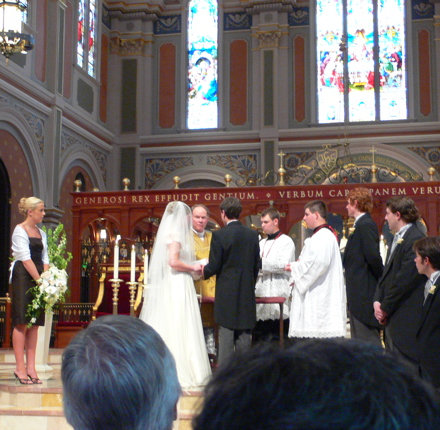
WHERE DOES ONE begin? Scotland, I suppose. I’ve known Abby since Day One in St Andrews. I was among the number of poor souls who were foolish enough to participate in the ‘overseas orientation’ for non-UK/RoI students. Through pure chance, a group of us who sat down to dinner in Andrew Melville Hall that night decided to venture into town that evening and see what was what. We went to the Central, which became my regular for a very long time, until replaced by the Russell for my tertian and magistrand years. Jon I met just over a year later, during his first few weeks at St Andrews (as I entered my second year). It was at the Catholic Society and he told me he came from Bristol. I was fairly ignorant of Bristol other than that it is home to the British Empire and Commonwealth Museum. I asked Jon about the museum and his answer was such as to confirm that he and I were on the same page of the book, so to speak. He didn’t come much to Canmore at the start and so we were not instant friends, though I do recall running into him in the corridor of New Hall at 2 or 3 in the morning one night and striking up a brief conversation (most likely telling him he ought to be coming to Canmore, since like-minded folk are a dime a dozen there).
Anyhow, by some time or another we were all best of friends, and both Jon and Abby have been the source of (and butt of) so many of the great amusements we enjoyed at St Andrews. Good God, how many laughs! In Canmore, the Cellar Bar, the Central, the Russell, in flats, in Edinburgh, in Rome, in Dublin, in New York, and most recently in California, whenever one is with Jon and Abby there is always a good time to be had, and an appropriately inappropriate comment to relish. I have picked up the habit of simply saying “ledge” (that is, short for “legend”) every time I utter the name of Jon Burke. Abby once desired that I verbally express precisely what it was that makes Jon such a legend, but all I could say was that it was of the same nature as the Sacraments in Eastern theology: appreciated, nourishing, and clung-to, but ultimately a mystery.
It was California then, which was host to our latest adventure, namely the joining in matrimony of Miss Abigail Hesser and Mr. Jonathan Burke. I flew in on Wednesday and upon checking in at the hotel, the desk clerk handed me a written message from Jon: “We’re in the bar, free cocktails!” The wonderful rehearsal dinner was the next evening, and I was privileged to have the best seat in the house, with Fr. E and Mrs. Hesser on my left and Abigail and Jon on my right. But Friday… Friday was the wedding! (more…)
‘First of Britain’s Sons To Die’
Saint Alban, June 22
Sing triumphant o’er the foe;
Tell of him, a Martyr glorious,
For the changeless truth laid low;
Faithful servant, bright example,
Whom all lands and ages know.
Valiant soldier, noble Martyr,
First of Britain’s sons to die,
Pagan ire and cries withstanding,
By the grace of God Most High,
By the strength of Him, Protector
Who, in strength and power, was nigh.
Laud and honour to the Father,
Equal honour to the Son,
Adoration to the Spirit,
Ever Three and ever One,
Consubstantial, Co-eternal,
While unending ages run.
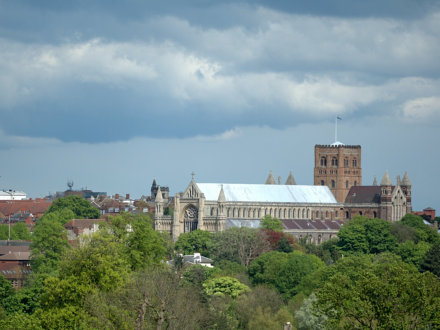
These were the words to the school hymn at St. Alban’s College down in Argentina, which I briefly had the privilege of attending and which is currently celebrating its centenary year (more on that in another post). It was down beneath the Southern Cross that I first became more closely acquainted with good Saint Alban, who was the first Christian martyr of Britain.
The Grand Master in Poland
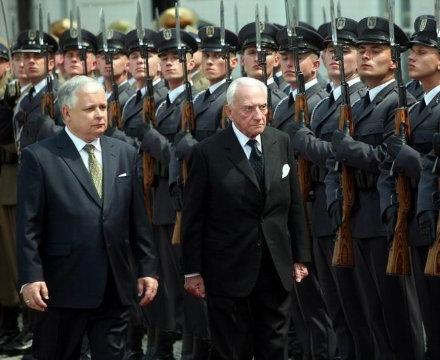
ROME, 21 MAY 2007 (From the Order of Malta) — The Grand Master’s meeting in Warsaw with the President of the Polish Republic Lech Kaczynski and the joint signature with the Health Minister of a framework cooperation agreement were two of the most significant moments of the state visit of His Most Eminent Highness Fra’ Andrew Bertie to Poland.
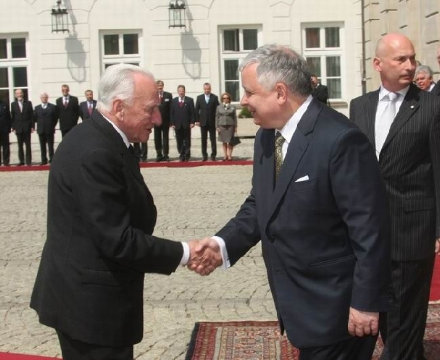
Received at the presidential palace with military honours, after the exchange of decorations, the Grand Master and the President of the Republic, flanked by their respective delegations and by ambassadors Vincenzo Manno and Hanna Suchocka, enjoyed a long and cordial conversation. A tangible sign of solid bilateral relations is the signature of the cooperation agreement for medical and hospital assistance. The order’s Grand Hospitaller and the Polish Health Minister signed a document that will help to improve the assistance given by the Order of Malta’s Polish Association, and in particular to the poorest and most needy. There will also be increasing support for terminal patients and the disabled through the numerous Order of Malta centres active in Poland, as well as cooperation for the development of emergency and first-aid medicine.
For Saint George
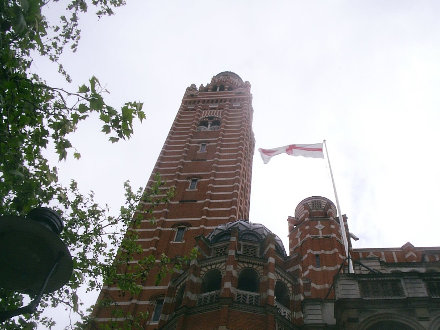
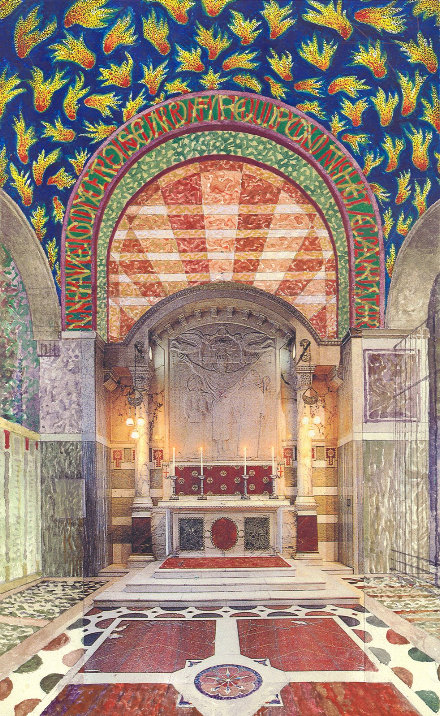
THE CROSS OF SAINT GEORGE snaps proudly from the flagpole above Westminster Cathedral, the Administrator of which, Msgr. Mark Langham, has given us a special St. George’s Day treat by revealing the newly-commissioned designs for completing the mosaic work in that cathedral’s chapel dedicated to the patron saint of England.
Nuns! Nuns! Nuns!
This brief piece from NBC has been making the rounds on a number of blogs, but I thought I’d share it for those folks who haven’t caught it yet.
The Knights of Malta Ball 2007
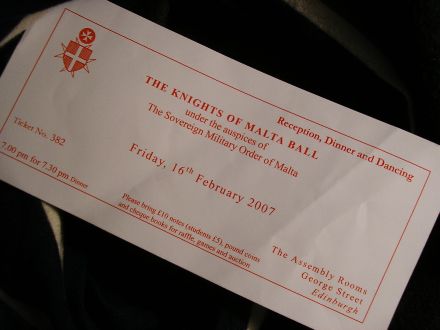
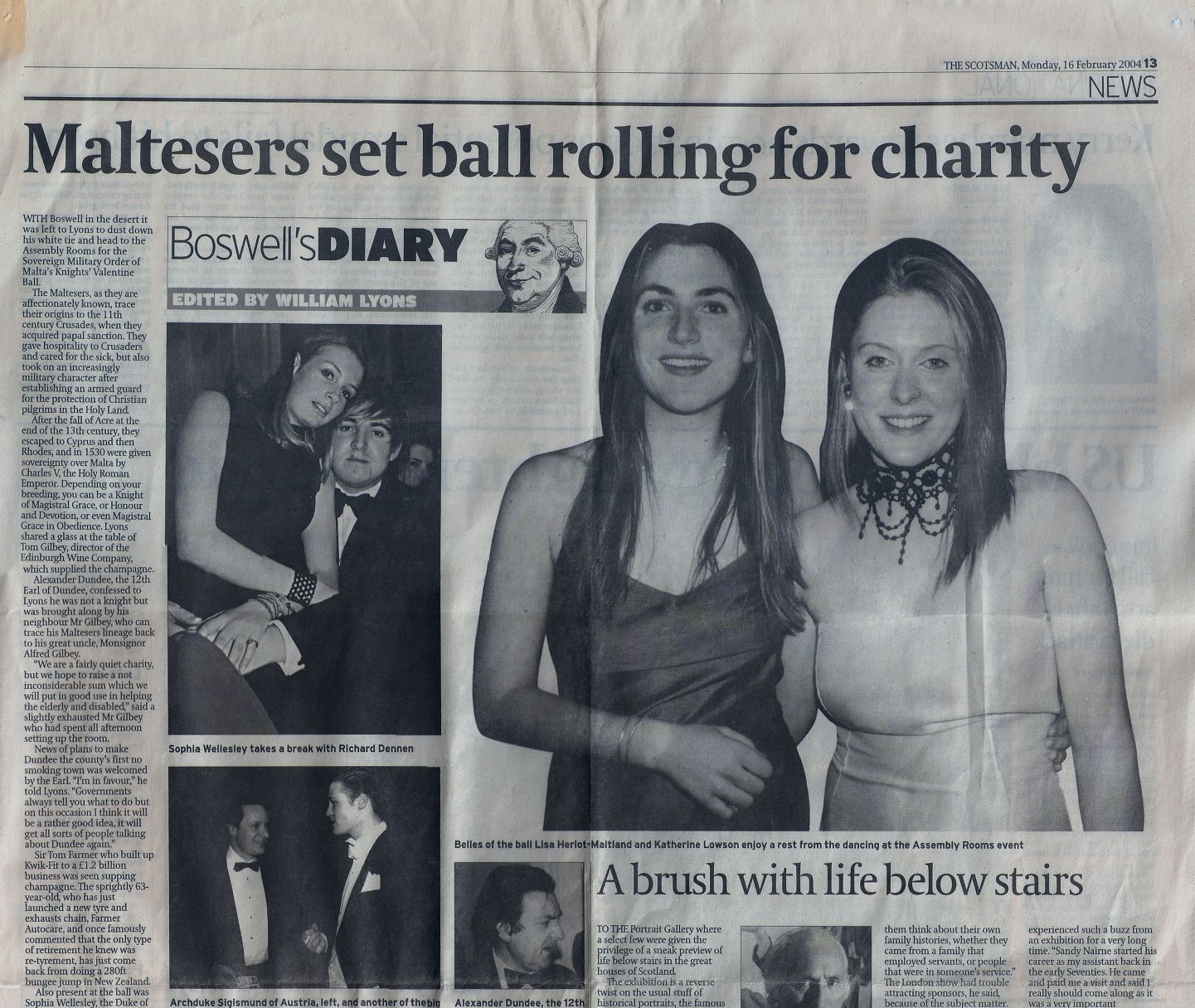
THE MONTH OF FEBRUARY returns, and so too the Knights of Malta Ball with its requisite sojourn to Edinburgh. If I have a confession to make, it is that I am a creature of habit, and having gone the past three years, I didn’t see why the intervening distance of the Atlantic Ocean should make any particular difference this year. If I may make another confession, it is that I am incapable at organizing things competently, and of course left sorting out tickets to the last week. “Impossible,” quoth Zygmunt Sikorski-Mazur when I contacted him. “Too late I’m afraid, and there is even a waiting list of people who’ve paid up just in case tickets become available”. Well, I had accommodated myself to the concept of heading up to St Andrews and having a grand night out instead, but luckily C. came to the rescue. “Perchance,” saith the youthful Old Harrovian, “I have a spare ticket and you can have it if you wish”. Well, that settled it.
Carried off by taxicab to the Assembly Rooms in George Street from the similarly-monikered Assembly bar in Bristo Square, it was something of a disappointment to find the fine Georgian building veiled in scaffolding and lacking the usual looming Scottish standards of the Order (smaller version seen here) and the flanking flags hanging, floodlit, from the splendid façade. Nonetheless, the Assembly Rooms have been in need a fixing-up for some time now, so it’s a relief to know that the City of Edinburgh have finally coughed up the dough. Interior restorations are to follow in the coming years, but then where will the Ball during such a restoration? Ed Monckton suggested the Castle as an acceptable substitute, and I’m inclined to agree.
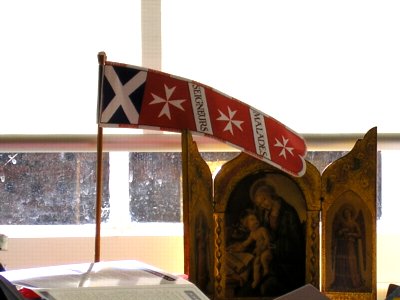
It was quite the enjoyable ball, as per usual. His Eminence the Cardinal Archbishop of St Andrews & Edinburgh was affable as ever. (Last year, a photo of His Eminence, Lt. Col. Bogle, Abigail, and myself at this very event made it onto the social page of Scottish Field. I hope that is as far as my life in the limelight goes!). I ran into Fra’ Freddie (Crichton-Stuart) and he exclaimed “What are you doing here!”, though he subsequently admitted that his “little spies” had, actually, informed him I would be popping over from New York. Ed Monckton shared an amusing tale of his late grandfather and the Duke of Wellington commandeering a tank to gain entry to a public house and disengaging street lamps by means of firearms. California’s own Chevalier Charles Coulombe, of course, talked to everyone, even the bouncers, who had a decidedly mafioso look to them this year. I, forgetfully, neglected to pick up a pack of Dunhills beforehand, but Gary Dench and I ran into Albert and he kindly offered his brand: an excellent, unfilitered variety of (naturally) German origin.
One of the unintended consequences of the Scottish smoking ban is an increase in socialization: a greater appreciation of the brotherly bonds of nicotine intake. Now that we of the smoking habit are forced to congregate outside entrances you have an instant bond of solidarity with complete strangers. I met an Austrian fellow named Camilo, an Edinburgh University student, and we agreed on the excellence of the Scottish system of higher education. (If one could dignify it with that term; perhaps ‘style’ is a better word than ‘system’). As it turned out, he had also spent some time in dear old Argentina, and so we swapped stories of the people and their particular ingenuity.
Later, Zygmunt introduced me to his son Nicholas, a very intelligent fellow who sounds terribly Scottish because he was educated in France rather than England with all the other Scots. (Alright, some Scots are educated in Scotland. There are Gordonstoun, Fettes, Glenalmond, and elsewhere needless to say). There were also two young Cypriot ladies, sisters if I recall correctly, who were very charming and whom we managed to drag onto the dance floor for a reel (and one of whom even managed to drag me onto the dance floor later in the evening). Typically, their names have been filed away in some deep but, alas, inaccessible fold of my brain. At any rate, we all agreed that the Turks ought to be given the boot. (Seems to be a recurring theme in European history, eh?).
Jamie Bogle was extremely late in arriving, and it turned out there was a story behind it. The trains from London were a typical shambles and there was every type of delay imaginable. Having used his mobile to make a phone call, the good Lieutenant Colonel was approached by another fellow asking if he could make a call. Jamie happened to overheard the fellow discussing “chambers” and so inquired if he (like Jamie) was a lawyer. The chap applied in the affirmative. Later in discussion, they discovered they were both actually heading to Edinburgh, and furthermore, as it turns out, to the Knights of Malta Ball! They realized they would both be terribly late, and so resigned themselves to the bar car, where they drank the train dry of champagne. The fellow’s name is Christopher Boyle, and he and his wife made for some excellent conversation, along with Amanda Crichton-Stuart, whom I singularly failed when sent to procure cigarettes for, as the few newsagents along George Street had shut by that time in the evening. I did, however, introduce her to Albert, who offered one of his cigarettes, and happily they seemed to get on well. Unhappily, the Sunday following, Albert’s Jack Russell terrier (who goes by the name of Cicio) took serious umbrage with my throwing a stick around with a female German shepherd Cicio clearly had eyes on. He ran up to me and bit me in the leg! Albert was very apologetic, and with a rolled-up newspaper and a “kommen zie here!” forced Cicio to likewise apologize. You know, as he lay prostrate before me with a teary look in his eye, I actually felt pity for the blighted creature which, only moments before, had planted its jaws on my right calf! Well, these things do happen.
On a more positive note, I actually won two prizes in the tombola raffle! A china mug bedecked with the insignia of the Sovereign Military and Hospitaller Order of Saint John of Jerusalem of Rhodes and of Malta and a placemat with an unrecognizable coat of arms emblazoned upon it. I shall have to get my heraldic detectives to work investigating the bearer of the arms; needless to say I will be quite prepared should he come for dinner.
EVENTUALLY, THE BELLS tolled and the staff encouraged us to exeunt the Assembly Rooms and we duly complied. There was then some prolonged pondering about after-parties. Zygmunt, Nicholas, and myself made a foray into the hopping Opal Lounge across the street, but I found it not to my particular liking (too loud! too crowded!) and thus decided to retire to bed. All in all a much-enjoyed evening. I congratulated Henry Lorimer on the night for having pulled it all off. “You have no idea how glad I’ll be when tomorrow comes!” was his response. Well, all the organizers deserve our thanks and appreciation. I have been to the ball four years in a row now and each time it has been excellent, though, because of the variety of parties I’ve gone with, excellent in very different ways. I wonder if I will attend next year? I hope so, as the more excuses to go to Edinburgh I have, the happier I shall be.
Hitchcock in Québec
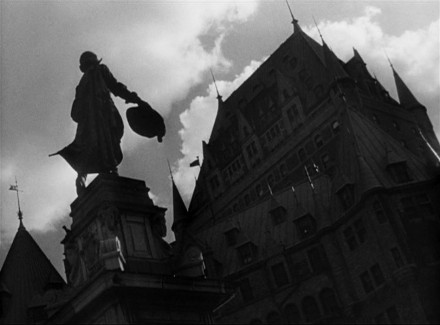
QUÉBEC, THAT STRANGE and charming province, is a most intriguing nation. It is where the British, French, and American tendencies clash and combine to form that most peculiar of all American varieties: le Québécois. Of course, since the 1960s Québec has become more French; no, not more French but more like France in that every year it plunges deeper into the depths of self-loathing: that hatred of one’s own tradition and history which has so marked out “the new Europe”. It is a race to assert one’s self by destroying any living connection to one’s past. Un jeu du fou. More’s the pity, as this once-vibrant melting pot of traditions expressed itself in interesting ways.
A splendid display of this Québec can be found in Alfred Hitchcock’s 1953 drama I Confess. The film had been recommended to me often and I finally got around to seeing it tonight. I won’t give away any of the plot, which is a good one, but Hitchcock lives up to his reputation with his excellent framing of the scenes. (Though I must admit, half of it is merely the settings in the Ville de Québec themselves). They include a peek into the Québécois Parliament. Above the Speaker’s dais is displayed not only the Sovereign’s arms, but also a crucifix, exhibiting our loyalties both temporal and spiritual. In the court room you find yet another blend of the Anglo and the French. As you no doubt recall from our handy little map, Quebec is a country with a mixed legal system. Founded as Nouvelle-France it had the civil system derived from the Romans. Captured by the British and later transformed into part of the Canadian Confederation, it has accrued layers of the Common Law so dear to we Anglos. The officials of the court wear British-style robes — the judge even has a tricorn hat — but over the jury looms a large crucifix. English government and French culture tempered by Catholic truth; not a bad mixture.
Anyhow, if you haven’t seen the film yet, here are a few snaps to enjoy until your Hitchcockian thirst is satiated. (more…)
Search
Instagram: @andcusack
Click here for my Instagram photos.Most Recent Posts
- Brunel’s Unbuilt Capitol February 3, 2026
- Cricket at Fordham January 27, 2026
- Palacio Barolo Revisted January 14, 2026
- Learning to Love Liguria January 14, 2026
- Crux Alba No. 2 January 13, 2026
Most Recent Comments
Book Wishlist
Monthly Archives
Categories