Arts & Culture
About Andrew Cusack
 Writer, web designer, etc.; born in New York; educated in Argentina, Scotland, and South Africa; now based in London.
 read more
News
Blogs
Reviews & Periodicals
Arts & Design
World
France
Mitteleuropa
Knickerbockers
Argentina
The Levant
Africa
Cape of Good Hope
Netherlands
Scandinavia
Québec
India
Muscovy
Germany
Academica
The Old Irish Parliament House
Please see the updated article of the Irish Houses of Parliament, College Green, Dublin here.
Risen from the Ashes
by Austin Ruse
Sursum Corda, Summer 1998
The first wholly traditional Catholic parish structure built since Vatican II could not be situated in a more central location, at a more opportune time. New York is enjoying an astounding 1990s rejuvenation, bulging with tourists and new business. St. Agnes Church is at the center of it all, in midtown Manhattan, near Grand Central Station.
 Only at St. Agnes in New York City can an orthodox churchman be attacked from the right. Yet there they were, a dedicated band of angry young people picketing Msgr. Eugene V. Clark at Mass only one week after St. Agnes had burned nearly to the ground in late 1992. Their charge? That the good Monsignor intended to replace the old brick Gothic structure, now ruined, with what they called a “Swedish-Igloo-Modern.” Monsignor Clark never gets mad, but he got mad that day – although today he looks back on the incident with amusement. He even saved one of their flyers and is considering having it framed.
Did those excitable young men and women actually live within the parish boundaries of St. Agnes? No. But then hardly anybody actually lives in the East 40s. St. Agnes has maybe 100 to 150 residential parishioners. Nobody really cares, either; and this is one of the charms of St. Agnes. It is a commuter church located next to one of the busiest ports of call in the world, Grand Central Station. St. Agnes Church is a place that is searched out, discovered, chosen. To many it seems that St. Agnes chooses them.
But there was that awful day when many thought it might close. (more…)
The Vicious Carbuncle of Brooklyn
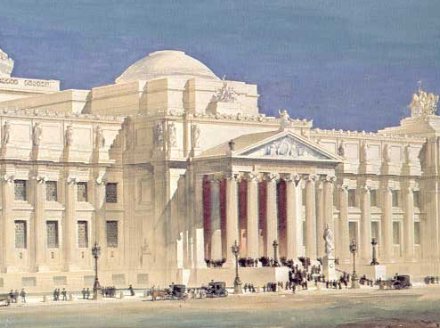
The Brooklyn Museum ought to be ashamed of itself. Though frequently overshadowed by its civic compatriot, the world-class Metropolitan Museum of Art in Central Park, this institution in Brooklyn’s Prospect Park is still considered one of the best museums in the United States. Its overall design was the work of the renowned McKim, Mead, and White who planned a sprawling beaux-arts palace for what was then known as the Brooklyn Insitute of Arts and Sciences. Their own illustration of the final design can be seen above and below (click the below image for a larger version). (more…)
Calatrava’s St. John the Divine
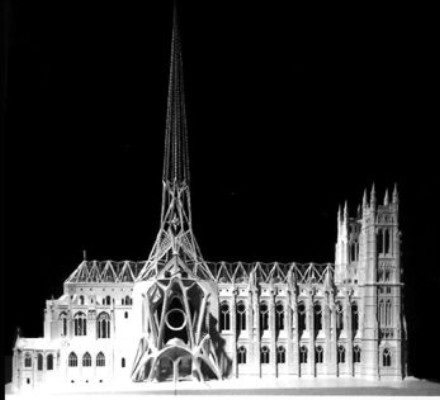
I’ve always somewhat admired Santiago Calatrava’s plan for the completion of the (Episcopalian) Cathedral of St. John the Divine here in New York. It was commissioned in the 1980’s by the über-dodgy Rev. James Parks Morton, dean of the Cathedral at the time. Morton was responsible for turning “St. John the Unfinished” into the hippie-trippy-ecumenical-syncretist-pagan-temple-cum-performing-arts-center it is known as today, and came up with this scheme to try to bring the cathedral to completion. (The plan has since been abandoned and all construction ceased a decade ago; scaffolding remains because the cost of removing it was judged to be too high).
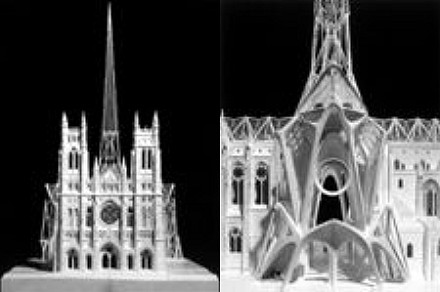
 The plan involved a ‘biosphere’ garden being planted atop the nave in the giant greenhouse formed by Calatrava’s lithely arches. Though I much prefer the crossing tower in the design by Ralph Adams Cram, I still think that Calatrava’s plan is rather exciting. It only succeeds, however, because Cram and (Heins & Lafarge before him) laid an ample beautiful foundation (well, obviously quite much more than that) for Calatrava to complete. The cathedrals which Signor Calatrava has designed completely himself have been completey devoid of aesthetic appeal, as well as conceived outside of the millenia-long tradition of church architecture.
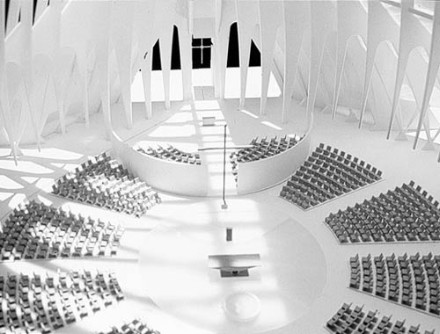
The (Catholic) Diocese of Oakland commissioned Calatrava to design their new ‘Cathedral of Christ the Light’ after the old seat was greatly damaged in an earthquake. Despite the vacuousness of the design (model below), Signor Calatrava proved to be outside the Diocese’s budget, and his second-rate design was shelved and replaced with a third-rate design of a vaguely similar ilk. The third-rate design is the one which will be built, though a first-rate proposal in the vernacular style natural to California has been drawn up by Mr. Domiane Forte. Methinks Signor Calatrava should stick to his catchy bridges.
Brownson on the Scholar
St. Gregory’s, Brooklyn
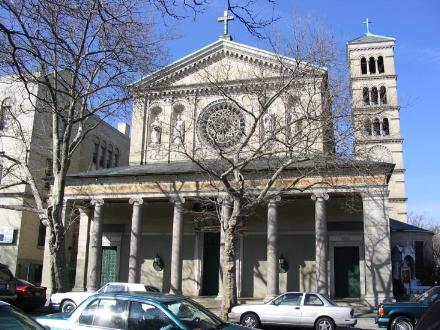
“St. Gregory’s Church of 1917, located at Brooklyn Avenue and St. John’s Place, was closely based on the ‘idealistic ground plan’ of St. Clement in Rome, an archetypal basilica with an open, colonnaded narthex and a tall engaged campanile on one side of the nave. In keeping with its prototype, St. Gregory’s was gaudily decorated with figural frescoes and mosaics.” – New York 1930
It seems a rather pulchritudinous church; I’ll have to add it to the list of places to visit. It was designed by Helmle and Corbett, who were also responsible for the Bush Tower, built a year later. The Bush Tower will soon get a brand new neighbor, seen below.
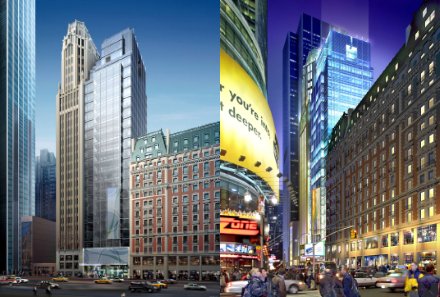
Top photo lifted from the ever-nifty Bridge and Tunnel Club‘s Walk Down Brooklyn Avenue.
Boldt Castle

Boldt Castle would have been among the finest homes in all New York had it ever been completed. The estate was started by Prussian immigrant and hotel entrepreneur George Boldt in the early 1900’s, and was intended to be presented to his wife Louise on St. Valentine’s Day. Tragically she died in 1904 before the castle was completed and work on the nearly-finished home stopped. The Boldts never returned to the island.
The small island estate is impressive nonetheless. It rests in the middle of the Saint Lawrence River on what was originally called Hemlock Island in the Thousand Islands region of New York. The island was renamed Hart Island when purchased by Congressman E.K. Hart, and upon being sold to the Boldts, the spelling was changed to Heart Island. (more…)
Rip van Winkle
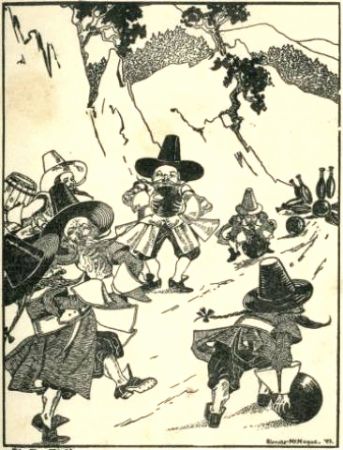
When was the last time you read the story of Rip van Winkle? If you’ve never had that pleasure, then you are all the worse for it, my friend. The tale was handed down to us through the ages by the munificence of one Diedrich Knickerbocker, though some sore-minded rapscallion later credited the ever-capable Washington Irving with its invention. Anyhow, it is one of my favorite tales in all the history of New York. It’s a short story, and worth a read online if you haven’t a printed copy immediately at hand.

The tale, of course, revolves around “a simple good-natured fellow”, namely Rip van Winkle, and his encounter with “odd-looking personages” whom still to this day show themselves around the Hudson valley. We merely have ceased to hear reports of them because thoroughly unimaginative types are in control of the world these days. (The “monotony monitors” as my Latin teacher monikered them, enforcing boredom and mediocrity at every possible opportunity).
The genealogists amongst you will be interested that Mr. Knickerbocker notes this van Winkle was “a descendant of the Van Winkles who figured so gallantly in the chivalrous days of Peter Stuyvesant, and accompanied him to the siege of Fort Christina.” Now, for want of fast-paced action, you may not have any particular desire to read about a simple, good-natured fellow like Rip van Winkle, but desires aside you must read “the Most Horrible Battle Ever Recorded in Poetry or Prose” (Chapter VII of Book VI of the same Diedrich Knickerbocker’s A history of New York, from the beginning of the world to the end of the Dutch Dynasty). The record of the siege of Swedish Fort Christina by the good New Netherlandish is the most hilarious and enchanting chronicle of any battle anywhere.
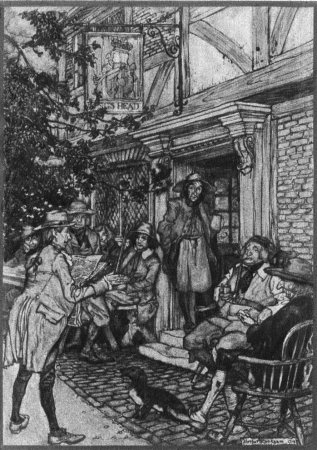
Old Men Playing Chess

Santiago de Chile, May 24, 2005. Photograph by Lucas de Soto.
New Globe Theatre
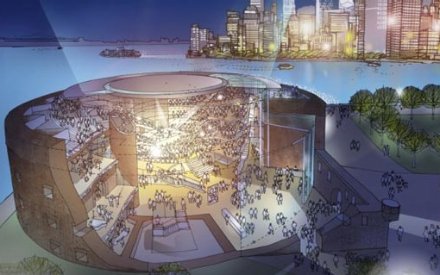
Plans are afoot for the construction of a New Globe Theatre in the middle of Castle Williams on Governors Island in New York Harbor. The theatre would be of the same concept as Shakespeare’s old Globe, now reconstructed close to the original site in Southwark, London. (more…)
Which Way Forward for the Sun?
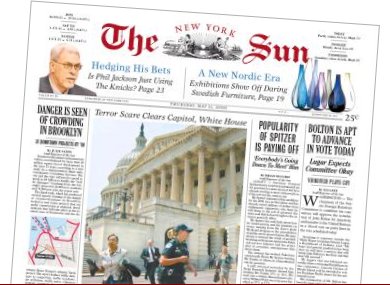
Marty Browne, a loyal reader from Queens, has brought to my attention that a hooplah has taken place in a few media outlets recently concerning our beloved New York Sun. Essentially, two memos written by Robert Messenger, deputy managing editor of the Sun, were somehow leaked to Gawker, Gotham’s flitty rumor mill, and posted on May 11, 2005.
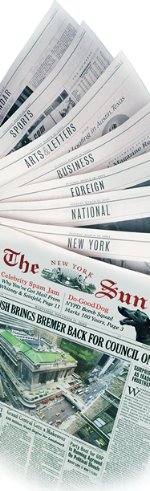 The two memos deal with the state of the Sun at the moment and highlights some concerns over its long-term future, suggesting something of a ‘back to basics’ course for the three-year old conservative broadsheet. Our friend Mr. Browne was concerned enough to write a letter to the editor cautioning against changing our beloved Sun, bar adding a few more voices from the old right (advice which should be heeded). But having read the memo, I think it offers a frank analysis of the paper today and productive suggestions for the direction it should go in.
Essentially, what the Sun has to do is decide what it will be. It would be excellent if New York could have a general interest conservative broadsheet newspaper. However, given the overwhelmingly liberal market, I doubt the city’s ability to support such an endeavour; a luxury we sadly cannot afford.
In the mad media market of Manhattan, the most reliable option for the Sun is not as a general interest paper, a more financially-precarious model, but instead to find a niche in which to solidly rest. The weekly New York Observer, only born in the nineties, has a niche which gives it a fairly firm foundation provided it continues to serve it well, and the Sun should take note of that.
Thus the niche market is the way to go. What niche though? In my opinion, the New York Sun should be three things: 1) Conservative, 2) High-brow, 3) Metropolitan.
1) The Conservative Newspaper: The right-minded mustn’t just give up and concede New York as legitimately 100% liberal. This simply would not reflect reality, and the Sun must continue to provide a conservative voice on a higher scale than the populist New York Post.
2) The High-Brow Newspaper: Arts & Letters is already the most flourishing section and long may it continue. James Gardner on great on Architecture and I am absolutely loyal to the architectural historian Francis Morrone’s ‘Abroad in New York’ column every Monday. The Editorial and Opinion sections provide good sound argument and discussion, but could do with expansion.
3) The Metropolitan Newspaper: Of course it must continue to be an intrinsically New York paper. Coverage of the civic, political, and social sides of the city are essentially. This department has been pretty solid and consistent, and should only be augmented.
Should the New York Sun aim to be the conservative, high-brow, metropolitan newspaper, I believe it will be a winning formula, and set the newspaper well along on path towards becoming a great New York institution, if it isn’t one already.
(Continue reading for my thoughts on a few of Mr. Messenger’s points.)
New Washington Square Plans

The Parks Department have unveiled their plans for the renvoation of Washington Square Park. I thouroughly approve. The main point is the replacement of the fountain with one along the axis of the Arch. This is a great improvement. The current layout of the Square is from when the road arrangement allowed you to drive through it, through the Arch in fact. When the Square was completely pedestrianised, they merely redirected and turned the former roads into paths, without any general rethink of the Square’s arrangement. The new plan orients the park around the Arch’s axis, which terminates on the N.Y.U. Catholic Church on Washington Square South. Unfortunately, the Church is a grievous 1970’s monstrosity ripe for being torn down and replaced by some of the bright gang from Notre Dame. (more…)
The Catholic Apostolic Church, Edinburgh
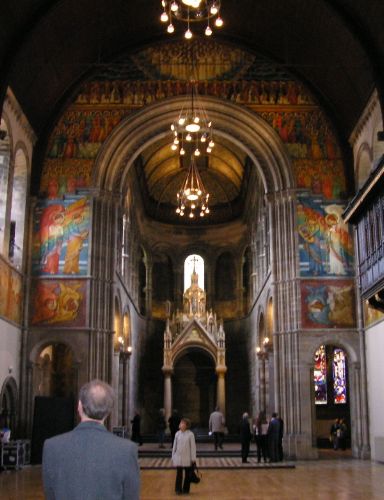
THIS AFTERNOON, Fr. Emerson and I paid a visit to the former Catholic Apostolic Church on Mansfield Place in Edinburgh, which is today the Mansfield Traquair Centre. The Catholic Apostolic Church, quite often called the Irvingites after the Church of Scotland minister who laid the basis for its creation, were a curious lot. A discussion of the CAC can be found here at Ship of Fools and, of course, Wikipedia has an article on them. Due to a number of wealthy converts as well as being fairly strict on tithing, the Irvingites were able to build some extraordinarily beautiful buildings, of which the Mansfield Place church is one. Vacated by the Catholic Apostolic Church in 1958, it is now used as a performance venue, and two floors of offices created in the crypt space (entered through a spiral staircase in what was the baptistery) provide a home for the Scottish Council of Voluntary Organisations. (more…)
Taki on the Sun

In this week’s Spectator, the ‘poor little Greek boy’ Taki informs us of a feud between the Dorothy Parker Society and the F. Scott Fitzgerald Society. Apparently the DPS invited the FSFS to a big to-do at the Algonquin and the FSFS didn’t even respond. “I get all this info from my favourite Big Bagel paper, the Sun, or the Sharon, as I call it, because of the line it follows where Israel is concerned.” I love the Sun, and I’m very glad Taki has discovered our favorite New York daily. He continues:
Benchley, like Parker, was a founding member of the Algonquin round table, and was known to have spilled more booze than F. Scott ever downed. Unlike the latter, he could hold it. Emerging once from the Waldorf Astoria, he commanded a doorman to get him a taxi. ‘How dare you, Sir,’ came the answer. ‘I am a United States admiral.’ ‘Well, in that case,’ said the well-oiled Benchley, ‘get me a battleship.’
Moving along…
I have not read his book, which is coming out sometime next year, but press reports have it that he was delighted by what he discovered. His accounts apparently have no condescending references to the kitsch or to materialism, which so many of us Europeans refer to every time we write about or mention America. That’s because he went to places like Cooperstown, New York, where the baseball hall of fame museum is located, or to Pennsylvania, among the Amish. (Not much materialism among that lot, that’s for sure.) And a poignant moment, when he is accosted by a Michigan policeman and told to stop loitering and to keep moving — BHL is relieving himself in a field — and he informs the cop that he’s a Frenchman and that he’s following Tocqueville’s footsteps, which results in a pleasant conversation.
Yes, Americans are nice people who want to be nice and do not understand why the Europeans hate them so. Our own Paul Johnson explained it all some weeks ago when he said that, if he were younger, he’d move to the land of plenty. Sure, manners are not an American strong point, nor is its taste for music and movies. But the natives are friendly, vulgar and nice, which is a lot more than I can say for some of us from the old continent.
I seem to have misplaced or thrown out (shudder!) the Speccie with Paul Johnson’s salient words urging and young people with talent in Britain to move to America, but if I do find it, I shall post his words of hope.
Grant’s Tomb
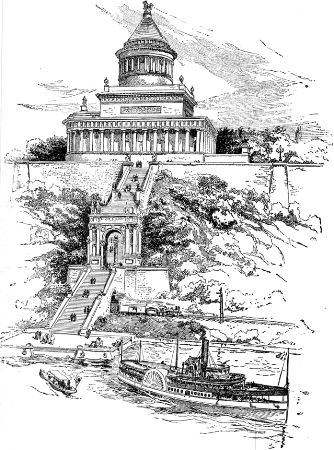
I came across this illustration of the original plan for Grant’s Tomb in Riverside Park on the Upper West Side, back home in New York. The differences are conceptually slight, except for the complete lack of this grand staircase and triumphal arched watergate on the Hudson River, which was never constructed. It would be an intriguing addition if built, but I think slightly awkward, as it leads up to the side of the mausoleum, rather than the front. Had the tomb been constructed with its orienation towards the Hudson rather than on the axis of the long Riverside Park, it might be sucessful, but otherwise, it was wise of the city fathers not to execute this part of the plan.
For more views of Grant’s Tomb, see the Bridge and Tunnel Club’s page.
‘The Pope: A Portrait from Life’
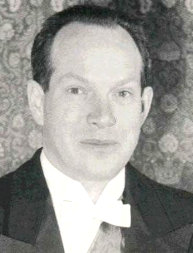 LAST NIGHT I finished reading ‘The Pope: A Portrait from Life’ by Constantine, Prince of Bavaria, about Pope Pius XII (who I thought had already been beatified, but not yet). It is definitely one of the biographies I have most enjoyed, perhaps even most enjoyed. The book’s strength lies not in academic depth nor in attention to detail but in giving the reader a great insight into the great man who Pius XII was. From his brilliant diplomacy, working for peace during the First World War under Pope Benedict XV, warning of the dangers of National Socialism as nuncio to Germany under Pope Pius XI, his own accession in 1939, and his tireless efforts to give shelter to all who were in need: Socialists, Communists, Jews, Christians, Atheists, Liberals, Royalists, Republicans, escaped Allied prisoners of war, and after the war, fascists, collaborators, Germans, and others whose lives (and souls) were equally in danger. There was no barrier of race or religion or party or ideology. Indeed, the Grand Rabbi of Rome, sheltered by Pius XII during the war was so inspired by him that three years after the war ended, he became a Christian, taking the name ‘Eugenio’, Pius’s birth name.
‘The Pope: A Portrait from Life’ tells the story of Eugenio Pacelli with anecdotes and stories from all the people surrounding this, the most lied-about figure in the history of the twentieth century. I strongly recommend this book to anyone interested in the life of Bl. Pius XII. It is almost cinematic as it moves from scene to scene, from the present (Rome 1954) to the past, in Rome, in Germany, in America over the years of Eugenio Pacelli’s career as priest, churchman, diplomat, and finally pontiff.
Constantine himself (pictured above) is interesting in his own right. Born in 1920, with all the Royal House of Wittelsbach he was kicked out of the German Army by Hitler and, in 1944, arrested by the Gestapo. Liberated by the French, he went on to work for the International Red Cross, until 1947 when he went to work in the Munich office of the Associated Press. In 1950, he became editor of Germany’s Revue magazine, and was later elected to the Bundestag. Unfortunately, he died in an air crash in 1969. This book as evidence of Contantine’s adroitness in the journalistic profession. It is no longer in print, sadly, and so hard to find, but if you do ever happen to come across it, buy it, read it; you will not be disappointed.
‘For Christ and Liberty’
Though a purely Protestant institution (literally), I am rather fond of Patrick Henry College. Indeed, it takes some courage in this day and age to only admit students willing to sign a ten-point profession of Protestant Reformed faith. They also happen to have an old-fashioned ball featuring ‘English country dancing, delicacies such as cream puffs and truffles and leisurely strolls about the scenic grounds of the historic Selma Plantation’.
Anyhow, the college, whose motto is ‘For Christ and Liberty’, was visited Anthony Esolen, a contributing editor to Touchstone magazine, who makes these comments:
That such a request came was no surprise. Its provenance is, and cheeringly so. For this De Tocqueville Society is made up of a group of students at the new Patrick Henry College, founded by Mike Farris, the President of the Home School Legal Defense Association. More than ninety percent of the college’s students were homeschooled. If there’s a Roman Catholic in the bunch, I’ve yet to hear about it, and I’ve been to that campus twice to give lectures. [Note: Esolen does not seem to be aware that PHC requires its students to be Protestant.]
More on that in a moment. I could spend all evening singing the praises of PHC (as the students fondly call it), but let me share one discovery I made that should gratify Touchstone readers. The first time I spoke there, two years ago, I was stunned to meet young men and women who—who were young men and women. I am not stretching the truth; go to Purcellville and see it for yourselves if you doubt it; I believe my wife took a couple of pictures, just to quiet the naysayers. The young men stand tall and look you in the eye—they don’t skulk, they don’t scowl and squirm uncomfortably in the back chairs as they listen to yet another analysis of Rebecca of Sunnybrook Farm, or one of the healthier poems of Sylvia Plath. They’re frank and generous and respectful, but they hold their own in an argument, and they are eager to engage you in those. They are comfortable in their skins; they wear their manhood easily. And the young ladies are beautiful. They don’t wither away in class, far from it; but they wear skirts, they are modest in their voices and their smiles, they clearly admire the young men and are esteemed in turn; they are like creatures from a faraway planet, one sweeter and saner than ours.
Two years ago I spoke to them about medieval Catholic drama. They are evangelicals, half of them majors in Government, the rest, majors in Liberal Arts. They kept me and my wife in that room for nearly three hours after the talk was over. “Doctor Esolen, what you say about the habits of everyday life—to what extent is it like what Jean Pierre de Coussade calls ‘the sacrament of the present moment’?” “Doctor Esolen, do you see any connections between the bodiliness of this drama and the theology of Aleksandr Schmemann?” “Doctor Esolen, you have spoken a great deal about our recovery of a sense of beauty, but don’t you think that artists can also use the grotesque as a means of bringing people to the truth?” “You’ve suggested to us that Christians need to reclaim the Renaissance as our heritage, yet we are told that that was an age of the worship of man for his own sake. To what extent is the art of that period ours to reclaim?” And on and on, until nearly midnight.
The questions were superior to any that I have ever heard from a gathering of professors—and alas, I’ve been to many of those. I mean not only superior in their enthusiasm and their insistence, but in their penetrating to the heart of the problem, their willingness to make connections apparently far afield but really quite apropos, and their sheer beauty—I can think of no better word for it.
A few weeks ago I was in town for another talk, on the resurrection of the body. The Holy Father had passed away. At supper, ten or fifteen of the students packed our table, to ask questions before the talk. They were reverent and extraordinarily well informed; most especially they were interested in the Theology of the Body. The questions on that topic continued after the lecture, and I had the same experience I’d had before, but now without the surprise.
And these are the young people who are devoting an entire issue of their journal to the thought of Cardinal Ratzinger, now the new head of the Roman Catholic Church. They are hungry to know about him; in the next week or two they will do what our slatternly tarts and knaves, I mean our journalists, have never done and will not trouble themselves to do, and that is to read what Benedict XVI has said, read it with due appreciation for their differences with him, and due deference to a holy and humble man called by Christ to be a light not only to Roman Catholics but to all the nations.
These students don’t know it, but in their devotion to their new school (they are themselves the guards, the groundskeepers, the janitors; they ‘own’ the school in a way that is hard to explain to outsiders), they live the community life extolled by Leo XIII in Rerum Novarum; in their steadfastness to the truth they are stalwart participators in the quest set out by John Paul II in Fides et Ratio; in their welcoming of me and, God bless them, of the good Benedict XVI, they live in the true spirit of Lumen Gentium, that greathearted document of the council so often invoked for the lame tolerance of every betrayal of the ancient faith. And for what it’s worth, they are readers of Touchstone Magazine.
Be silent, Greeleys and Dowds of the world. These young people have you whipped, if for no other reason than that they believe in the One who is Truth, and who sets us free. How can I praise these my young brothers and sisters any more highly? God bless them and Patrick Henry College. And the rest of us, let’s keep an eye on them. We’ll be seeing quite a harvest from that seedbed!
Many of the points Esolen commends are things I hope will be found in the colleges of my university when I get around to starting it. I particularly admire that Patrick Henry College’s young men and women are just that, according to Esolen. This is all too often hard to achieve in modern American higher education, where students are quite often just elderly adolescents. (Though I suspect this has more to do with parents and family than education).
The absurdist drinking age that the Federal government underhandedly coerced each state into passing hinders maturity as well. Indeed, when I start the first college or colleges of the university I’m planning, each will have a private college bar which will serve anyone over the age of 16 or so. (Probably at the barman or barmaid’s discretion). Civil disobedience is the only solution.
Though the graduates Patrick Henry College provides will be Protestant (at least at the time of their graduation), I have no doubt that they will act as leaven to raise up the social and political life of our United States. I’m not particularly fond that they proudly advertise their commendation as “One of America’s Top Ten Conservative Colleges”. I’m not of the view that colleges ought to be ‘conservative’ or ‘liberal’ per se. They ought to be seen more as communities of inquisitive, curious, intelligent people united in the quest for truth. Labels like ‘conservative’ and ‘liberal’ are far too narrow and allow the simple-minded to pidgeon-hole things which are too complex for such monikers.
But anyhow, cheers for Patrick Henry College.
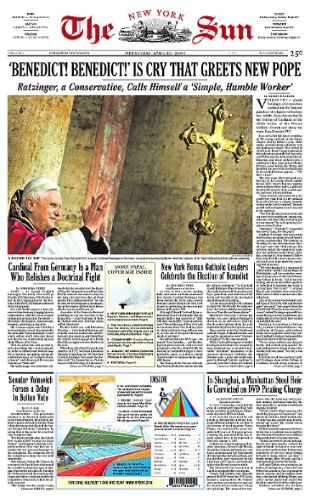
The Rites of Saturday Morning
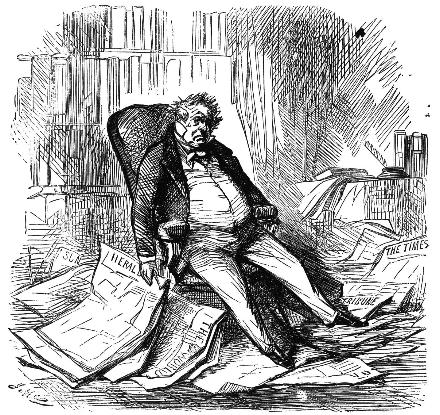
ORDER OF SERVICE
Entrance (silence)
(The officiant then organises the various sections of newspaper into the order in which they shall be read. Frivolities, such as ‘Gardening’, ‘Motoring’, and ‘Money & Business’, are discarded.)
First Reading: The Daily Telegraph, first section
Second Reading: The Financial Times, first section
First Glance: The Daily Telegraph, Weekend section (Rarely anything worth reading inside, but tradition requires at least a glance)
Third Reading: The Daily Telegraph, Property section
Nourishment: A sugar doughring from Fisher & Donaldson’s (Members of all newspaper-reading denominations are invited to partake, but are encouraged to abide by the rules of their respective communities)
Fourth Reading: The Financial Times, Weekend section (The best weekend section there is. Short and varied.)
Second Glance: The Daily Telegraph, Travel section (Ditto notes on Telegraph Weekend section)
Fifth Reading: FT Magazine
Final flip through the pages: (ruffle, ruffle, ruffle)
Exit. (The assembled then disperse and carry on with their day).
Search
Instagram: @andcusack
Click here for my Instagram photos.Most Recent Posts
- Brunel’s Unbuilt Capitol February 3, 2026
- Cricket at Fordham January 27, 2026
- Palacio Barolo Revisted January 14, 2026
- Learning to Love Liguria January 14, 2026
- Crux Alba No. 2 January 13, 2026
Most Recent Comments
Book Wishlist
Monthly Archives
Categories