Arts & Culture
About Andrew Cusack
 Writer, web designer, etc.; born in New York; educated in Argentina, Scotland, and South Africa; now based in London.
 read more
News
Blogs
Reviews & Periodicals
Arts & Design
World
France
Mitteleuropa
Knickerbockers
Argentina
The Levant
Africa
Cape of Good Hope
Netherlands
Scandinavia
Québec
India
Muscovy
Germany
Academica
The Finest Library in All New York
Or is it in all the New World?
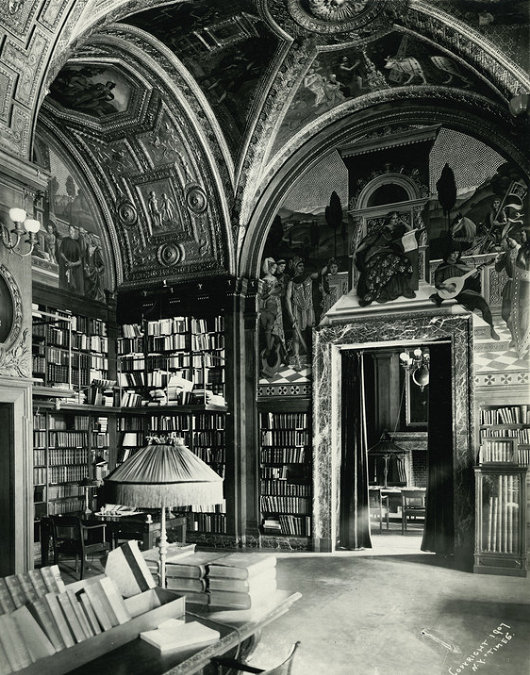
I do miss my two libraries in Manhattan, the Society Library on 79th Street and the Haskell Library at the French Institute on 60th. Neither of them, however, are fit to shine the boots of the library of the University Club on 54th & Fifth. Architecturally and artistically, it is undoubtedly the finest library in New York. But does it have an equal or a better in all the New World? The BN in BA certainly isn’t a competitor.
Old Radders
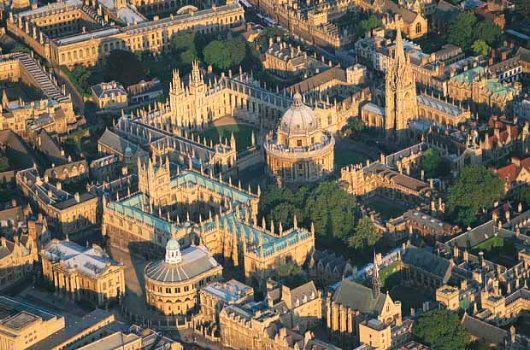
The devil in me, while entirely appreciative of the beauty of Radcliffe Camera, sometimes wonders if the handsome square it is in might be better off without it. What would it look like?
Wupperthal in die Wes-Kaap
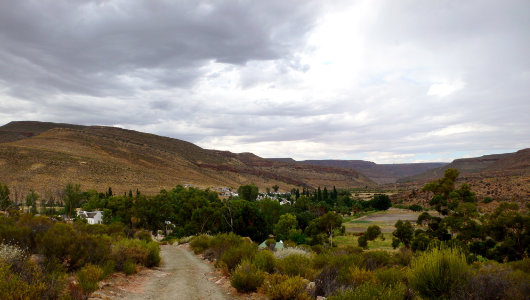
Deep in the Cedarberg, in the northern reaches of the Western Cape, there is a lovely little Moravian mission in a valley called Wupperthal. Unless you have a 4×4, there is just one road in and out of the valley, and even that road can be a bit tricky for conventional vehicles. Barefoot children, smiling and carefree, play in the streets beneath the avenue of eucalyptus that perfectly frames the beautiful church. Genadendal is the most famous of the Moravian missions, but Wupperthal was actually founded by Rhenish missionaries, before briefly becoming Dutch Reformed in the middle of the last century, and then taken over by the Moravians, or Herrnhuters as they are called in Afrikaans, after the Sorbian stronghold of the Unitas Fratrum.
Russia’s Treasures on the Banks of the Amstel
Seventeenth-century Amsterdam building will, from June, be home to collections from St. Petersburg’s Imperial Hermitage Museum
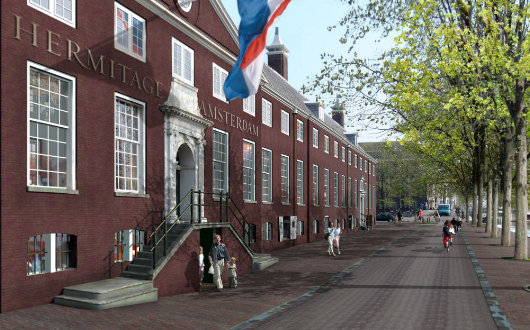
A new 100,000-square-foot space displaying works from the Hermitage Museum in St. Petersburg will open in Amsterdam this June. The Hermitage Amsterdam will be located in the Amstelhof, a former home for the elderly built in 1683 by the Dutch Reformed Church and transformed into a modern exhibition space by Hans van Heeswijk Architects. The opening exhibition, “At the Russian Court” — a “a deeply researched exploration of the opulent material culture, elaborate social hierarchy and richly layered traditions of the Tsarist court at its height in the nineteenth century” — will display 1,800 works from the massive collection in St. Petersburg and continue until the end of January 2010.
New York Firm Tapped for Restoration of Budapest Landmark
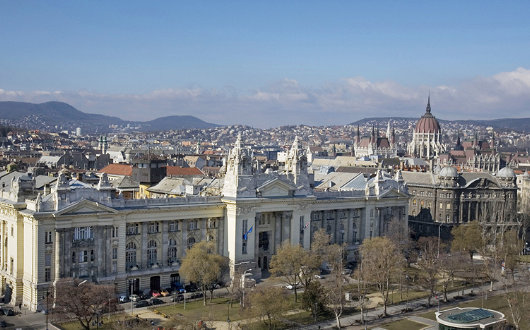
The New York firm of Beyer Blinder Belle, responsible for the restoration of Grand Central Terminal, has been selected to develop “an adaptive reuse and restoration plan” for Exchange Place, a historic building on Budapest’s Freedom Square (Szabadság tér). Exchange Place was built in 1905 for the Budapest Stock and Commodities Exchange, and includes a number of ornamental details in the Hungarian style of the Secession architectural movement. After the Soviet conquest of Hungary, the building became the Lenin Institute before being given over to the state television broadcaster.
First Troop, Philadelphia City Cavalry
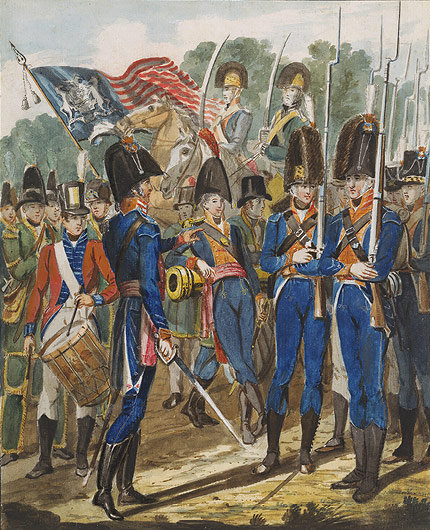
Watercolor, gouache, and graphite on white laid paper, 9 in. x 7 1/4 in.
c. 1811-1813, Rogers Fund
Previously: The Prince of Wales in Philadelphia
Some Afrikaners
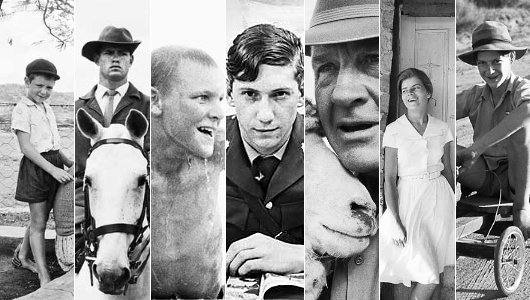
“In my father’s shop,” writes the photographer David Goldblatt, “serving Afrikaners, I found, almost in spite of myself, that I liked many of them and, to my surprise, that I was beginning to enjoy the language. There was a warm straightforwardness and an earthiness in many of these people that was richly and idiomatically expressed in their speech. And, although I have never advanced beyond being able to speak a sort of kombuistaal, I delighted in our conversations. Yet, withal, I was very aware that not only were most of these people Nationalists, strong supporters of the Party and its policies, but that many were racist in their very blood. Although anti-Semitism was now seldom overt, they made no secret of their attitude to blacks, who at best were children in need of guidance and correction, at worst sub-human. I was much troubled by the contradictory feelings of liking, revulsion, and fear that these Afrikaner encounters aroused in me and felt the need somehow to come closer to these lives and to probe their meaning for me. I wanted to do this with the camera.
“I had begun to use the camera long before this in a socially conscious way. And so I began to explore working-class Afrikaner life in our district. I drove out to the kleinhoewes around the town. I would stop and ask people if I might do some portraits of them or spend time with them while they went about whatever they were doing. In this way I became intimate with some of the qualities of everyday Afrikaner life in these places, and with some of its deeply embedded contradictions.
“An old man sits for me. A black child comes and stands next to him, looking at me with curiosity. The man turns and says to the child, ‘Ja, wat maak jy hier, jou swart vuilgoed?‘ (Yes, what are you doing here, you black rubbish?), the insult meant and yet said with affection. How is this possible? I don’t know. But the contradiction was eloquent of much that I found in the relationship between rural and working-class Afrikaners and blacks: an often comfortable, affectionate, even physical intimacy seldom seen in the ‘liberal’ circles in which I moved, and yet, simultaneously, a deep contempt and fear of blacks. …
“Travelling through vast, sparsely populated parts of the country with my camera became a major part of my life at that time. I think that our landscape is an essential ingredient in any attempt at understanding not just the Afrikaner but all of us here. We have shaped the land and the land has shaped us. Often the land was unforgivingly harsh. Yet, the harsher the landscape the stronger the Afrikaners’ sense of belonging seemed to be. Many of the people whom I met in the course of those trips had a rootedness in the land of which I was very envious. Envious in the sense that I couldn’t claim 300 years of ancestry in this country. Yet, increasingly, I felt viscerally bonded to it.”
The Groote Kerk
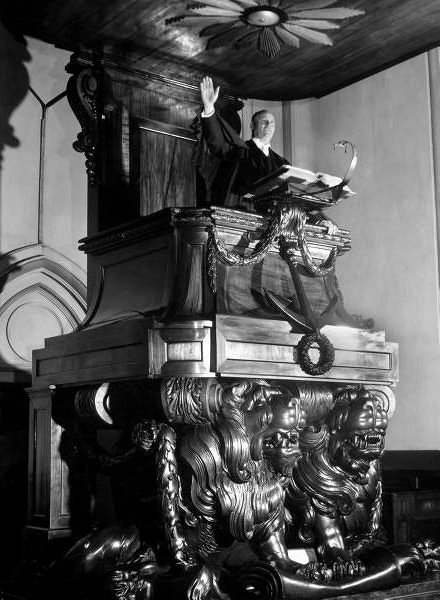
Dr. van der Merwe, moderator of the Dutch Reformed Church, poses in the splendidly carved pulpit of the Groote Kerk in Cape Town.
How bad journalism infects religion reporting
Tom Kington & Jamie Doward of The Observer lead the way
“Pope stirs up Jewish fury over bishop: The Vatican is reinstating a British priest who denies millions died at the hands of the Nazis. … Tension between the Vatican and Jewish groups looked set to explode yesterday after Pope Benedict XVI rehabilitated a British bishop who has claimed no Jews died in gas chambers during the second world war.”
Or rather, not. All the Holy Father has done is lift Bishop Williamson’s excommunication. Bishop Williamson’s excommunication had nothing to do with his holocaust denial, but rather with his willful disobedience to authority. Thus the lifting of his excommunication is in no way a “rehabilitation”, nor an endorsement of his dodgy views on history, but merely to do with the offense or state which brought about excommunication.
For some reason, this kind of misleading disinformation (whether out of malicious intent or just not being very good at one’s job) infects religion reporting more than any other field in the British media. You would think people would study or learn about the institutions they report about, but that no longer seems a requirement of the job as it presumably once was. Go figure.
Passenger Ship Chapels
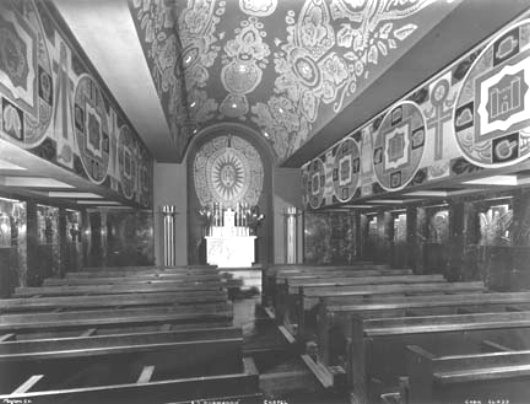
Above & below: the SS Normandie. The Normandie was seized by the U.S. government and renamed the USS Lafayette but burned in New York harbor before she could be put to good use in the war effort. The bronze doors to the chapel were salvaged and now grace the Church of Our Lady of Lebanon in Brooklyn.
South Africa
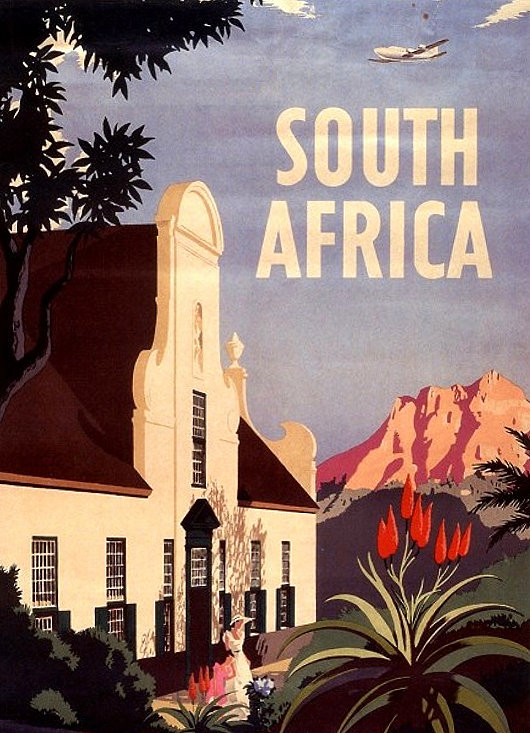
I‘m afraid that blogging may be lighter than usual for the next few months, as I have gone into voluntary exile in South Africa. Internet access can be a bit tricky deep in the verdant winelands of the Western Cape, but I will certainly endeavour to send a few updates, not to mention some of the usual variety of posts (a number of which are currently cooking in the oven). It’s a rather handsome town I’m in, as this page shows.
Berlin to build ersatz Stadtschloß
Afraid of celebrating glorious past, a horrible future is created instead
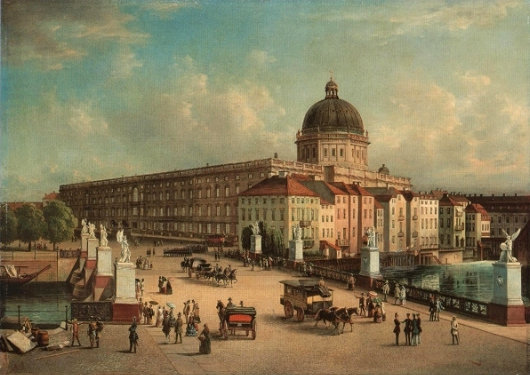
Fresh from the glories of Dresden’s rebuilt Lutheran Frauenkirche, the city fathers of Berlin have decided to reconstruct the old Stadtschloß (“City Palace”) at the heart of the German capital, only not quite. Largely ignored by the anti-monarchist Nazis, the original Stadtschloß was damaged by Allied bombing and by shelling during the Battle of Berlin before the Communist government of East Germany demolished it entirely and built the horrendously ugly Palast der Republik (housing the Soviet satellite’s faux parliament) on the site. The Communist monstrosity has finally been demolished, but the authorities decided that, rather than restore the beautiful royal palace that once stood on the site, they will instead merely replicate three of the old structure’s façades, leaving one of the façades and most of the interior in a modern style.
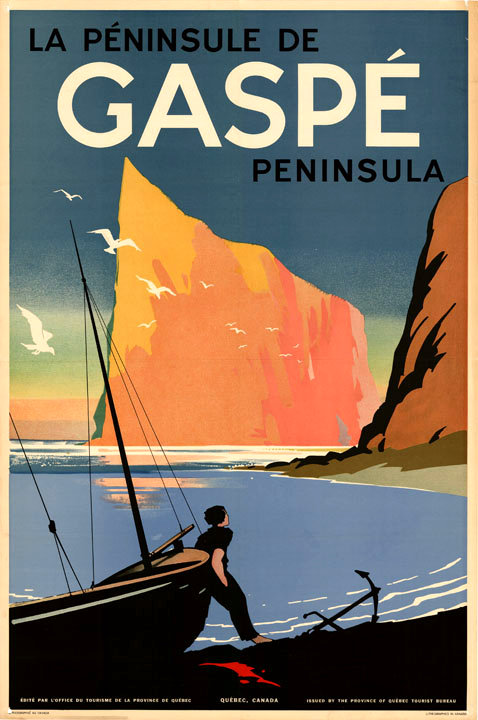
Dublin (In the Rare Old Times)
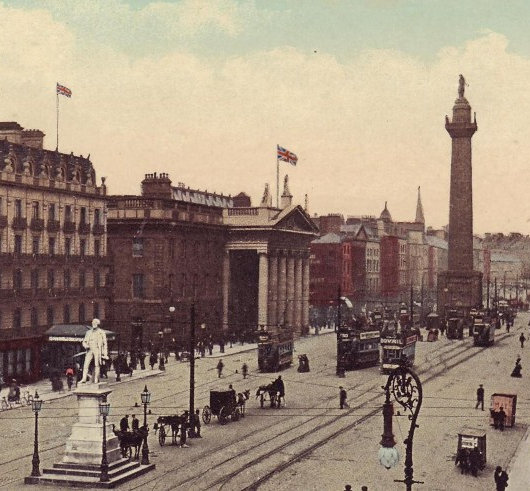
O’Connell Street, Dublin, United Kingdom of Great Britain & Ireland.
West End Collegiate Church
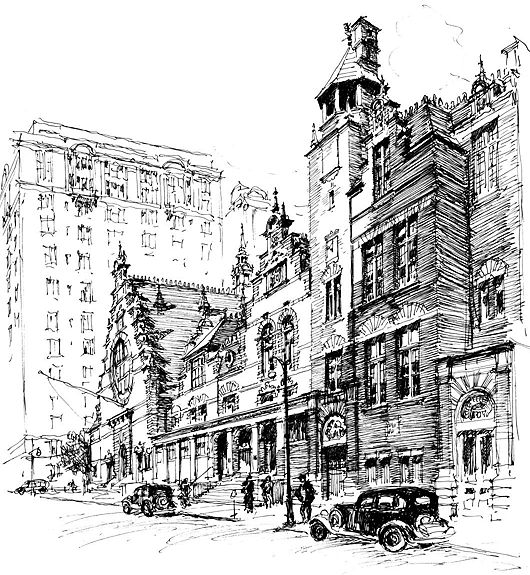
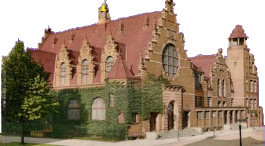 One of my good friends, who is amongst the most loyal denizens of this little corner of the web, found our post on St. Nicholas Collegiate Church of great interest because his son attended the Collegiate School, the oldest school in North America (founded in 1628, and formally incorporated ten years later). The Collegiate School is part of the same complex as the West End Collegiate Church on the corner of West End Avenue & 77th Street on the Upper West Side. The church & school buildings were designed by McKim Mead & White in a Dutch Renaissance Revival style, and handsomely executed.
THE ARCHITECTS modelled the church after the seventeenth-century Vleeshal (meat market) of Haarlem in the Netherlands. The story goes that, during the Second World War, a handful of Collegiate grads serving together in the U.S. Army participated in the liberation of Haarlem, stumbled upon the Vleeshal and said “Hey, that’s our school!”

New York’s Dutch Cathedral
The Collegiate Church of St. Nicholas, Fifth Avenue
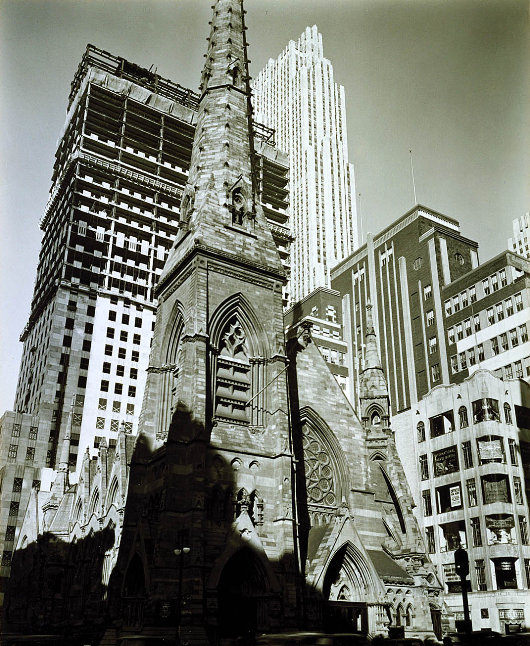
Dedicated a hundred-and-thirty-six years ago, the Collegiate Reformed Protestant Dutch Church of Saint Nicholas on the corner of Forty-eight Street & Fifth Avenue (photographed above by Berenice Abbott) was for many years regarded as the most eminent Protestant church in New York. The Collegiate Reformed Protestant Dutch Church is the oldest corporate body in what is now the United States, having been founded at the bottom of Manhattan in 1628 and receiving its royal charter from William & Mary in 1696. Now part of the Reformed Church of America, the Collegiate Reformed Protestant Dutch Church is actually a denomination within a denomination, and the remaining Collegiate Churches of New York tend to preach a sort of “Christianity Lite”. (The famous Norman Vincent Peale, author of The Power of Positive Thinking and one of the paragons of the “finding a religion that doesn’t interfere with your lifestyle” school of thought, was the pastor of Marble Collegiate Church at Twenty-ninth & Fifth, where Donald Trump is a member of the congregation).
Peter Stuyvesant’s Legion
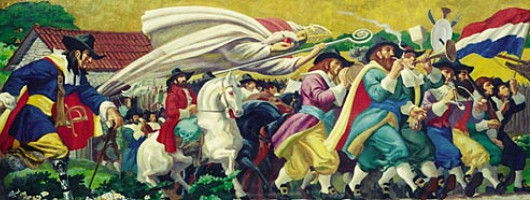
Oil on canvas, 30 in. x 80 in.
1953, Jacob Ruppert Brewery
An Aside: I was taught Latin beside the beautiful carved marble fireplace in the artist’s dining room. Winter lived next door to the school, which purchased the house after his death and used it for class rooms. In our more neglectful hours which investigated the basement, in which were still secreted some of the artist’s sketches for larger murals and models for a bas-relief.
67th & Fifth
One of the most remarkable things about these photos from a 1956 Seventh Regiment ceremony are how traditional the buildings in the background are.
Search
Instagram: @andcusack
Click here for my Instagram photos.Most Recent Posts
- Brunel’s Unbuilt Capitol February 3, 2026
- Cricket at Fordham January 27, 2026
- Palacio Barolo Revisted January 14, 2026
- Learning to Love Liguria January 14, 2026
- Crux Alba No. 2 January 13, 2026
Most Recent Comments
Book Wishlist
Monthly Archives
Categories