Arts & Culture
About Andrew Cusack
 Writer, web designer, etc.; born in New York; educated in Argentina, Scotland, and South Africa; now based in London.
 read more
News
Blogs
Reviews & Periodicals
Arts & Design
World
France
Mitteleuropa
Knickerbockers
Argentina
The Levant
Africa
Cape of Good Hope
Netherlands
Scandinavia
Québec
India
Muscovy
Germany
Academica
The Malteserkirche, Vienna
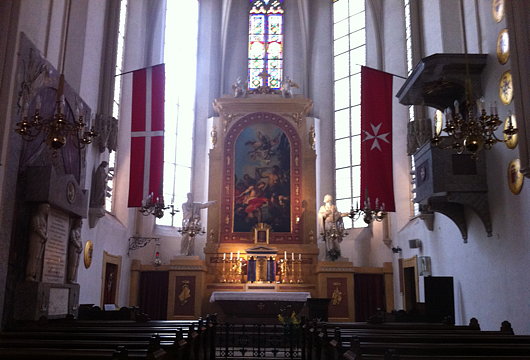
I happened to stumble upon the Order of Malta church in Vienna while meandering down the Kärntner Straße in the middle of a snowy day. It’s a small and relatively simple church consisting of a Gothic nave with an organ gallery. The Order has occupied the site since 1217, though the bulk of the current church dates from the fifteenth century. In 1806, Commander Fra’ Franz von Colloredo had the façade remodelled in the Empire style fashionable at the time. The altarpiece, a painting by Johann Georg Schmidt depicting the Baptism of Jesus by John the Baptist, is from a few decades earlier in 1730, and there is a splendid Neoclassical monument to Jean de la Valette including telamonic Saracens. The church is also decorated with forty coats of arms: five of grand priors, one cardinal, a grand commander, twenty-nine commanders, and one bailiff.
The Kaiserforum
The Unrealised Vision of an Imperial Forum for Vienna
SIDLING UP THE KOHLMARKT and entering the Hofburg through the Michaelerplatz is a glorious architectural experience, but viewing Vienna’s imperial palace from the Ringstraße end, one is left with a certain awkwardness. This is because what is now the Heldenplatz, open to the neighbouring Volksgarten, was conceived as part of a great imperial forum, the Kaiserforum, but the scheme has been left incomplete.
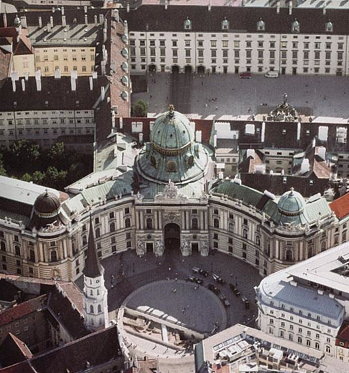
The original impetus for this forum was the plan to build the identical Kunsthistoriches Museum and Natural History Museum across from the Hofburg next to the former imperial stables. Emperor Franz Joseph held a closed competition for four invited architects — Carl Hasenauer, Theophil von Hansen, Heinrich Ferstel, and Moritz Löhr — to conceive of an overall scheme to expand the Hofburg in order to provide an architectural connection to the two new museums. (more…)
The most beautiful city never built
Ernest Gimson’s Canberra
Whenever I’m in in Westminster Cathedral, I feel obliged to nip in to and say a prayer in the chapel dedicated to St Andrew. The apostle is my patron many times over: in addition to being my name-saint, he is the patron of the university, the town, and the country in which I spent four luxurious years. His is one of the most finely decorated chapels in the cathedral, and boasts a beautiful mosaic depiction of the ‘Auld Grey Toun’ above the arms of the donor, the 4th Marquess of Bute. (His father, the eccentric 3rd Marquess, had been Lord Rector of the University of St Andrews.)
Stumbling upon the genial Cathedral Historian, Patrick Rogers, the other day, he shared with me that the stalls and kneelers in St Andrew’s Chapel are widely considered the finest works of arts-and-crafts furniture design in all of Great Britain. They are the creation of a man I had never heard of: the craftsman, designer, and architect Ernest Gimson.
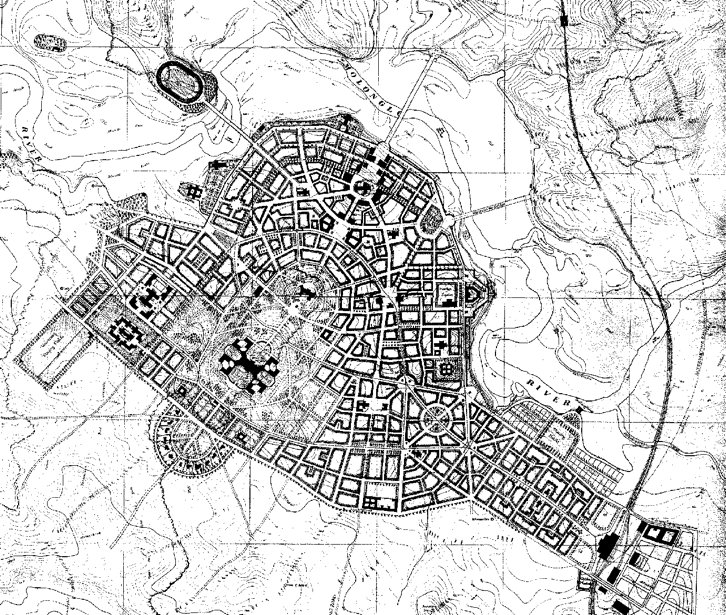
An unfamiliar name is always a potential new avenue of knowledge down which to saunter, and so it proved with Ernest Gimson. His talent at furniture is undoubted but, given my obsession with architecture, it was instead that field of his expertise which particularly drew me in. It was then that I discovered his submission for the 1911-1912 Australian Federal Capital Competition.
The British colonies in Australia federated in 1901, and the dispute between Sydney and Melbourne as to which would be the capital of the youthful nation was settled by agreeing to build a new planned city within New South Wales (the state Sydney is in) but not more than 200 miles from Melbourne.
Ten years later, an international competition was announced to determine the design for this new capital being created ex nihilo on the banks of the Molonglo river, which was given the name of Canberra.
Of the 137 entries received, many of them were very handsome, but some of them were frankly awful. Rather than have a team of architects, artists, or urbanists choose the winning design, the Minister for Home Affairs, Mr King O’Malley, was the sole decision-maker.
He eventually chose the plan submitted by the Chicago architect Walter Burley Griffin, awarding a second prize to Eliel Saarinen of Finland, with third prize going to Alfred Agache of Paris.
The design I would have chosen, however, was Ernest Gimson’s.
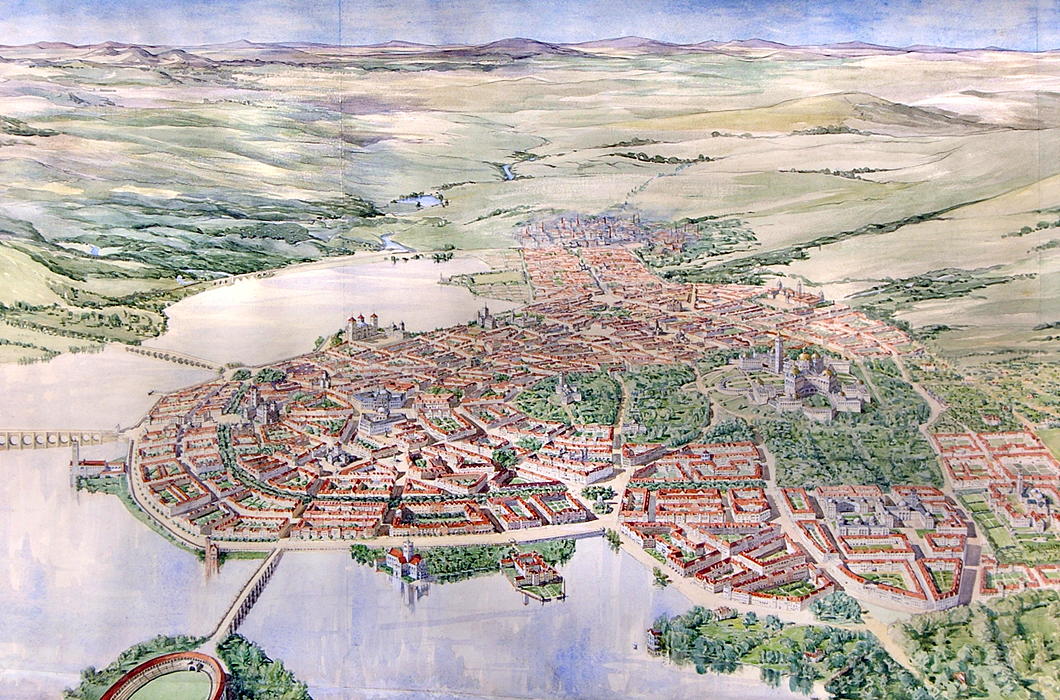
Gimson designed a compact capital city of 25,000 inhabitants that would be able to support itself based on neighbouring farms and small-scale industry.
The city is entirely concentrated along the south bank of an artificial lake and centred on a wooded park containing Kurrajong Hill and Camp Hill, with the streets of the city radiating down from there toward the lakeside.
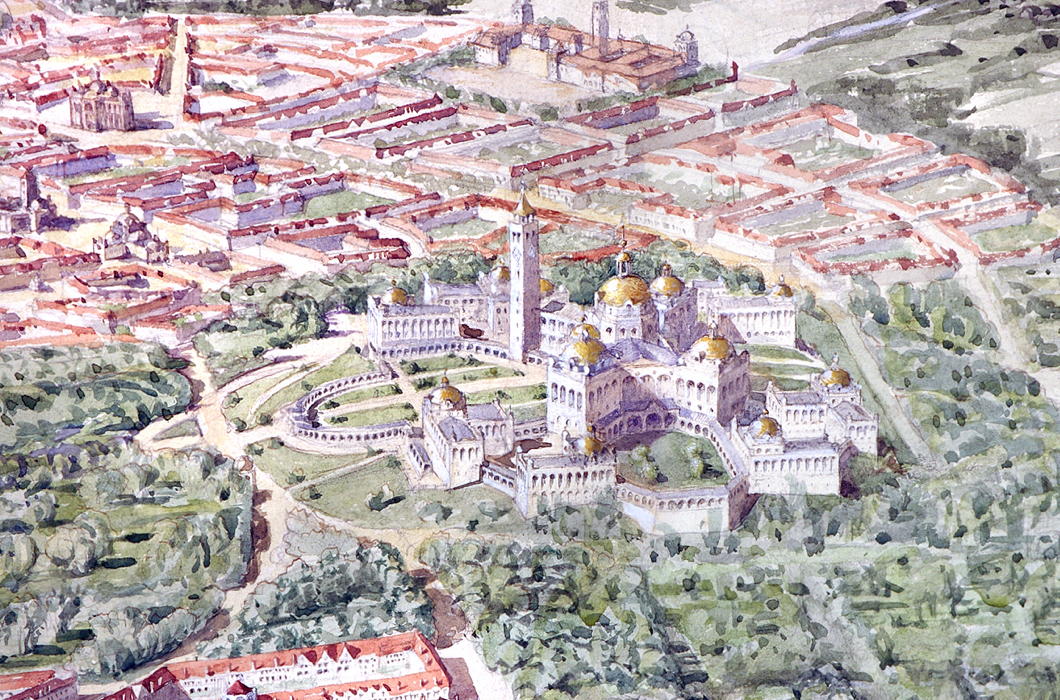
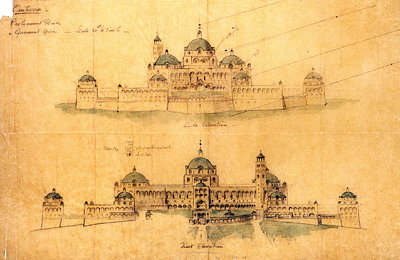
Kurrajong Hill, with its dominating position over the city, was selected for the Houses of Parliament, with eight departmental buildings surrounding it on a lower terrace.
Official residences for the Governor-General and Prime Minister are located nearby, each with six acres of private grounds.
The State Hall is located atop the adjacent, slightly lower, Camp Hill, with the Printing Office and Mint located at either side, where the park ends.
North-west of Kurrajong is the City Hall, flanked by the Courts of Justice, with its main entrance facing towards the central park.
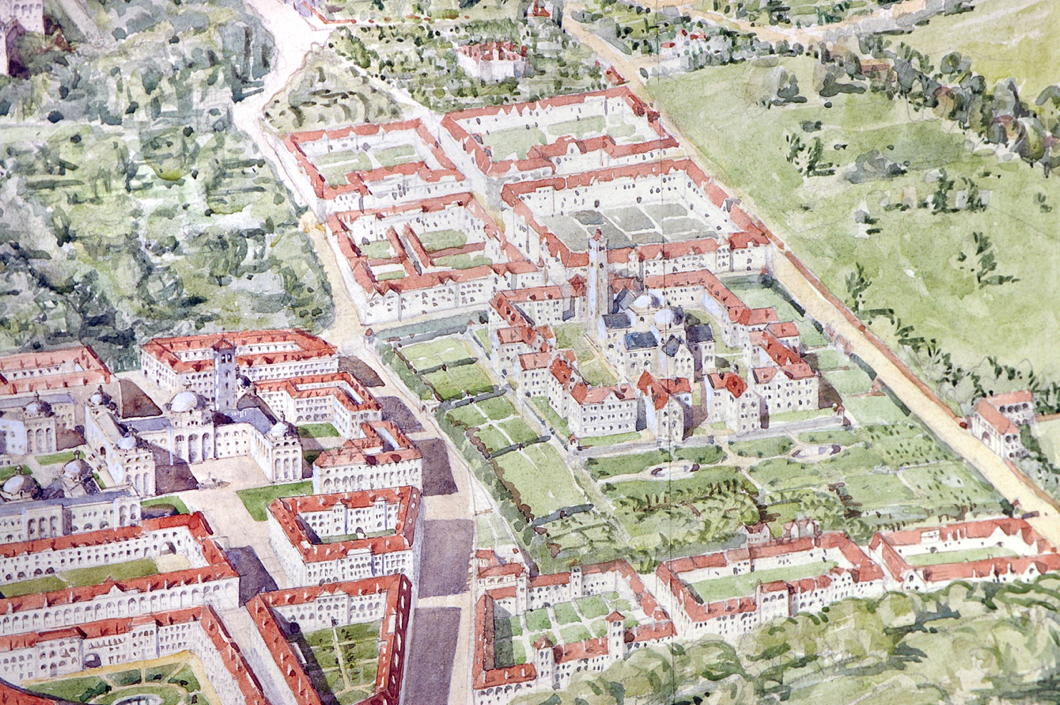
On a small hill nearby is the University, its double-domed central block surrounded again by ancillary buildings on a lower terrace. Playing fields are allotted nearby.
The market is located on the east side “with a covered arcade for the stalls enclosing an open square”, alongside a market house and technical colleges.
The Cathedral rises from the center of the city proper and forms an axis with the State Hall on Camp Hill and the Houses of Parliament atop Kurrajong.
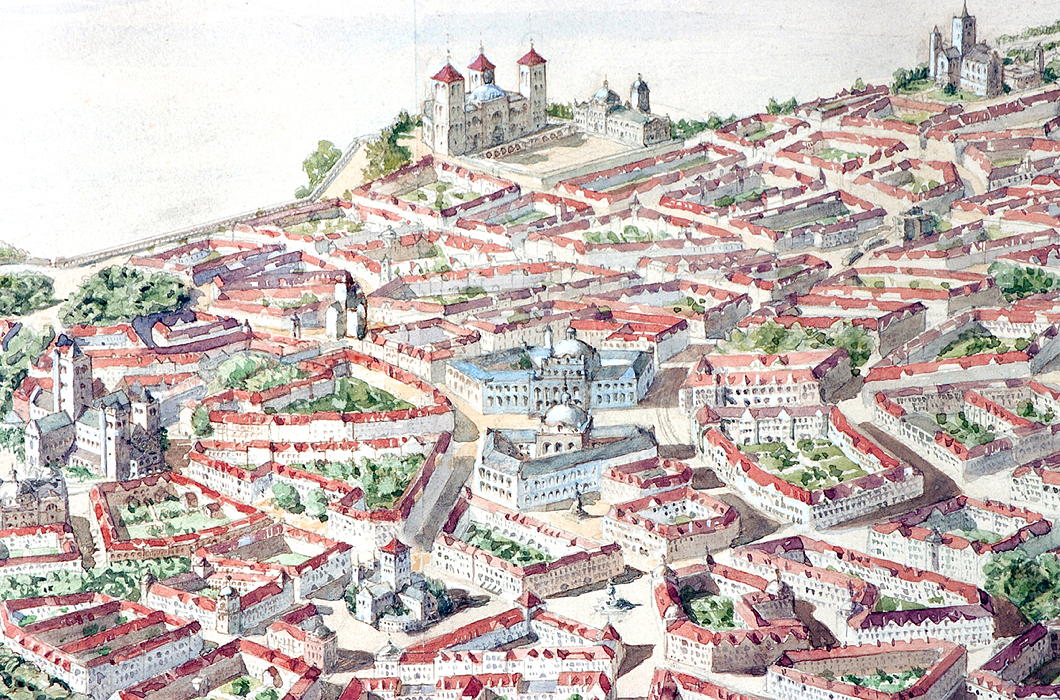
At the near-midpoint of the street connecting the Cathedral to the State Hall, a public square is flanked by a National Art Gallery and Library. Around the Cathedral itself are the National Theatre and the General Post Office.
A stadium is located on the north side of the lake, connected to the city by a bridge, and further provision is made for siting barracks, gas works, a power station, cattle market, and other necessities.
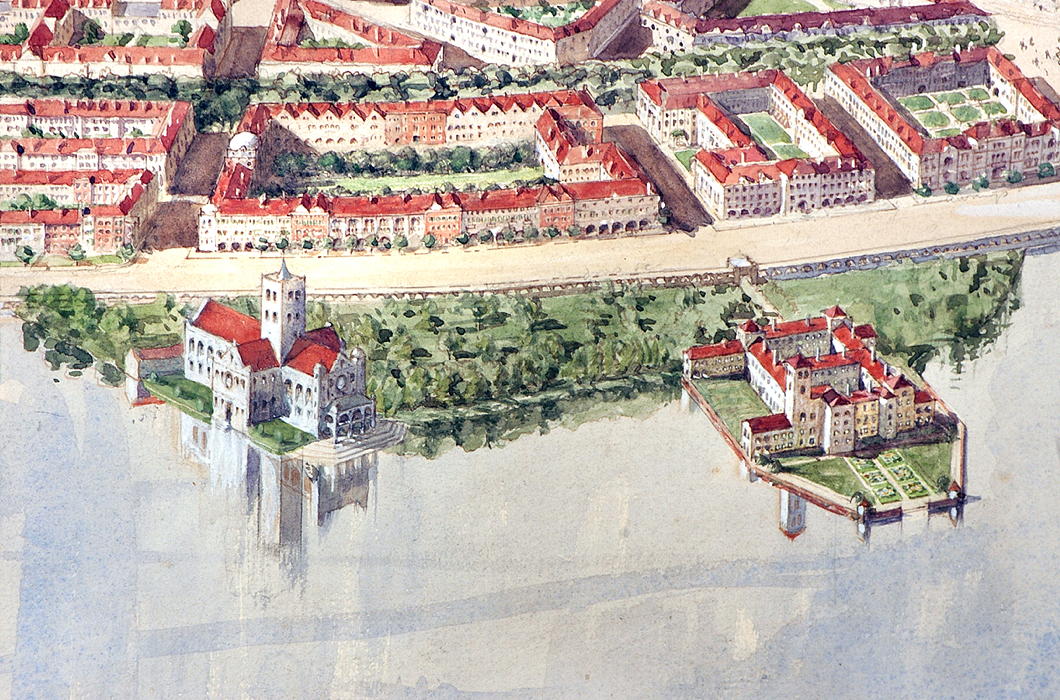
Buildings would chiefly be faced in a light-coloured local stone which gives the plan, deeply influenced by tradition, both a brightness and a more vernacular feel.
To discuss the design of the buildings is tricky: this proposal is an initial plan and, had it been selected, the architect would have had more time to then further refine what he was proposing.
The Houses of Parliament, with their eccentric X-footprint, are a curious conglomeration and not quite right. There seem to be a surfeit of towers that look too similar to one other.
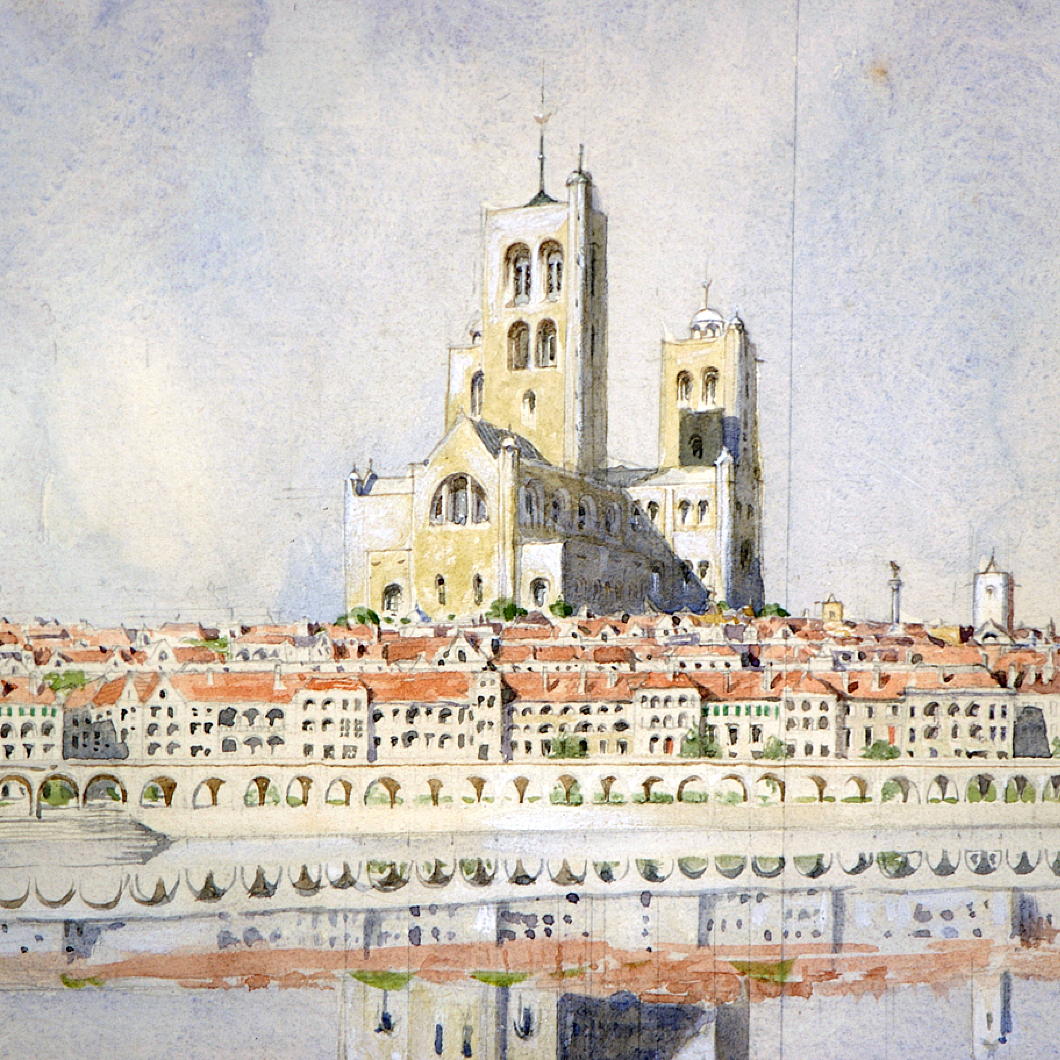
But the Cathedral — my favourite part of Gimson’s plan — is a magnificent creation with an assertive central crossing tower that doubtless would become the visual focus of the city.
The embankment, with its long, generous, 20-foot-deep arcade providing “sheltered walk in hot and wet weather”, is both picturesque and useful.
“While screening in some measure the near part of the lake from the ground floor windows of the houses opposite,” the arcade, Gimson notes, “would enhance rather than diminish, the interest of the wider views.”
Indeed, it provides a useful transition point from lakeside to the rise of the buildings.
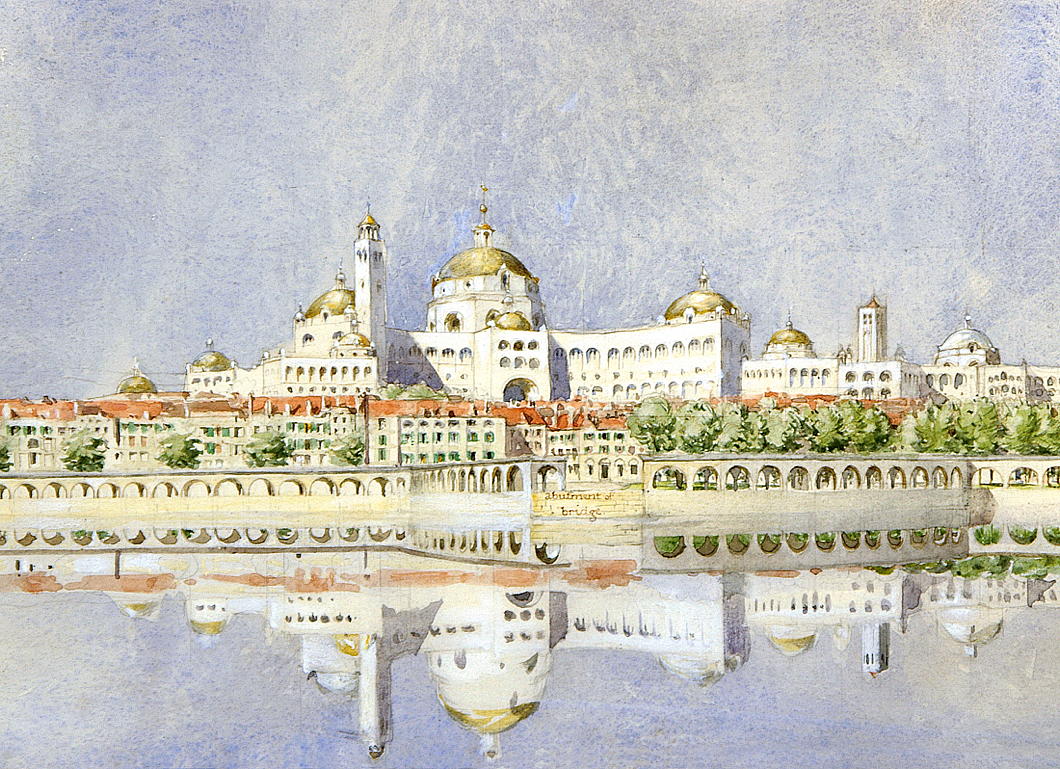
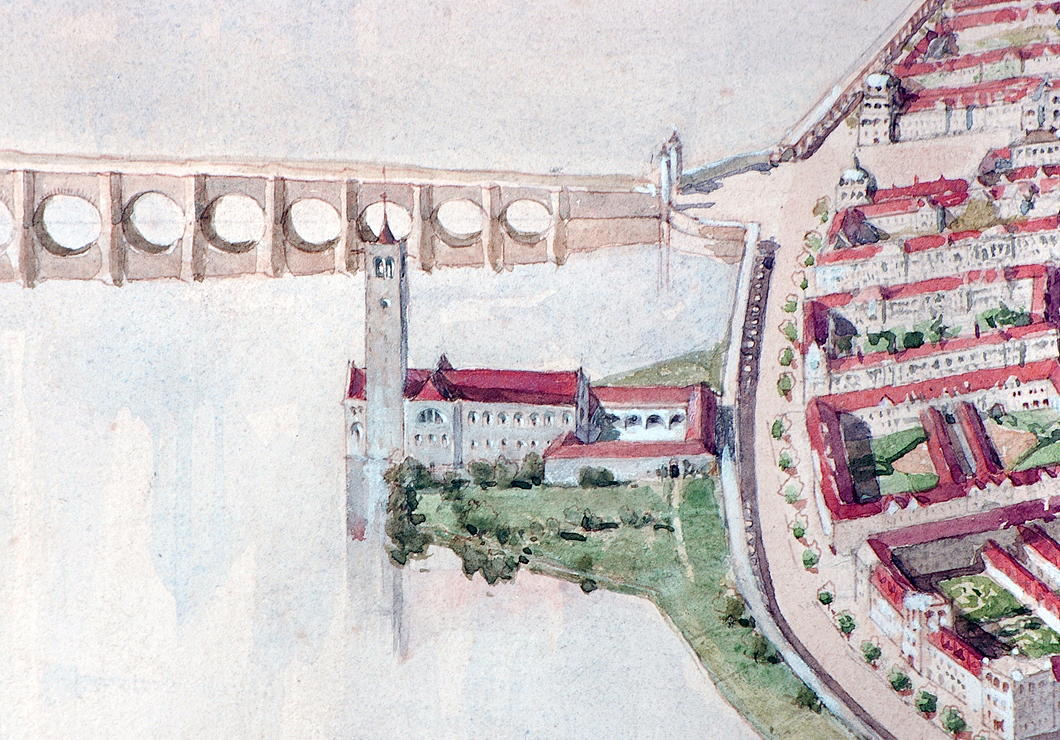
The architect’s layout of streets, public spaces, and important buildings, meanwhile, shows the influence of the aesthetic principles of the Austrian urbanist Camillo Sitte, now unjustly neglected since being contemptuously derided by Le Corbusier and other leading modernists.
Gimson’s Canberra is an unpretentious city: its lack of grandeur is what most likely secured its rejection by the fathers of the young and vigorous nation, who were keen to impress. Burley Griffin provided them with a plan redolent of modernity and progress, but marred by fading modishness.
The Gimson plan would have provided Australia a beautiful modern capital city with a design deeply rooted in tradition, and with appropriate consideration of locality and climate. One can imagine that, as the course of history continued, ‘Old Canberra’ would have formed a handsome and much-loved heart of an ever-growing city.
The humane, natural traditionalism of Gimson’s Canberra would have made it much more popular with ordinary people than the sprawling, overly spacious modern city that Canberra is today. Still, it provides a model that urbanists of the future should be mindful of and take inspiration from.

A Rainy Day in Winchester
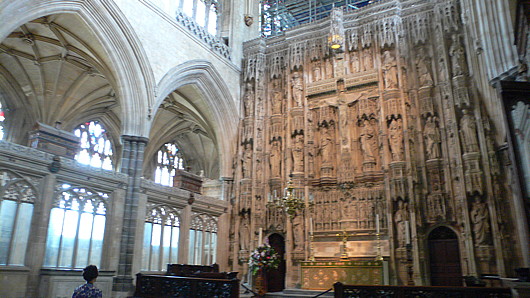
IT WAS LATE summer, neither particularly warm nor cold, and a bit rainy. I hadn’t seen Nicholas in a while but he wasn’t particularly keen on travelling into London. “Why not meet in Winchester?” he suggested, and, never having been to England’s former capital, I thought it was a good idea. I popped on the tube to Waterloo, got on a train, and in no time at all was in the county town of Hampshire. It’s a humanely size town, admirably located, and most famous for its medieval cathedral.
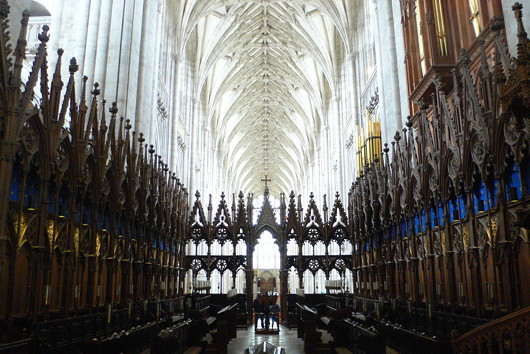
The thieving Protestants, not content with stealing all the cathedrals we built throughout the width and breadth of the land, highten the insult by charging admission to these former shrines and places of worship. I had arranged to meet Nicholas in the Cathedral, though, and the blighters got a good £6.50 out of me. I had a good wander round, though.

These mortuary chests contain the remains of the Saxon royalty of the kingdom of Wessex and later England.
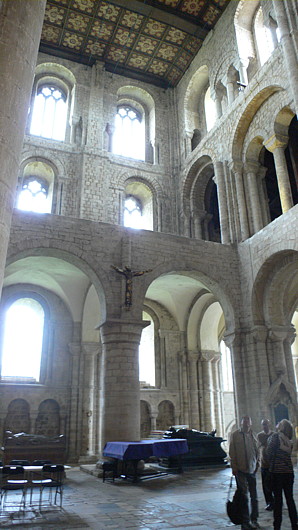
Norman architecture is woefully underappreciated, and might form a useful style to return to today given its relative simplicity. So much Norman architecture was destroyed and replaced by Gothic during later periods of medieval prosperity, but at Winchester the Norman transepts remain.
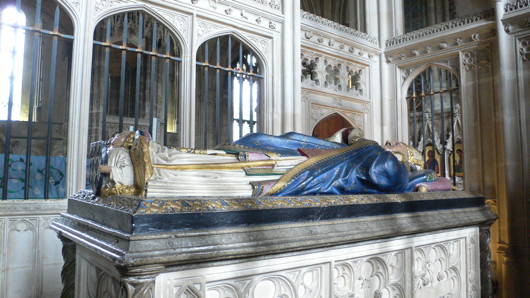
William of Waynflete, buried here, was a high-flyer in his day. He was, varyingly, Bishop of Winchester, Headmaster of Winchester College, Provost of Eton, Lord Chancellor of England, and founded Magdalen College, Oxford. Not a bad innings.
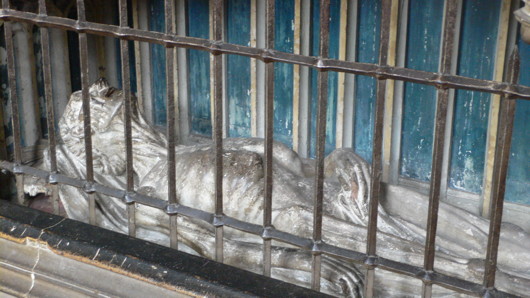
Richard Foxe chose a more macabre memorial, but enjoyed similar success in this world: he was Bishop of Exeter, then of Bath & Wells, then of Durham, and finally of Winchester. He was Lord Privy Seal and founded Corpus Christi College at Oxford. Foxe and Erasmus sometimes wrote to eachother, and his elaborate crozier is on display at the Ashmolean.
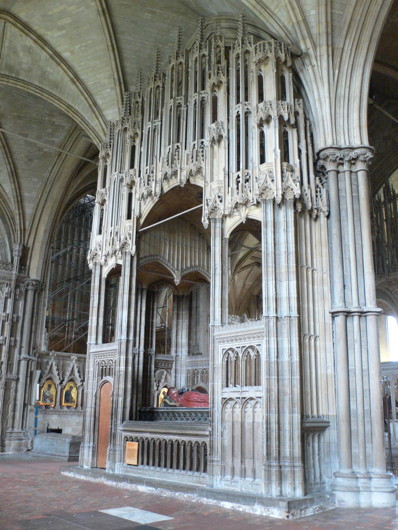
The tomb of Henry Cardinal Beaufort is my favourite memorial in the cathedral. Beaufort — a Plantagenet — was Dean of Wells, Chancellor of the University of Oxford, Bishop of Lincoln, Lord Chancellor of England, and finally Cardinal Bishop of Winchester. He was a sometime papal legate for Germany, Hungary, and Bohemia, and most famously presided over the trial of St Joan of Arc.
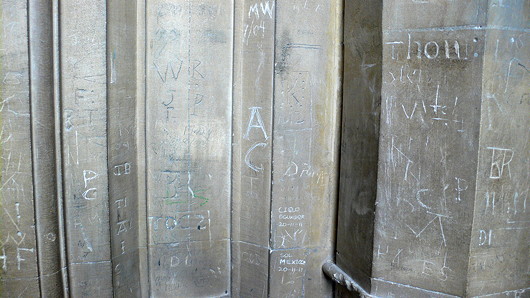
One of the walls was inscribed with graffiti.
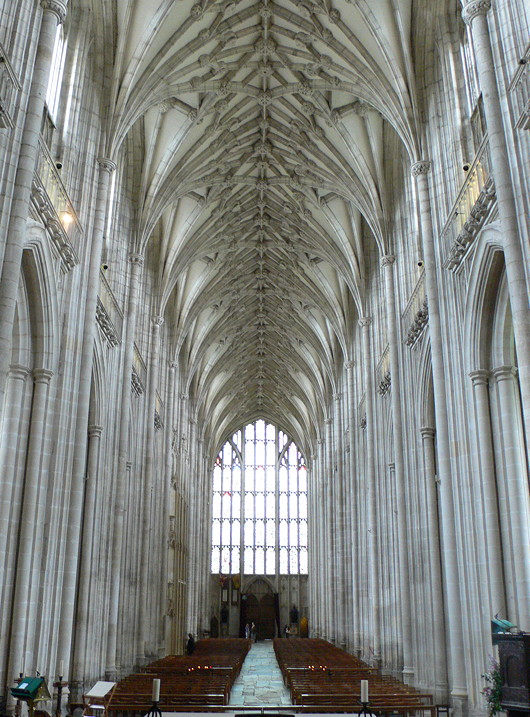
The cathedral is also the final resting place for the earthly remains of Hampshire native Jane Austen, but nevermind that.
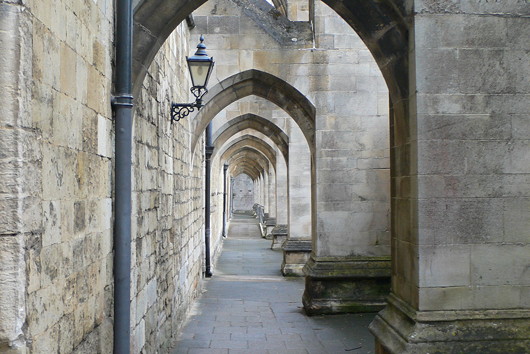
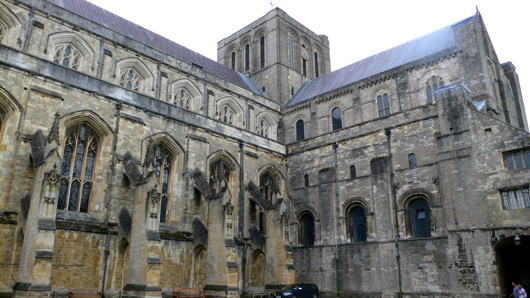
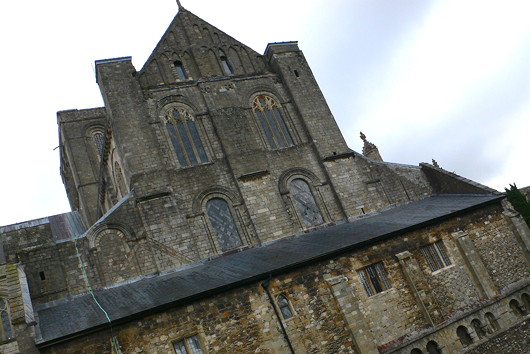
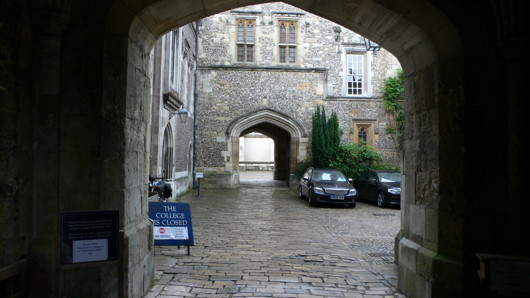
Tours of the College were available, but we decided to leave it for another visit, and went on a wander in the direction of the Hospital of St Cross.
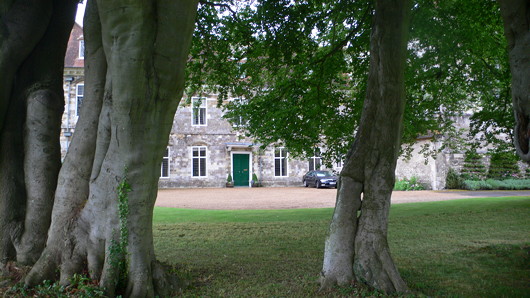
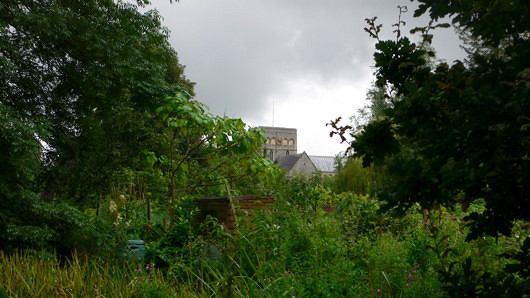
The Hospital of St Cross and Almshouse of Noble Poverty is the oldest charitable institution in England and the largest medieval almshouse. The church could be a small cathedral in and of itself, but as we arrived an interment was taking place, so we thought it best that it, too, was left for another day.
The Other Modern in Madrid
Miguel Fisac’s Church of Espíritu Santo, Madrid
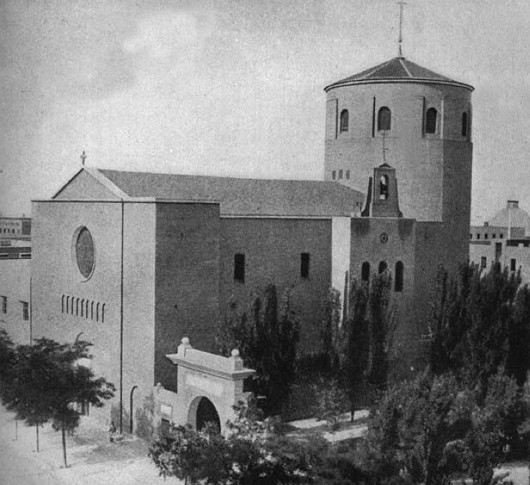
It might be difficult for some to imagine that the architect of the pagoda-like Laboratorios Jorba outside Madrid was an accomplished classicist, but, like many modern architects, Miguel Fisac began his career with more traditional works. His very first commission as an individual was to design a church for Spain’s Consejo Superior de Investigaciones Científicas (Higher Council of Scientific Research). The CISC had only been founded in 1939 and was originally housed in existing structures around Madrid. The Church of the Holy Spirit (constructed 1942–1947) was the first newly built structure for the research council, and the fact that it was an ecclesiastic building “eloquently expresses the spirit of commitment between religion and science that animated the new project” (according to the Fundacion Fisac). Around the corner from the Church of the Holy Spirit, the main headquarters of the CISC was designed by Fisac. (more…)
Yorkville Promenade
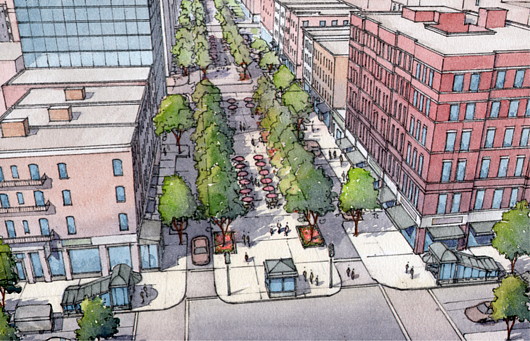
One of the thorough-going irritations of New York is that, for all its glories, one can’t help but feel that the individual, the human being, is simply not the priority there. This intriguing and worthwhile proposal from Massengale & Co, Dover Kohl & Partners, and H. Zeke Mermell, if executed, would go a long way to making the Upper East Side of Manhattan a much more people-friendly place.
It takes its inspiration from the Ramblas of Barcelona, one of the greatest streets in the world. While their written proposal (below) is couched in anti-car talk, I frankly don’t care about reducing auto use in New York City. The much more important priority is increasing people places in the city; that is, increasing the amount of public space in which it is clear that people have priority. (This will almost certainly have the same effect as the intention of reducing auto use, I’ll concede.) The city has taken some admirable steps in that direction in recent years (the increasing in pedestrian-oriented spaces, including previously unheard-of outdoors tables and chairs for the use of all and any).
The Yorkville Promenade proposal for Second Avenue is eminently suitable to its particular place and location, especially coupled with making First and Third Avenues bi-directional. It is a worthy attempt to tame and civilise streets that all too often feel quite inhumane, and should be enacted.
Yorkville Promenade on Second Avenue
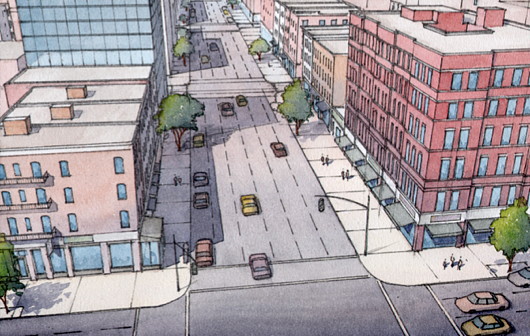
FOR SO MANY REASONS, we must reduce auto use in New York City. Studies for Mayor Bloomberg showed that living on a high-traffic avenue in Manhattan is un-healthy, particularly for our children. To add insult to injury, 80% of Manhattan residents do not own cars, and only 20% of our out-of-town commuters drive to work. Our ugly, unhealthy avenues are more for the benefit of others than Manhattan’s workers and residents.
Most Manhattanites live in small apartments and spend a lot of time in public life. When the weather is nice, we spend lots of money to dine next to places designers call “auto sewers”: noisy, smelly streets made to move cars quickly, with wide, one-way lanes and no parking at rush hour so that the speeding cars and trucks are inches from the sidewalk. It doesn’t make much sense.
Then there are the problems of Climate Change and Peak Oil. We have built our way of life on an inexpensive but non-renewable resource that is simultaneously starting to run out, becoming more expensive than we can afford and changing the earth for the worse.
The New Yorkville Ramble
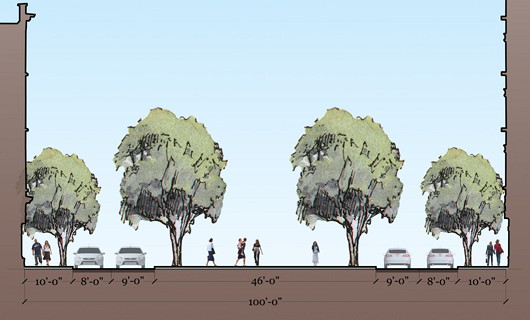
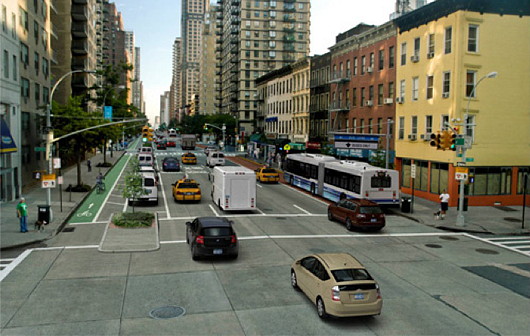
The Yorkville Ramble is an idea for a new way to rebuild Second Avenue, after the completion of the new subway under construction below the avenue. Inspired by the famous Ramblas of Barcelona, the design gives the center of the wide avenue that was once two-way to a new car-free linear park for walking, biking, sitting, dining and people watching. Cafés and restaurants along Second Avenue would be licensed to have tables on the center island. Narrow traffic lanes and short term parking lanes to each side would let cars and deliveries come and go while eliminating speeding traffic from Second Avenue.
Construction would be timed to work with the construction phasing for the subway, which will initially run from Sixty-Third Street to Ninety-Sixth Street. The Ramble would be a special place that enlivens the Manhattan grid, like Broadway on the Upper West Side and Park Avenue on the Upper East Side, with a vibrant street life unlike staid Park Avenue.
WEST OF THIRD AVENUE ON THE UPPER EAST SIDE, the introduction of Madison and Lexington Avenues into the normal city grid produced shorter blocks that made the grid more interesting for pedestrians and thereby increased the value of the real estate.
Yorkville’s longer blocks are less pedestrian-friendly, and Second and Third Avenues both used to have that New York oxymoron–the elevated subway–depressing real estate values and building quality for decades. In recent decades the area has boomed, and the Yorkville Ramble will give it a linear neighborhood center unique in New York City, drawing from both the neighborhood and the access provided by the new subway line.
Proposed Congestion Zone
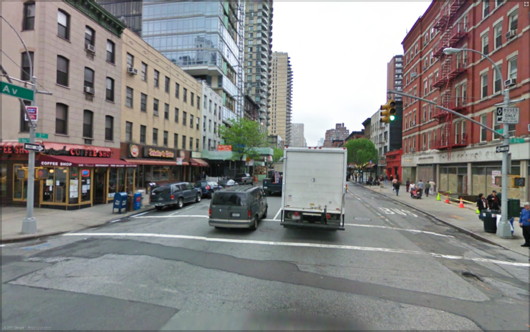
Mayor Bloomberg and the New York City DOT have proposed a congestion zone for the city. London’s congestion zone shows that roads like the Second Avenue design proposed by the DOT will then be oversized and inappropriate for the amount of traffic they will have. First and Third Avenues could go back to being two-way, as they once were, and traffic would move in a more civilized fashion. We don’t need to make express auto routes in and out of the city when we have the best mass transit in the country.
The bicycle lane in the DOT’s new design for Second Avenue is a good idea, but the design for the road shown above is still a traffic engineer’s dream, with wide, one- way lanes and no parking shielding the pedestrian from the speeding cars, buses and trucks. Studies show that walkers don’t like the visual clutter of all the signs and multi-color lanes that the engineers want. Walkers also of course want wider sidewalks.
Conclusion
Second Avenue is currently torn up for the subway con- struction and its rebuilding will start in the next few years. Combined with changing attitudes and perceptions about the car in the city, that makes now the perfect time for a humane and beautiful new type of post- auto road for New York.
The ingenuity of eighteenth century furniture
The Metropolitan Museum is hosting an exhibition, Extravagant Inventions: The Princely Furniture of the Roentgens, that continues for just a few days more. The show looks at the work of Abraham Röntgen and his son David, whose workshop created the most extraordinary pieces of furniture. A few of them are presented here in videos: above, a secretary cabinet, and below, a writing desk, dressing table, and automaton of Marie Antoinette. (more…)
Return to Downside
Christmas was marked by a return to the Abbey Basilica of Saint Gregory the Great at Downside for Midnight Mass. The abbey church always has a splendid feeling at night. One of the best points at the wedding of the century was in the evening when, after a fair bit of dining and drinking, a whole slew of guests slipped into the church where the monks who a few hours previous had sung the nuptial mass were singing compline and joined in their prayers.
Doubtless you will recall last year’s Christmas diary documenting my holiday with Garabanda, Ming, und Familie. In the time since then, my own parents have very wisely moved onto the same landmass as I, and — even better — moved to nary a half-hour’s drive from Downside, so this Christmas was spent in blessed Georgian comfort with my own parents and all the delights of that particular patch of the West Country. (more…)
Palacio Legislativo Federal
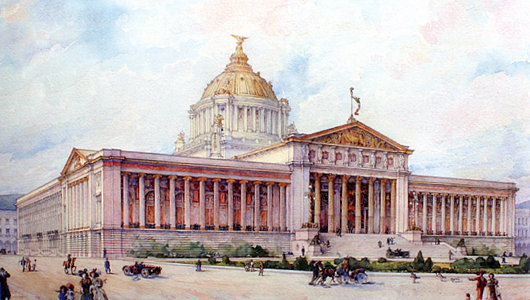
MOST OF THE major American countries have large parliamentary buildings built at the height of their prosperity in the decade before and after 1900, but Mexico is a particular exception. (Brazil, for complicated reasons, is another). In the 1890s, the government of President Porfirio Díaz decided that it needed a grand legislative palace whose magnificence would be worthy of the head of state’s own grand appearance. A competition was held and an entry chosen as the winner, but the victor was disregarded in favour of a new design by a French architect.
Émile Bénard had assisted the great Charles Garnier in draught work for the celebrated Paris Opera House which now bears that architect’s name. In the 1890s, Bénard became famous for winning Phoebe Hearst’s architectural competition for the campus of the University of California at Berkeley with his entry “Roma”. The Spectator wrote from the London of the day, “On the face of it this is a grand scheme, reminding one of those famous competitions in Italy in which Brunelleschi and Michelangelo took part. The conception does honor to the nascent citizenship of the Pacific states.” Unfortunately, very little of Bénard’s scheme for the academic complex was completed.
Grace Jones, Artist
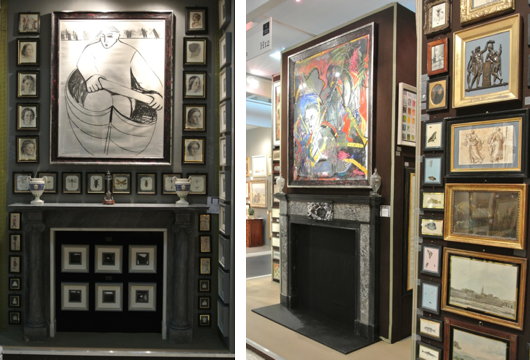
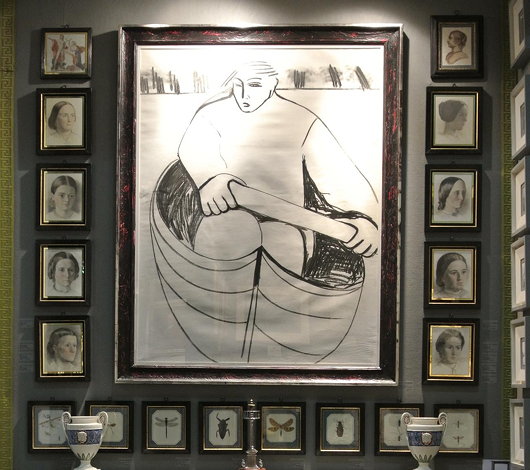
Among the surprises in store at the Collectors’ Preview of the Olympia antiques fair on Monday night were two works by the actress Grace Jones. When I was a wee bairn, “A View to a Kill” was one of my favourite Bond films, and Jones played May Day, the frightening sidekick to Christopher Walken’s Zorin. Apparently Grace Jones studied art for a period, and Charles Plante Fine Arts has two pictures by her amongst their offering: ‘An Eskimo rowing a boat’ (Charcoal with mixed media, 49 inches by 43 inches) and ‘Untitled abstract composition 1983’ (Mixed media on paper, 60 inches by 67 inches).
Fit for a Duke in Covent Garden
Russell House, No. 43, King Street
This apartment occupies the piano nobile of a 1716 house designed by Thomas Archer for the Earl of Orford, then First Lord of the Admiralty. He obtained the lease for the site from his uncle, the Duke of Bedford, on condition he tear down the house located there and build a new one. Batty Langley, the eighteenth-century garden designer and prolific commentator hated it, and devoted over 200 words of his Grub Street Journal (26 September 1734) to slagging it off. The Grade II*-listed building looks onto Covent Garden Piazza and has seen a number of uses over the years. (more…)

An Otto Wagner Embassy
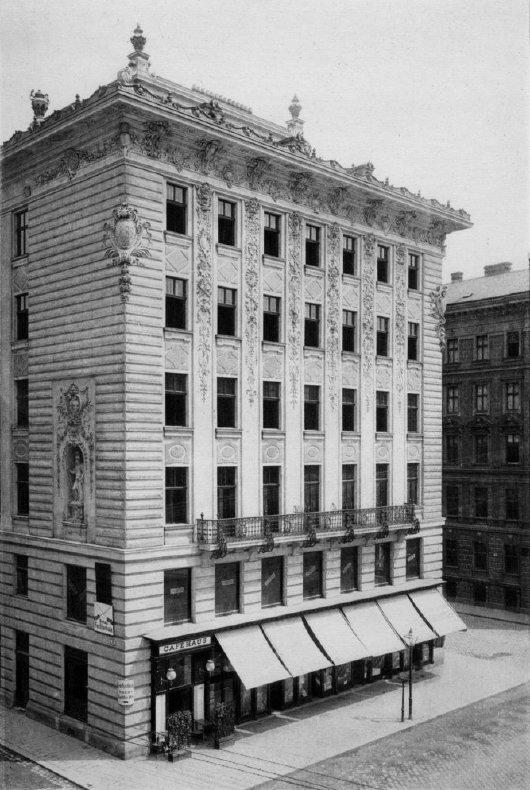
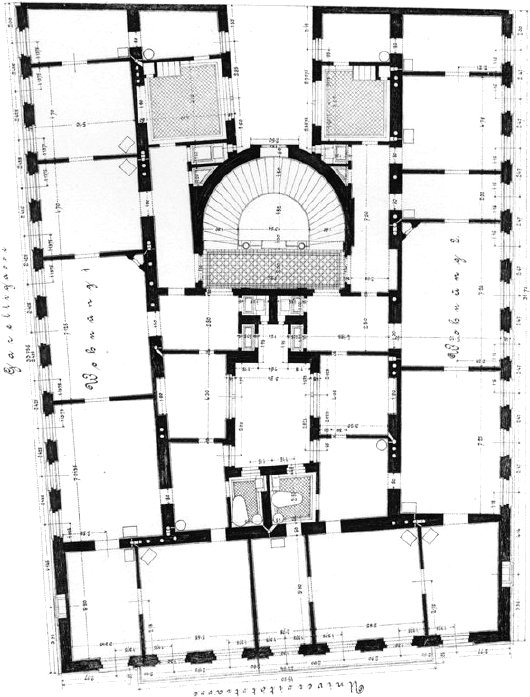
The unbuilt Imperial Russian Embassy in Vienna
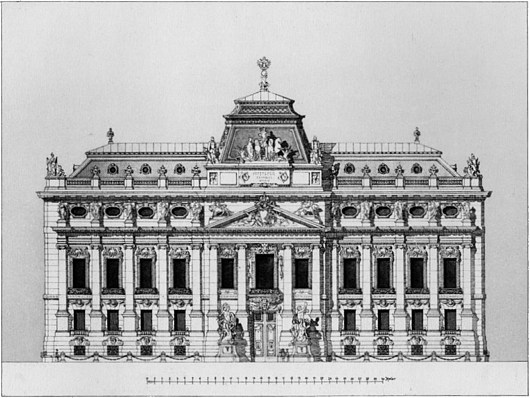
Otto Wagner was an exceptionally talented architect, though not, I think, the genius that many people would credit him with being. In the most emblematic work for which he is known, the Kirche am Steinhof in Vienna, there is too much angularity and not enough flow, curvature. For a free-standing structure it feels a bit stultified and uptight despite the brilliance of the individual elements of the design. I much prefer his Post Office Savings Bank and Stadtbahn stations.
Stumbling through the archives the other day, I came across this unexecuted Otto Wagner design for an Imperial Russian Embassy in Vienna: one now-vanished emperor’s embassy to another. From earlier in his career, it’s not as distinctively Ottowagnerian, but I admire the composition of the façade. The bulbous curved projections into the courtyard, however, are unfortunate, and too large for the space. (more…)
Arab Newspapers
Having recently made my first venture into the Middle East, I thought I’d provide a brief overview of the pan-Arab newspapers that are read by exiles, businessmen, and intellectuals in Arabia and the diaspora.
Marlow’s St Paul’s Capriccio
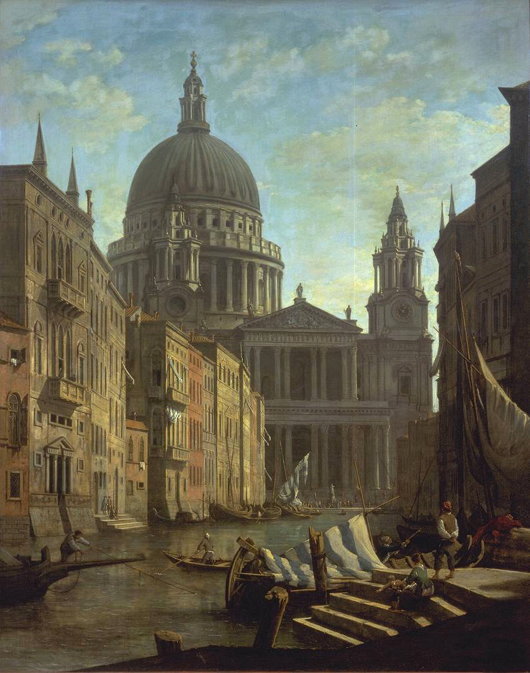
c. 1795; oil on canvas, 60 x 41 in.; London, Tate Gallery
The view of St Paul’s Cathedral as if it had been completed according to the original plans of Wren and with Hawksmoor’s baptistry (which I posted yesterday) reminded me of this capriccio by William Marlow. And then this in turn recalled my 2005 post If London Were Like Venice.
Carl Laubin’s Architectural Fantasies
While the subjects of his works are varied, Carl Laubin has become best known for his architectural paintings. Born in New York in 1947, he veered into architectural painting when he was taken on by the London office of Richard Dixon — now part of Dixon Jones, the firm responsible for, among other projects, the Royal Opera House and the redesign of Exhibition Road. With an eye for detail, he has completed capriccios displaying the total built corpus of Hawksmoor, Cockerell, and, most recently, Vanbrugh, while the National Trust also commissioned him to paint a capriccio of all the houses currently within their care.
More of his work can be viewed at the website of Plus One Gallery, and a book of his paintings has been published by Philip Wilson. (more…)
The UN at Quebec
IN 1943, THE BRITISH, Canadian, and American governments descended upon the city of Quebec, capital of la vieille province, for an intergovernmental conference to plan the invasion of France — surely one of the greatest military tasks ever undertaken in the modern era. The site proved auspicious due to a peculiar combination of factors: Quebec City enjoys a certain European cachet but with both the geographic safety of North America and the more spacious accommodation usual to that continent. The three governments held a second conference there in 1944, and in 1945 the International Labour Organisation met in the city, followed a few months later by the Food & Agriculture Organisation of the nascent United Nations.
With this track record of indisputable experience, the ville de Québec, lead by its mayor Lucien Borne, put in a bid to be the permanent seat of the United Nations Organisation. (more…)
Little Ben
 WALKING THROUGH Victoria recently, I was horrified to see the recent renovations and street improvements have led to the disappearance of ‘Little Ben’, the small Victorian clocktower that sat in a traffic island halfway between Westminster Cathedral and Victoria Station. Little Ben is a convenient meeting place in a district that is rather uninspiring and surprisingly lacking in conveniences.
Why, for example, is there no decent pub in Victoria? If you need a meal, Grumbles of Pimlico is walking distance, and they treat you well at Il Posto. But a decent pub atmosphere is not to be had, unless you fancy The Pub Formerly Known as the Cardinal (now styling itself as ‘The Windsor Castle’).
Happily, a simple Google search reveals that Little Ben’s absence is merely temporary: indeed, Little Ben is taking a rest-cure. The goodly folk at Wessex Archaeology have informed us as such.
The clock owes its creation to Gillet & Johnston of Croydon, who built Little Ben in 1892 and erected it in the middle of Victoria Street. It fell victim to a road-widening scheme and was removed in 1964 but, after sitting in storage unappreciated for some years, it was finally renovated and restored to its original location in 1981.
Transport for London is currently working on a significant upgrade to Victoria Underground Station, including a rearranged traffic alignment on surface level, in addition to new entrances and exits and a great big whopping ticket hall sous la terre. When all is finished and done and in tip-top shape, Little Ben will be returned to his traditional location, and some semblance of order will return to this sector of the most unglamorous Victoria Street.
Politigården
The Police Headquarters, Copenhagen
One of the pleasures of the recent hit Danish television series Forbrydelsen (released in the UK as ‘The Killing’) is the occasional view it provides of Copenhagen’s police headquarters.
Politigården (lit. police-yard) is in a restrained Scandinavian modern classicism and was designed by Hack Kampmann.
It was constructed from 1918 to 1922 but Knapmann died in 1920, and his role as chief architect was assumed by his son Hans Jørgen Kampmann (whose brother Christian was also an architect).
The interior hints towards a variety of styles from Renaissance to Baroque and Art Deco, while the building rises around a large central circular courtyard roughly the same diameter as the Pantheon in Rome.
Some architectural historians consider Politigården the last neoclassical public building in northern Europe (so far, that is). (more…)
Overwhelming the Farber Building
A bland glass-plated giant will piggy-back onto a sound example of the Modern Movement in Cape Town
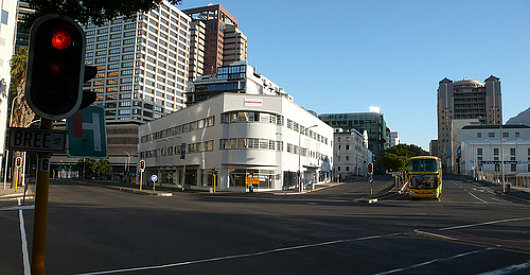
The Farber Building, one of the few extant examples of the Modern movement in architecture in Cape Town, is to be overwhelmed by an eighteen-storey plate-glass skyscraper. The developers had sought to have the 1935 building designed by Roberts & Small demolished, but the city fathers wisely refused permission. The price of its salvation, however, is that the boring skyscraper will piggy-back onto this actually rather inoffensive Modern structure. (more…)
Search
Instagram: @andcusack
Click here for my Instagram photos.Most Recent Posts
- Brunel’s Unbuilt Capitol February 3, 2026
- Cricket at Fordham January 27, 2026
- Palacio Barolo Revisted January 14, 2026
- Learning to Love Liguria January 14, 2026
- Crux Alba No. 2 January 13, 2026
Most Recent Comments
Book Wishlist
Monthly Archives
Categories