Art
About Andrew Cusack
 Writer, web designer, etc.; born in New York; educated in Argentina, Scotland, and South Africa; now based in London.
 read more
News
Blogs
Reviews & Periodicals
Arts & Design
World
France
Mitteleuropa
Knickerbockers
Argentina
The Levant
Africa
Cape of Good Hope
Netherlands
Scandinavia
Québec
India
Muscovy
Germany
Academica
Russia’s Treasures on the Banks of the Amstel
Seventeenth-century Amsterdam building will, from June, be home to collections from St. Petersburg’s Imperial Hermitage Museum
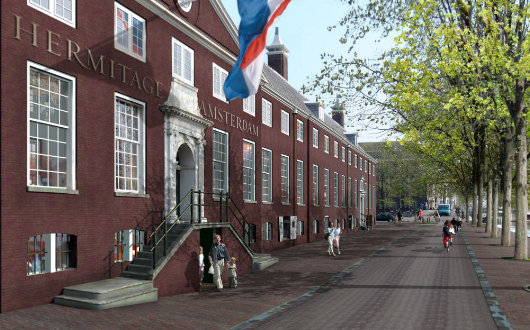
A new 100,000-square-foot space displaying works from the Hermitage Museum in St. Petersburg will open in Amsterdam this June. The Hermitage Amsterdam will be located in the Amstelhof, a former home for the elderly built in 1683 by the Dutch Reformed Church and transformed into a modern exhibition space by Hans van Heeswijk Architects. The opening exhibition, “At the Russian Court” — a “a deeply researched exploration of the opulent material culture, elaborate social hierarchy and richly layered traditions of the Tsarist court at its height in the nineteenth century” — will display 1,800 works from the massive collection in St. Petersburg and continue until the end of January 2010.
First Troop, Philadelphia City Cavalry
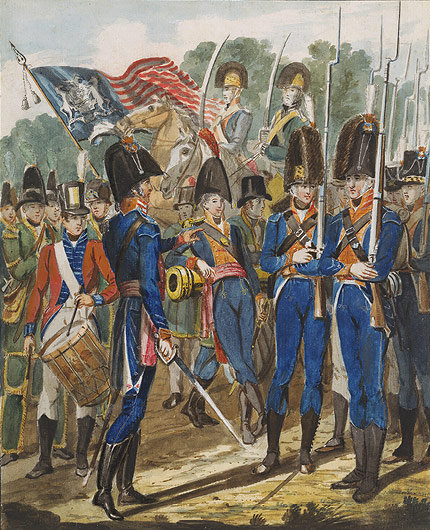
Watercolor, gouache, and graphite on white laid paper, 9 in. x 7 1/4 in.
c. 1811-1813, Rogers Fund
Previously: The Prince of Wales in Philadelphia
Some Afrikaners
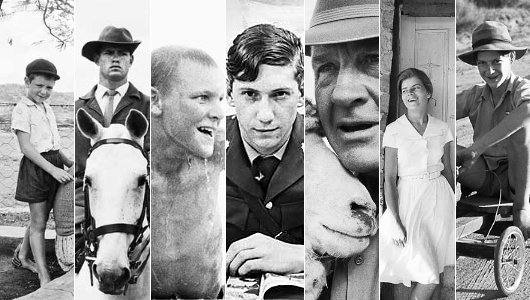
“In my father’s shop,” writes the photographer David Goldblatt, “serving Afrikaners, I found, almost in spite of myself, that I liked many of them and, to my surprise, that I was beginning to enjoy the language. There was a warm straightforwardness and an earthiness in many of these people that was richly and idiomatically expressed in their speech. And, although I have never advanced beyond being able to speak a sort of kombuistaal, I delighted in our conversations. Yet, withal, I was very aware that not only were most of these people Nationalists, strong supporters of the Party and its policies, but that many were racist in their very blood. Although anti-Semitism was now seldom overt, they made no secret of their attitude to blacks, who at best were children in need of guidance and correction, at worst sub-human. I was much troubled by the contradictory feelings of liking, revulsion, and fear that these Afrikaner encounters aroused in me and felt the need somehow to come closer to these lives and to probe their meaning for me. I wanted to do this with the camera.
“I had begun to use the camera long before this in a socially conscious way. And so I began to explore working-class Afrikaner life in our district. I drove out to the kleinhoewes around the town. I would stop and ask people if I might do some portraits of them or spend time with them while they went about whatever they were doing. In this way I became intimate with some of the qualities of everyday Afrikaner life in these places, and with some of its deeply embedded contradictions.
“An old man sits for me. A black child comes and stands next to him, looking at me with curiosity. The man turns and says to the child, ‘Ja, wat maak jy hier, jou swart vuilgoed?‘ (Yes, what are you doing here, you black rubbish?), the insult meant and yet said with affection. How is this possible? I don’t know. But the contradiction was eloquent of much that I found in the relationship between rural and working-class Afrikaners and blacks: an often comfortable, affectionate, even physical intimacy seldom seen in the ‘liberal’ circles in which I moved, and yet, simultaneously, a deep contempt and fear of blacks. …
“Travelling through vast, sparsely populated parts of the country with my camera became a major part of my life at that time. I think that our landscape is an essential ingredient in any attempt at understanding not just the Afrikaner but all of us here. We have shaped the land and the land has shaped us. Often the land was unforgivingly harsh. Yet, the harsher the landscape the stronger the Afrikaners’ sense of belonging seemed to be. Many of the people whom I met in the course of those trips had a rootedness in the land of which I was very envious. Envious in the sense that I couldn’t claim 300 years of ancestry in this country. Yet, increasingly, I felt viscerally bonded to it.”
Peter Stuyvesant’s Legion
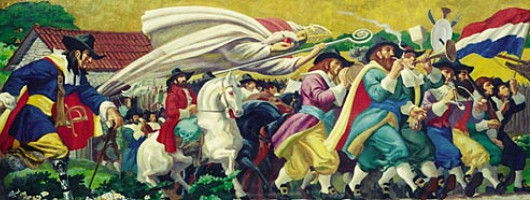
Oil on canvas, 30 in. x 80 in.
1953, Jacob Ruppert Brewery
An Aside: I was taught Latin beside the beautiful carved marble fireplace in the artist’s dining room. Winter lived next door to the school, which purchased the house after his death and used it for class rooms. In our more neglectful hours which investigated the basement, in which were still secreted some of the artist’s sketches for larger murals and models for a bas-relief.
Lewis of the Porcellian
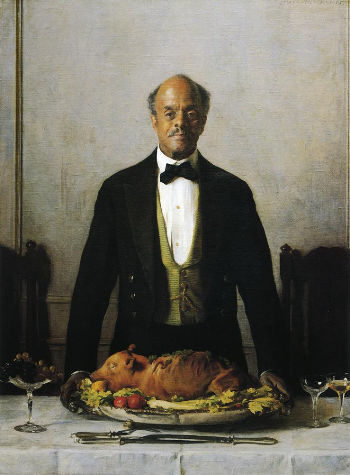
Oil on canvas, 54 in. x 40 in.
1919, the Porcellian Club
The Porcellian Club at Harvard University was founded in 1791 and McKean Gate, the entrance to Harvard Yard opposite the club’s quarters on Massachusetts Avenue in Cambridge, features a boar’s head in tribute. Digby Baltzell ranked the Porc (as it is colloquially known) as the most exclusive of Harvard’s “final clubs”, and Porcellian is known for having correctly turned its nose to Harvard seniors who later turned out to be no good: Joseph Kennedy was blackballed and Franklin D. Roosevelt described his failure to be elected to Porcellian as “the greatest disappointment of my life”.
The Bad Shepherd
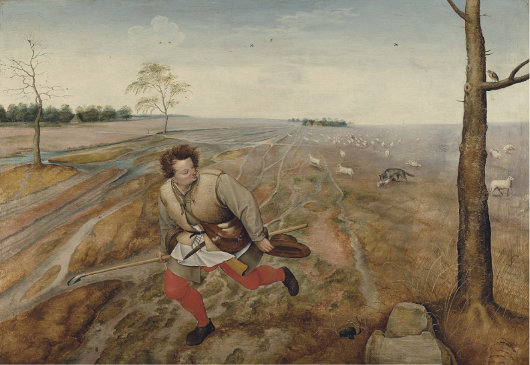
Pieter Brueghel II, The Bad Shepherd
Oil on panel, 29 in. x 41¼ in.
c. 1616, Private collection
With an original estimate of £1,000,000–£1,500,000, Pieter Brueghel the Younger’s The Bad Shepherd sold at a final hammer price of £2,505,250 at Christie’s in London this July. As the house lot notes state, it is “one of the most original and visually arresting of all images within the Brueghelian corpus of paintings”.
I am the good shepherd. The good shepherd lays down his life for the sheep. He who is a hireling and not a shepherd, whose own the sheep are not, sees the wolf coming and leaves the sheep and flees; and the wolf snatches them and scatters them. He flees because he is a hireling and cares nothing for the sheep.
It is significant that the distant horizon behind the sheep is broken only by a solitary church spire and a small farmstead. They seem to suggest that in abandoning his responsiblities the shepherd also rejects both the church and the community as he rushes headlong in the opposite direction. The mental anguish experienced by the shepherd is mirrored in a remarkable way by the barren landscape, shown from a dizzying bird’s eye perspective, stretching back into infinity. Interwoven only by vein-like tracks and ditches that lead the eye into the distance, the landscape is one of the artist’s most extraordinary achievements and very much a precursor to the psychological landscapes of the 20th century.
There is something arrestingly modern about this painting that fascinates me.
Subway riders, New York City, 1914
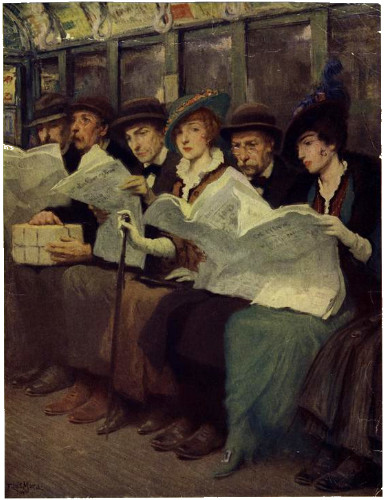
Francis Luis Mora, Subway riders, New York City, 1914
Print, 12½” x 9¼”
1914, New York Public Library
A Tribute to Cockerell
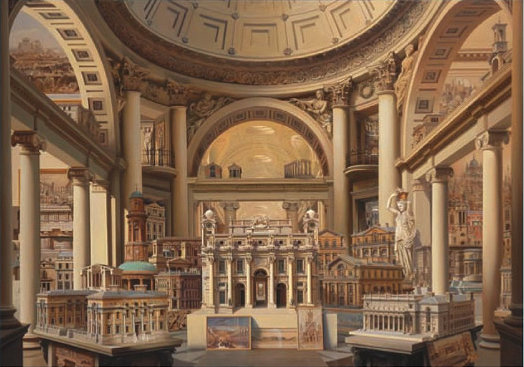
Carl Laubin, A Tribute to Charles Robert Cockerell, RA
Oil on canvas, 39′ 11″ x 60′
2005, Private collection
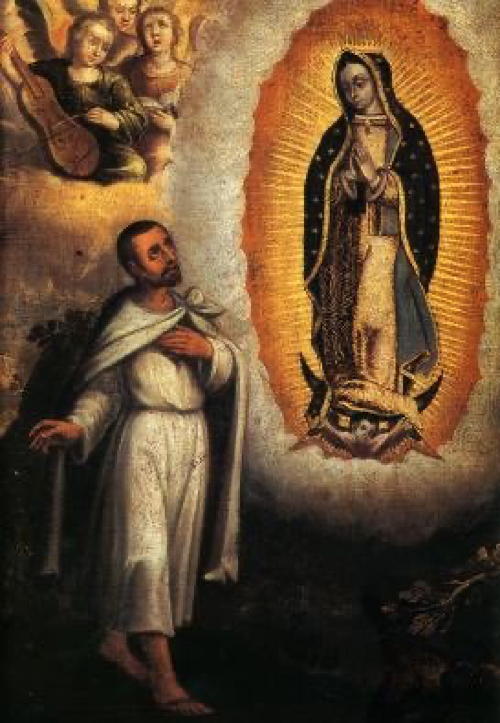
Ave Maria, Plena Gratia!
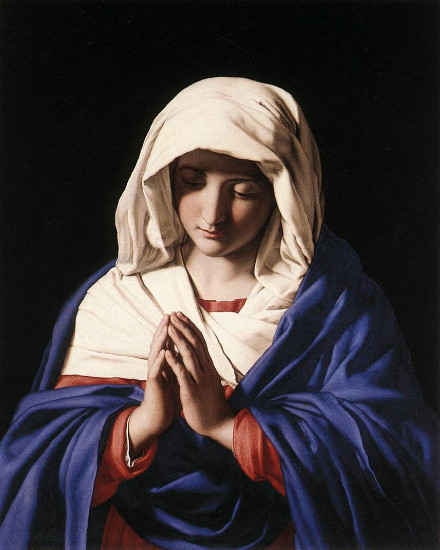
In thanksgiving for many petitions granted.
St Andrews in London
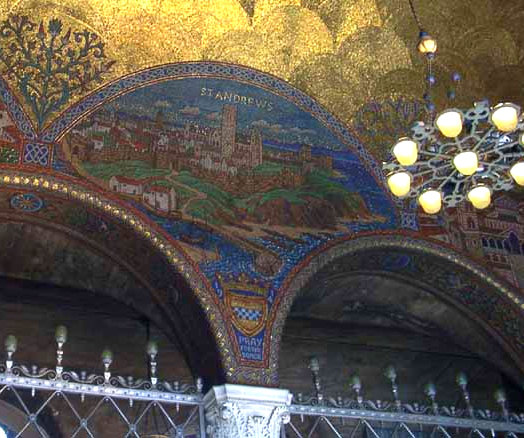
A LITTLE SOMETHING for our good friends from university who’ve just moved to London from the countryside. I hope that when they are in the Cathedral they will pop into our patron’s chapel, glance at the mosaic of our dear old Royal Burgh of St Andrews, remember good times, and say a prayer for us all.
Christopher Street, Greenwich Village
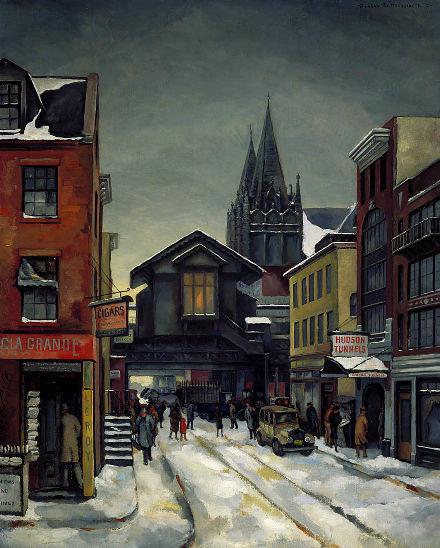
Beulah R. Bettersworth, Christopher Street, Greenwich Village
Oil on canvas, 30 1/8″ x 24 ¼”
1934, Smithsonian American Art Museum
Grand Central Station at Night
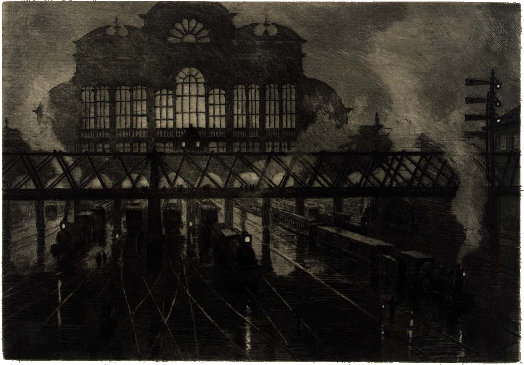
Charles Frederick William Mielatz, Grand Central Station at Night
Etching on paper, 7″ x 10″
1890, Smithsonian American Art Museum
This, of course, is not the Grand Central we know today, but its immediate predecessor.
The Rapalje Children
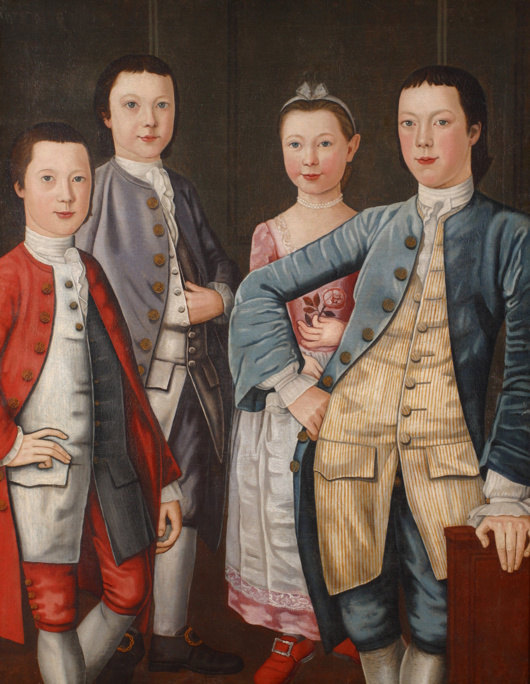
Oil on canvas, 50¾″ x 40″
1768, New-York Historical Society
Durand’s painting of the four children of this prominent mercantile family of Manhattan is one of the finest examples of group portraiture from the colonial period in America. From left to right are Garret (b. 1757), George (b. 1759), Anne (b. 1762), and Jacques (b. 1752).
The painter had come to New York from Virginia two years previous to paint individual portraits of the children of the Beekman family. Art historians suspect he was born or trained in France. Durand later returned to Virginia, where he continued to paint until his death in 1805.
Ludlow Street
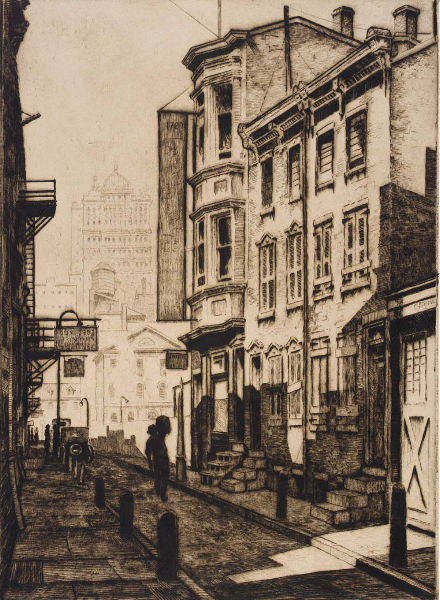
George A. Bradshaw, Ludlow Street
Drypoint on paper, 8 7/8 ” x 6 3/8 ”
1935, Smithsonian American Art Museum
Ludlow Street is the home of the world-famous Katz’s Delicatessen.
New Netherland Medal
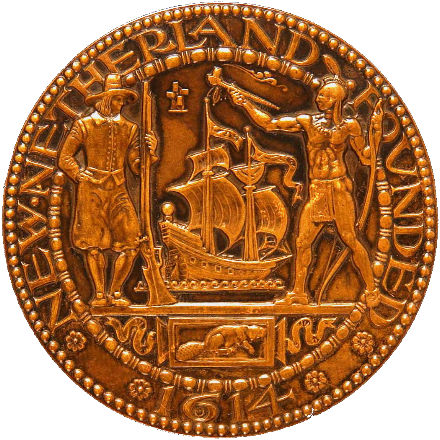
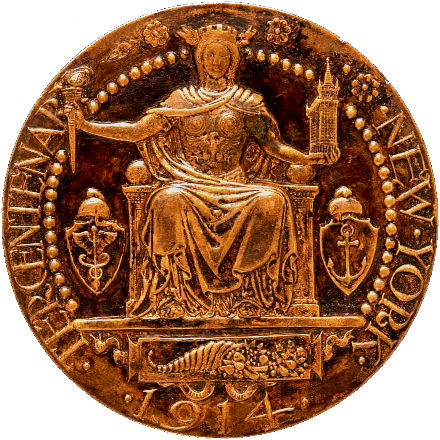
Paul Manship, New York Tercentenary Medal
Bronze, 2 3/4 inch diameter
1914, Smithsonian American Art Museum
For Saint George
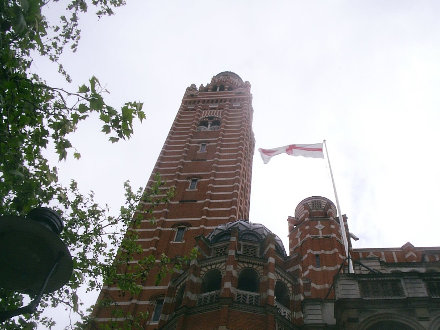
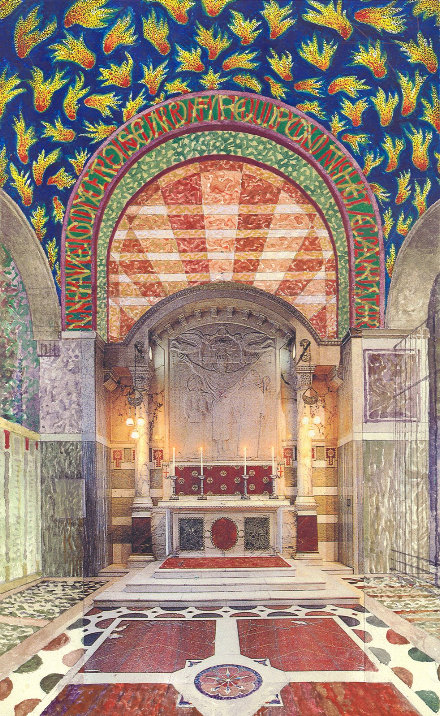
THE CROSS OF SAINT GEORGE snaps proudly from the flagpole above Westminster Cathedral, the Administrator of which, Msgr. Mark Langham, has given us a special St. George’s Day treat by revealing the newly-commissioned designs for completing the mosaic work in that cathedral’s chapel dedicated to the patron saint of England.
Lord Glenavy

Sir James Henry Mussen Campbell, Bt., 1st Baron Glenavy, PC, QC. was born in Dublin in 1851. Campbell graduated from the University of Dublin (Trinity College) a Bachelor of the Arts in 1874. He was called to the Irish bar in 1878, being made a Queen’s Counsel in 1892.
Campbell was elected to Parliament in 1898, being called to the English bar a year later. He was made Solicitor General for Ireland in 1903, as well as being appointed an Irish Privy Counsellor. He rose to become Lord Chief Justice of Ireland in 1916, being made a baronet the following year, and Lord Chancellor of Ireland the year after that (1918). Sir James was ennobled as 1st Baron Glenavy upon relinquishing office in 1921.
Ireland was partitioned in the following year, and Lord Glenavy became the first Cathaoirleach of Seanad Éireann (Presiding officer of the Irish senate). In 1923, he chaired the judicial committee investigating the establishment of a new courts system for the Irish Free State. His proposals were implemented the following year in the Courts of Justice Act 1924, forming the Irish courts as they remain today.
Having served one six-year term in the Seanad, he did not seek re-election in 1928, and died three years later in 1931. Holding the largely honorary position of President of the College Historical Society (“the Hist”), Dublin University’s debating society, from 1925, he was succeeded upon his death by his fellow Irish Protestant, Douglas Hyde, who himself later became the first President of Ireland from 1938 until 1945.
Un Écossais en France
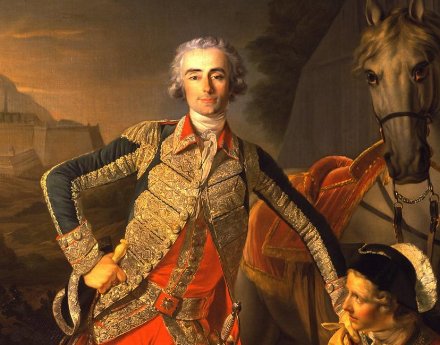
CHARLES GRANT, VICOMTE DE VAUX, was a Frenchman of Caledonian extraction who served as a sous-lieutenant in the Scots Company of the Garde du Roi, eventually rising to the rank of Lieutenant Colonel. A cadet branch of the Scottish clan, the Grants in France made sure to maintain links with their kinsmen in the old country. Abbé Peter Grant helped Sir James Grant, 8th Bt., commence an art collection while Sir James was on the Grand Tour in 1759-60. Abbé Grant’s nephew, Baron Grant de Blairfindy, was a fellow Catholic and Colonel in the Légion Royale of Louis XVI.
In a letter to Sir James, who was Chief of the Grants, Blairfindy described their fellow kinsman the Vicomte de Vaux as “a clever, brave officer, polite in company… as brave as his sword,” though, rather disappointingly, the Baron adds that the Vicomte “never drinks”. De Vaux himself took a keen interest in his extended family, and when the terrors of the French Revolution forced him into exile in London, he published there his Mémoires de la Maison Grant depicting the history of the clan. (more…)
King Jagiello of Poland
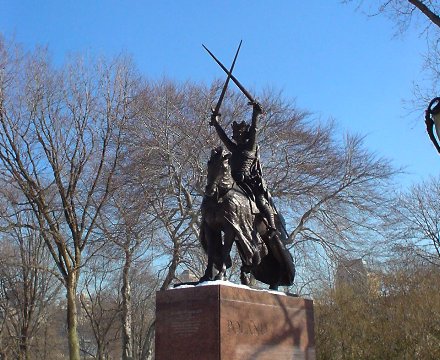
My favorite statue in Central Park is that of King Władysław II Jagiełło of Poland, by the Turtle Pond. (more…)
Christmas
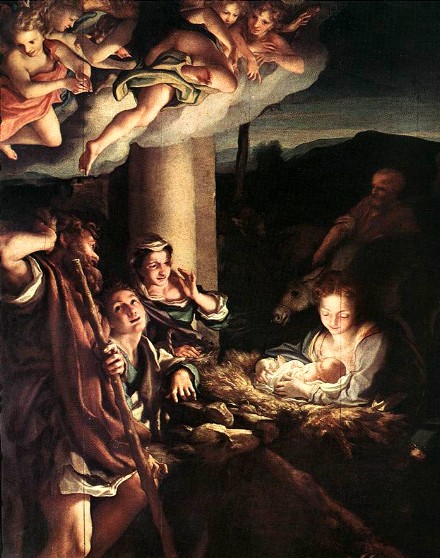
Corregio, Nativity
Oil on canvas, 101″ x 74″
1528-30, Gemäldegalerie, Dresden
Who with His life, the world to save,
All honor, power, glory, Thine,
and in Thy Heart our souls do bind.
a very merry and blessed Christmas.
Search
Instagram: @andcusack
Click here for my Instagram photos.Most Recent Posts
- Brunel’s Unbuilt Capitol February 3, 2026
- Cricket at Fordham January 27, 2026
- Palacio Barolo Revisted January 14, 2026
- Learning to Love Liguria January 14, 2026
- Crux Alba No. 2 January 13, 2026
Most Recent Comments
Book Wishlist
Monthly Archives
Categories