About Andrew Cusack
 Writer, web designer, etc.; born in New York; educated in Argentina, Scotland, and South Africa; now based in London.
 read more
News
Blogs
Reviews & Periodicals
Arts & Design
World
France
Mitteleuropa
Knickerbockers
Argentina
The Levant
Africa
Cape of Good Hope
Netherlands
Scandinavia
Québec
India
Muscovy
Germany
Academica
In the footsteps of an illustrious predecessor
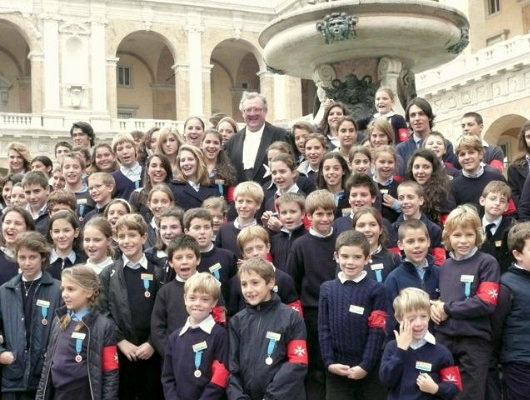
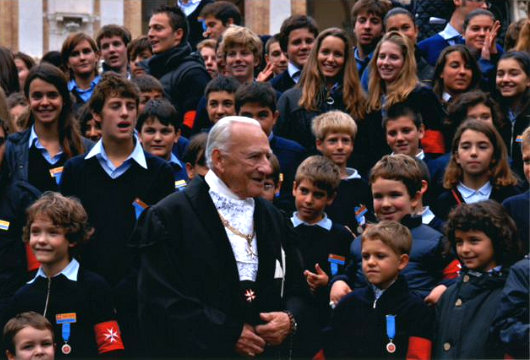
This past November His Most Eminent Highness Fra’ Matthew Festing, the Prince & Grand Master of the Order of Malta, led the order’s annual pilgrimage of Italian youth to the Marian shrine of Loreto, which last year had been led by his predecessor the late Fra’ Andrew Bertie.
The Prime Minister & His Wife
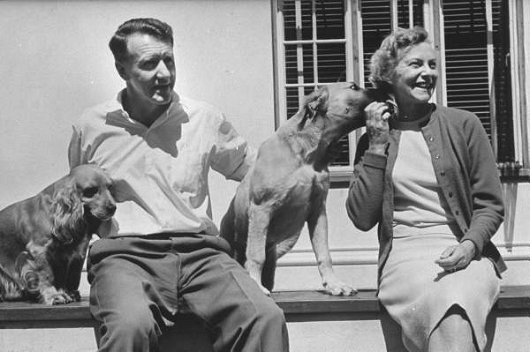
The Rt Hon Ian Douglas Smith & Mrs Smith, at home in Salisbury, Rhodesia.
Dublin (In the Rare Old Times)
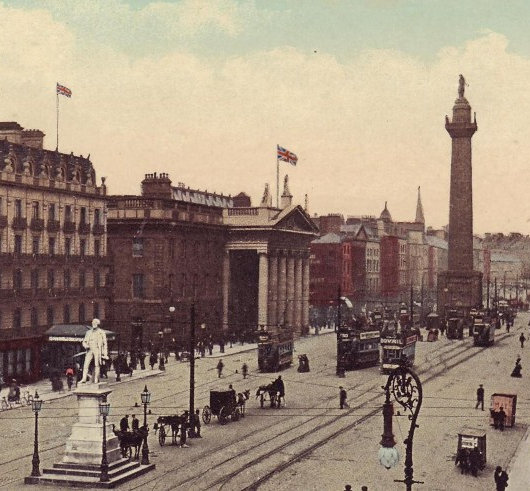
O’Connell Street, Dublin, United Kingdom of Great Britain & Ireland.
‘German’ Poland vs. ‘Russian’ Poland
A curiosity of the 2007 Polish parliamentary election
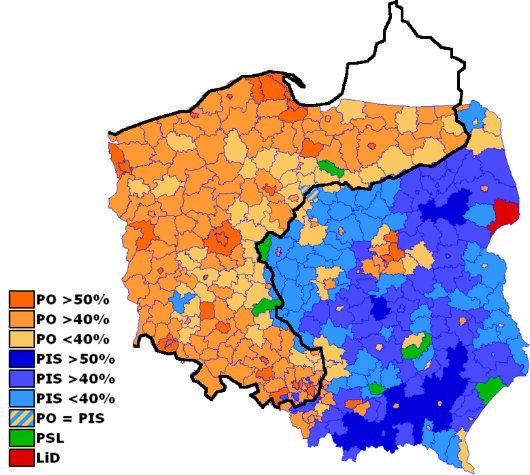
THIS MAP displaying the results of the 2007 general election for the Polish parliament is overlaid with an outline of the nineteenth-century border between the German and Russian empires.
The areas formerly ruled by the German Kaiser tend to back the right-wing liberal Platforma Obywatelska (“Civic Platform”) party, while those formerly ruled by the Tsar tend to support the conservative Prawo i Sprawiedliwość (“Law and Justice”) party.
The green represents the centrist-agrarian Polish People’s Party, while the dark red represents the already-defunct “Left and Democrats” coalition.
Source: Strange Maps
Buckleyana up for sale
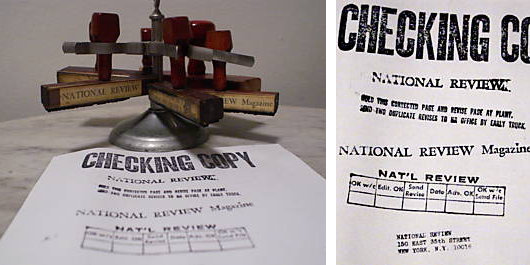
Anyone for bidding on a piece of history? This set of six rubber stamps from the old East 35th Street offices of the once-great National Review is up for grabs on eBay. Less than two days left for bidding.
West End Collegiate Church
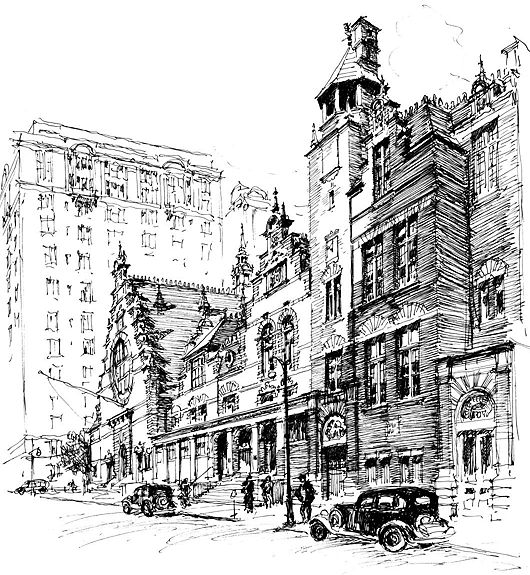
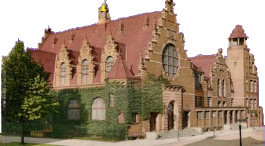 One of my good friends, who is amongst the most loyal denizens of this little corner of the web, found our post on St. Nicholas Collegiate Church of great interest because his son attended the Collegiate School, the oldest school in North America (founded in 1628, and formally incorporated ten years later). The Collegiate School is part of the same complex as the West End Collegiate Church on the corner of West End Avenue & 77th Street on the Upper West Side. The church & school buildings were designed by McKim Mead & White in a Dutch Renaissance Revival style, and handsomely executed.
THE ARCHITECTS modelled the church after the seventeenth-century Vleeshal (meat market) of Haarlem in the Netherlands. The story goes that, during the Second World War, a handful of Collegiate grads serving together in the U.S. Army participated in the liberation of Haarlem, stumbled upon the Vleeshal and said “Hey, that’s our school!”
The Dering Roll
College of Arms Foundation
&
The
Committee on Heraldry
of the
New York Genealogical & Biographical Society
cordially invite you to a talk by
MARIA DERING
on
THE DERING ROLL
Wednesday 14 January 2009
at
6:00 PM
The Portrait Gallery
No. 122 East 58th Street
Between Park & Lexington Avenues
In August 2008, the British Library acquired ownership of the Dering Roll, the oldest-surviving English roll of arms. The illuminated parchment dates from c. 1270-1280 and is a vital documentary record for the study of knighthood in medieval England. It contains 324 coats of arms arranged in 54 rows, with six shields assigned to each line.
Maria Dering, a member of the G&B’s Committee on Heraldry, will present an illustrated talk about the Dering Roll, its history, and the public campaign to keep it in the United Kingdom after it was bought by a foreign collector.
Admission charge of $20 (cash or check) includes a wine and cheese reception.
To reserve, please email John Shannon at john.shannon@coaf.us.
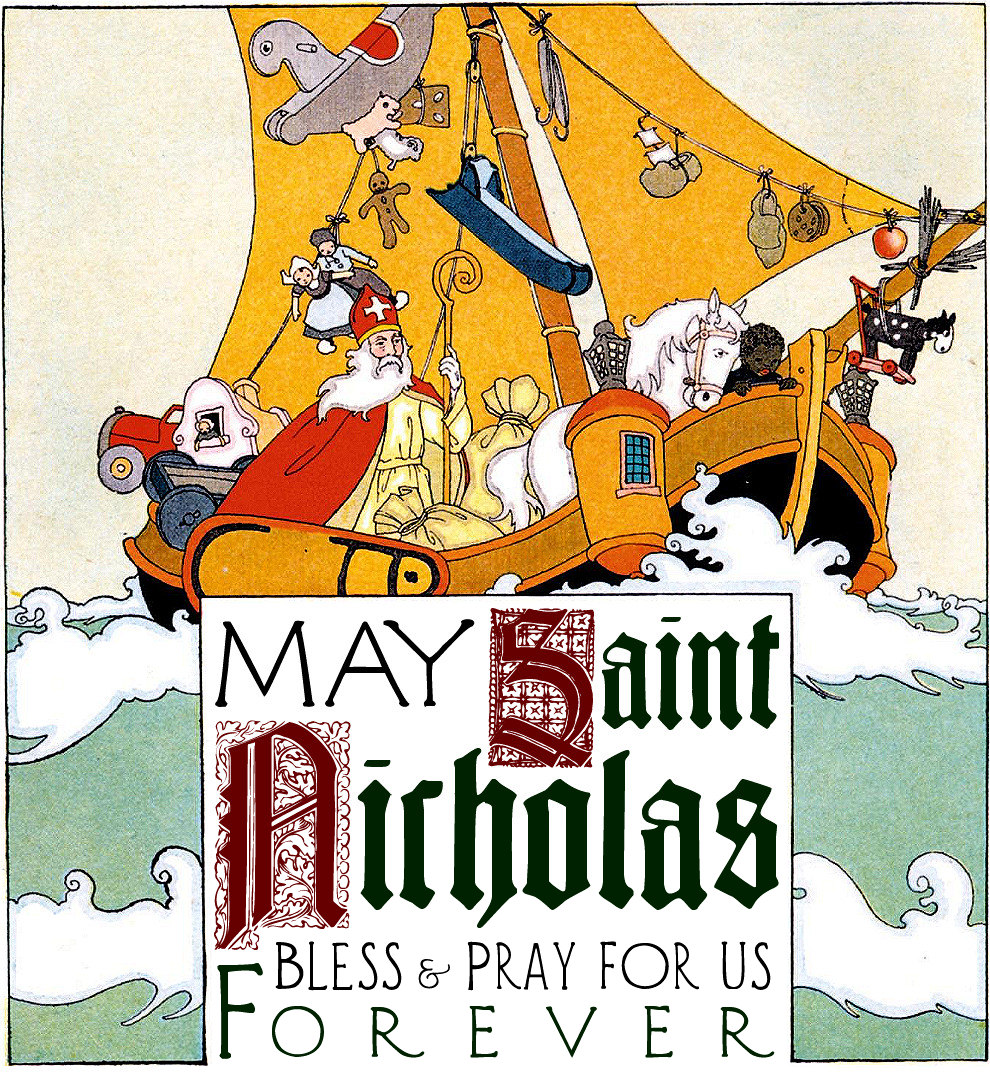
New York’s Dutch Cathedral
The Collegiate Church of St. Nicholas, Fifth Avenue
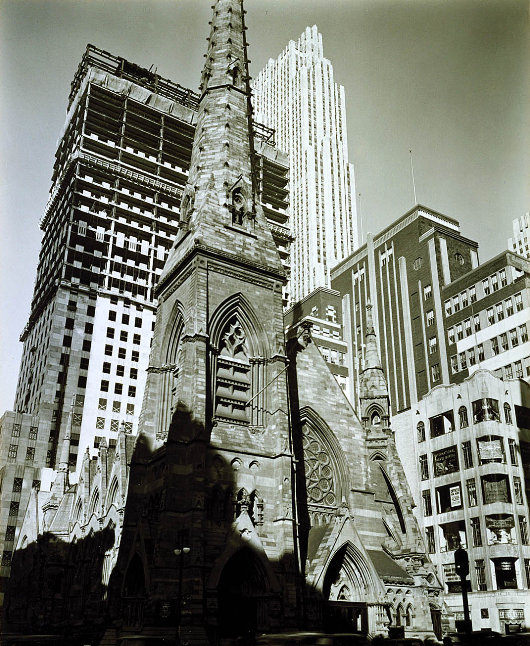
Dedicated a hundred-and-thirty-six years ago, the Collegiate Reformed Protestant Dutch Church of Saint Nicholas on the corner of Forty-eight Street & Fifth Avenue (photographed above by Berenice Abbott) was for many years regarded as the most eminent Protestant church in New York. The Collegiate Reformed Protestant Dutch Church is the oldest corporate body in what is now the United States, having been founded at the bottom of Manhattan in 1628 and receiving its royal charter from William & Mary in 1696. Now part of the Reformed Church of America, the Collegiate Reformed Protestant Dutch Church is actually a denomination within a denomination, and the remaining Collegiate Churches of New York tend to preach a sort of “Christianity Lite”. (The famous Norman Vincent Peale, author of The Power of Positive Thinking and one of the paragons of the “finding a religion that doesn’t interfere with your lifestyle” school of thought, was the pastor of Marble Collegiate Church at Twenty-ninth & Fifth, where Donald Trump is a member of the congregation).
Peter Stuyvesant’s Legion
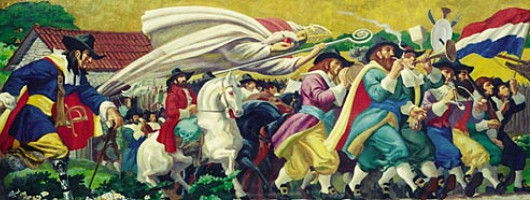
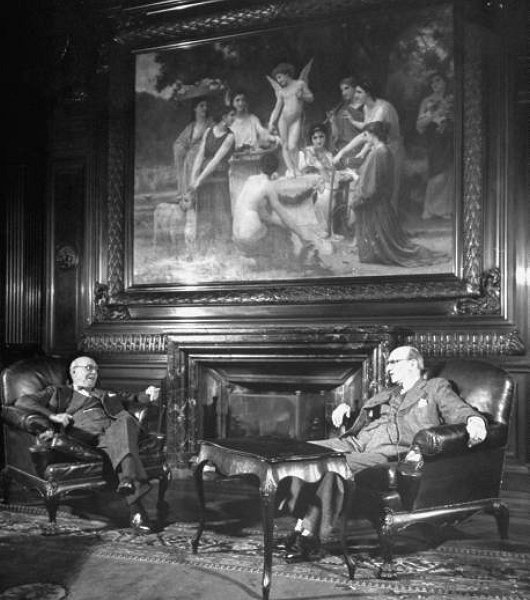
Oil on canvas, 30 in. x 80 in.
1953, Jacob Ruppert Brewery
An Aside: I was taught Latin beside the beautiful carved marble fireplace in the artist’s dining room. Winter lived next door to the school, which purchased the house after his death and used it for class rooms. In our more neglectful hours which investigated the basement, in which were still secreted some of the artist’s sketches for larger murals and models for a bas-relief.
Remembering the Seventh
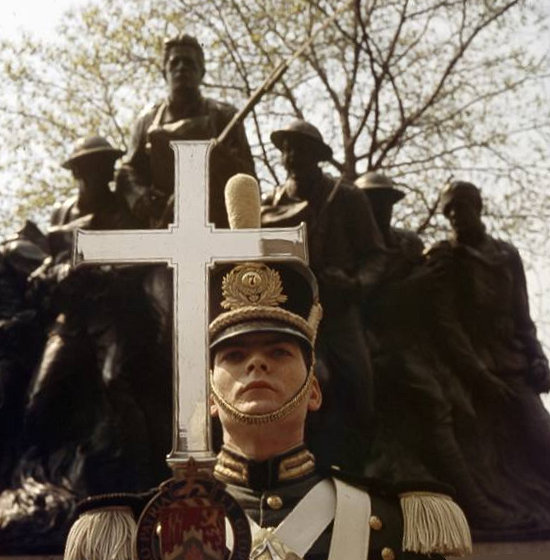
It is entirely appropriate that November 11 — Armistice Day — both falls during the month of the Holy Souls and on the feast of St. Martin of Tours. It’s not unlikely that the souls in Purgatory added their voices to plead for peace that November of 1918, and St. Martin, who had himself been a Roman soldier, was no doubt leading the cause from Heaven. (Indeed, his father having been in the Imperial Horse Guards, St. Martin was born into a military family).
67th & Fifth
One of the most remarkable things about these photos from a 1956 Seventh Regiment ceremony are how traditional the buildings in the background are.
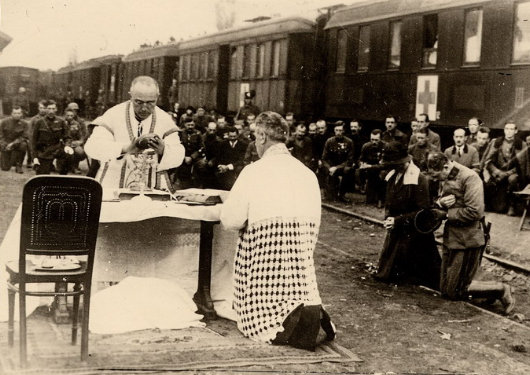
God and the Emperor
Von hier an blind
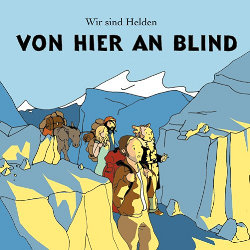 The German band “Wir sind Helden” is a quartet purveying inoffensive pop rock, and recommended to us by one of our continental cronies. For their 2005 album cover, Von hier an blind, the band commissioned a group portrait in the ligne-claire style. The design is an obvious homage to Hergé’s Tintin. “Wir sind Helden” are little-known in the English-speaking world, though they have played three sold-out concerts in London, and are available from the iTunes Music Store.
Thanksgiving Collect
The Pester Lloyd
The Hungarian capital’s German-language newspaper has been “independent, pluralistic, steeped in tradition” since 1854
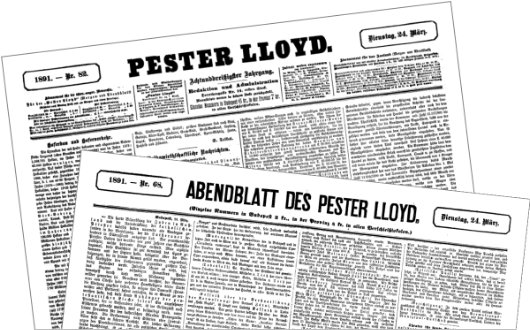
The fall of the Iron Curtain nearly twenty years ago after a half-century of Communist domination in Eastern Europe afforded an opportunity to revive many of the traditions and institutions which — while they had survived monarchy, republicanism, and fascism — were annihilated by the all-consuming Red totalitarianism. One such institution that has risen from the ashes is Hungary’s once-revered German-language newspaper, the Pester Lloyd.
 First appearing in 1854, when Buda and Pest were still two cities flanking the banks of the Danube, the Pester Lloyd was the leading German journal in Hungary. Printed daily with morning and evening editions, the “Pester” in the paper’s name refers to Pest, while “Lloyd” is in imitation of Lloyd’s List (the London shipping & commercial newspaper founded in 1692 by the eponymous properitor of Lloyd’s Coffee Shop and still going strong today). The paper first gained prominence under the editorial leadership of Dr. Miksa (Max) Falk, who had famously tutored the Empress Elisabeth in Hungarian and instilled in the consort a particular love for the Hungarian kingdom.
Search
Instagram: @andcusack
Click here for my Instagram photos.Most Recent Posts
- Brunel’s Unbuilt Capitol February 3, 2026
- Cricket at Fordham January 27, 2026
- Palacio Barolo Revisted January 14, 2026
- Learning to Love Liguria January 14, 2026
- Crux Alba No. 2 January 13, 2026
Most Recent Comments
Book Wishlist
Monthly Archives
Categories