About Andrew Cusack
 Writer, web designer, etc.; born in New York; educated in Argentina, Scotland, and South Africa; now based in London.
 read more
News
Blogs
Reviews & Periodicals
Arts & Design
World
France
Mitteleuropa
Knickerbockers
Argentina
The Levant
Africa
Cape of Good Hope
Netherlands
Scandinavia
Québec
India
Muscovy
Germany
Academica
The Rhodes Memorial
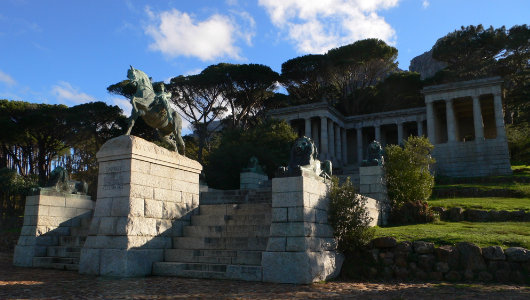
PERCHED AMID THE bluegum trees on the slopes of Devil’s Peak in Cape Town is the memorial to one of the most brilliant & cunning men the world has ever produced. Cecil John Rhodes may have been born in Bishop’s Stortford, England, but his worldly glories all emanated from the Cape of Good Hope, and so it’s appropriate that his memorial stands here in Cape Town. His first commercial enterprise in South Africa was founding the Rhodes Fruit Farms (now Rhodes Food Group) which still exist on the road from Stellenbosch to Franschhoek, and has since expanded throughout the Western Cape, and to the Transvaal and Swaziland. But it was his creation of the diamond monopoly De Beers out of the Kimberley mines that made him one of the wealthiest men in the world. Ten years after being elected to the Cape Parliament, he was made Prime Minister of the Cape in 1890, but his catastrophic and illegal attempt to seize the independent Transvaal in 1895 forced his resignation from politics in disgrace. (more…)
Sounds like America
I attended Orthodox Divine Liturgy yesterday at the Russian Orthodox Church of St. Nicholas, about a 20-minute walk from Central Station. The liturgy was mostly in Dutch. The church is a former Franciscan priory church. A parishioner, a Dutch convert, told me that in Holland you are either a Protestant Calvinist, a Catholic Calvinist, or an atheist Calvinist. He was pretty sure that most of the (tiny) Orthodox minority were Calvinists, too.
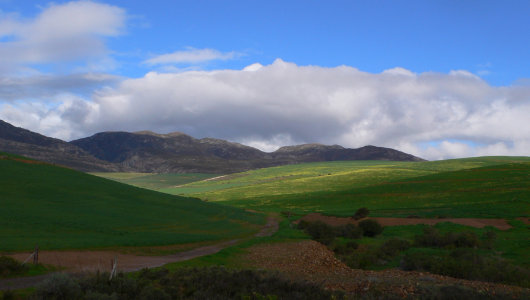
The Union Defence Force
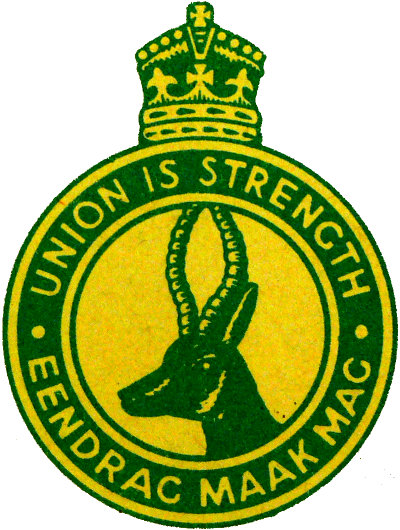
From 1912 to 1957, South Africa’s military was called the Union Defence Force (the Union in question being the Union of South Africa, the other USA). The Nationalist government renamed it the South African Defence Force (Suid-Afrikaanse Weermag) in 1957, prior to the declaration of the Republic of South Africa in 1961. After the introduction of universal suffrage in 1994, the SADF was merged with the MK (Umkhonto we Sizwe, the ANC’s terror branch) and APLA (Azanian People’s Liberation Army, the terrorist wing of the Pan-Africanist Congress), as well as the Self-Protection Units of Prince Mangosuthu Buthelezi’s Inkatha Freedom Party, into the South African National Defense Force (SANDF, or SANDEF), which remains the name of the country’s armed forces today.
The University of Dublin
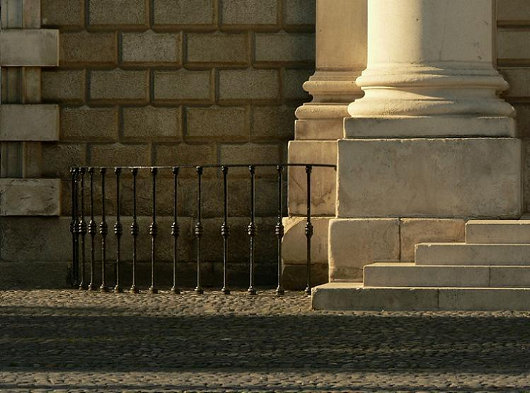
Founded in 1592, the University of Dublin is the youngest of the ancient universities of Great Britain & Ireland. (It’s ten years younger than the next youngest, Edinburgh, and nearly five-hundred years younger than the oldest, Oxford). On Archiseek, an Irish internet forum dedicated to architecture, there is a user named ‘grahamh’ who posts, from time to time, photographs he has taken from around the fair city of Dublin, of which those presented here are a selection. The University of Dublin is much more commonly known as Trinity College, Dublin, as the university has just the one college, unlike the multi-collegiate universities of Oxford, Cambridge, and elsewhere. (more…)
Reclaiming his Birthright
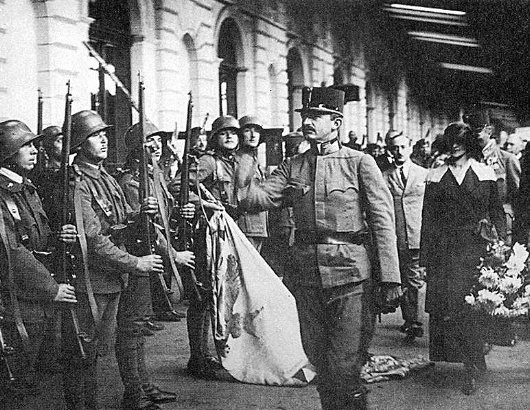
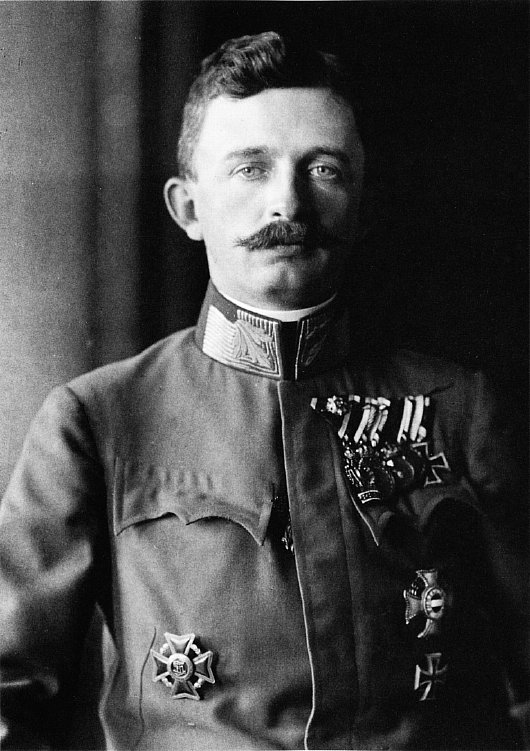
Blessed Emperor Charles’s two homecomings to Hungary after the overthrow of the Hapsburgs are worthy of the greatest spy novels, except they are fact: the hushed secrecy and underground preparations, the airplane contracted under a false name, the disguises used to sneak over borders. In his first attempt, Charles — the Apostolic King of Hungary — made it all the way to Budapest, only to be persuaded to return to exile by the self-appointed regent, Admiral Horthy (a naval commander in what, by then, was a land-locked country).
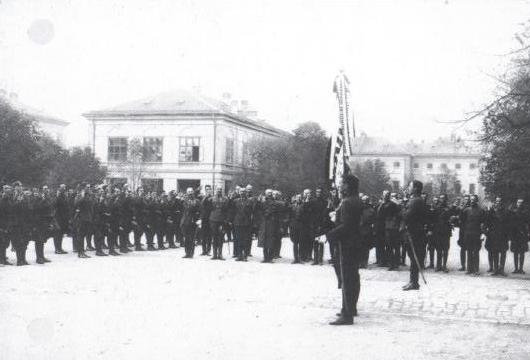
The King’s second attempt to reclaim his power was much more considered and deliberate, and he spent some time securing a loyal power base of local nobility before pressing on to Budapest by armoured railway train. The King’s force made it to just outside of the Hungarian capital before they were overwhelmed by troops loyal to Horthy — who, in order to maintain their loyalty, neglected to inform the soldiers and officers that the “rebels” they were fighting were actually those of their King and Queen.
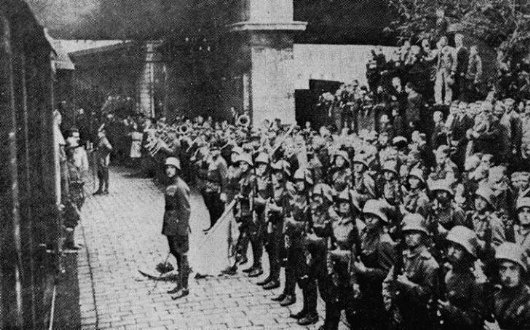
Along his path to the capital, the King was greeted by fervent crowds, and stopped at least twice to review small detachments of troops and to show himself in person to his loyal Hungarian subjects. The King had returned, but sadly not for long. After the failure of this second attempt, the Allied powers refused to allow the Imperial & Royal family to remain in mainland Europe, and exiled them to the Portuguese island of Madeira, where the Emperor-King grew ill and eventually died. He is entombed on the island today — a source of great pride, I am told, to the Madeirans.
Elsewhere: Miracle Attributed to Blessed Charles (Norumbega)
Il degrado della lingua italiana
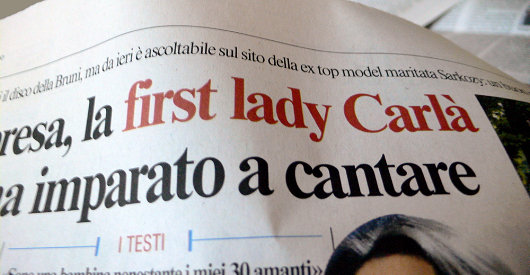
The French are always the one’s worrying about the revolting infiltration of English upon their beautiful and august language — and rightly so — but in my experience it is the Italians who should be worrying. One need only look at their newspapers to see the wretched expansion of English into one of the most beautiful languages of Europe, and indeed the world. Carla Bruni is “la first lady”? What’s wrong with “prima signora” or some other such equivalent. (more…)
Whiskey Tango Foxtrot
Followers of recent news in right-wing French politics will be able to decipher this text message:
I hope to share more thoughts on this controversial subject when I get back to New York in September, but I’m busy settling my affairs in Africa this week, then hunkering through Edinburgh & London the following weeks, before I return to the glories of uncapped internet access. Until then, it can be followed in French at Le Salon Beige, among other blogs.
My bolt-hole in the Cape
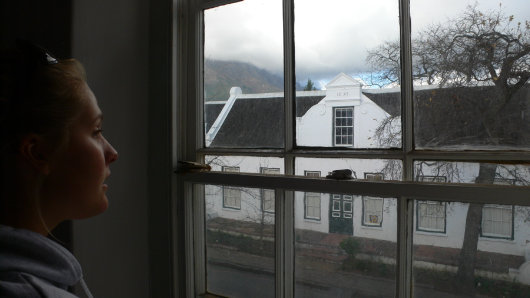
Winter in the Western Cape is relatively mild: grey days of pouring rain when the clouds veil Stellenbosch mountain, coupled with beautiful sunny afternoons best spent having a coffee with a friend at a sidewalk cafe.
Today is one of the grey days, however, in which one hopes to leave the house as little as possible (provided, that is, one is already adequately supplied with enough tea and books to last the day).
My little flat is in an old Dutch townhouse in the middle of town, one which the arbitrary modernisers neglected to supply with an alternative source of heat when they foolishly removed the iron stoves and blocked all the fireplaces.
Nevermind. A good jumper and a cup of rooibos will keep me warm as I make progress with Sassoon’s Memoirs. (more…)
Crosses Return to Columbia Crown
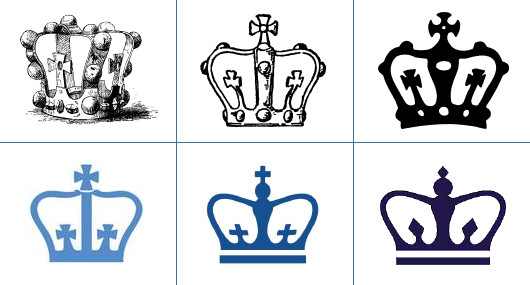
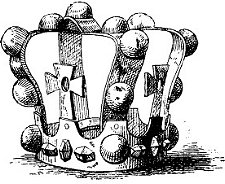 AFTER AN ABSENCE of some years, Columbia University has returned the crosses to its official crown emblem. The crosses had been missing since March 2004, when they were replaced with trapezoidal lozenges, but the more historic cross design has quietly returned to favour as the Ivy League institution’s official symbol. Columbia was founded in 1784, but claims the earlier heritage of King’s College, founded in 1754 but exiled to Nova Scotia, where it now has university status, after the tumult of the American Revolution. A copper crown (right) was originally attached to the cupola of College Hall, King’s College’s home in the colonial city of New York. When Columbia was founded in 1784, a year after New York’s independence was recognized, the state legislature gave the property and endowment of King’s College to the new Columbia College, which was organized by the remaining non-Loyalist members of King’s College. (more…)
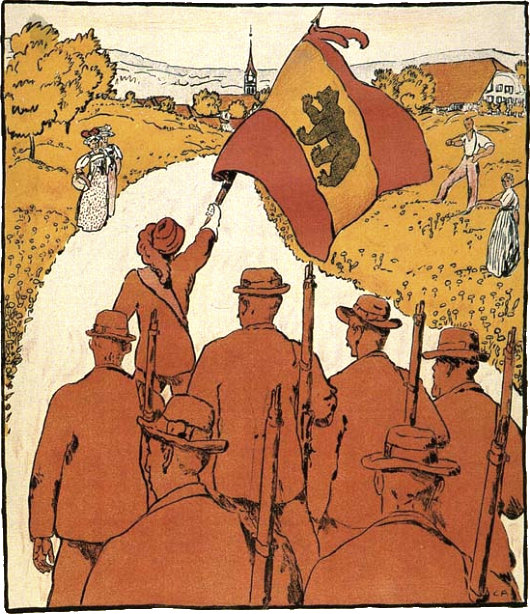
Metternich: Ex Ordine Libertas
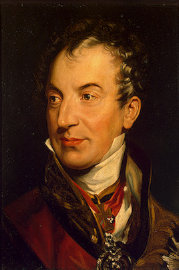
Fürst von Metternich-Winneberg-Beilstein
Flammen & Citronen
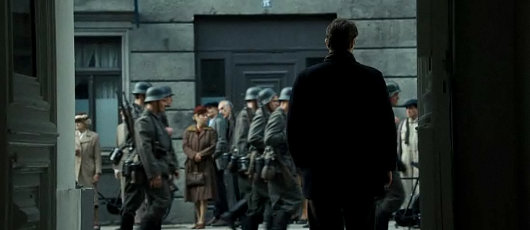
IT’S NOT VERY OFTEN that a big-budget period film comes out of Scandinavia, but recently there’ve been not one, but two. Here mentioned is the Danish film “Flammen & Citronen”, an action-drama based on the Second World War actions of Bent Faurschou-Hviid (nicknamed “Flame”) and Jørgen Haagen Schmith (“Citron”). Faurschou-Hviid and Schmith were members of the Holder Danske group, a Danish resistance organization primarily composed of Danes who had previously fought for Finland against the Soviet Union in the Winter War of 1939-1940. (more…)
Wisconsin Baroque, Priests, and Paper Architecture
Matthew G. Alderman
Taken from: Dappled Things, Ss. Peter & Paul, 2009
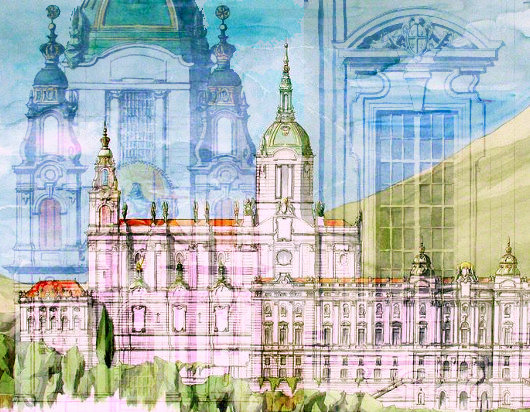
MY FAVORITE BUILDINGS never got around to being built. Some, like Sir Edwin Lutyen’s majestic design for Liverpool Cathedral, fell victim to budget cuts and the vagaries of history. Others were consigned by good taste, or occasionally outright timidity, to competition honorable mentions, and still others, like numerous student proposals or visionary dreams—like Boulée’s alarming hemispherical cenotaph for Newton, or an imaginary papal palace in Jerusalem cooked up by one of the votaries of the Vienna Sezession—weren’t terribly serious to begin with, unfortunately.
Note that I say favorite buildings, my own personal favorites, rather than the best or the most beautiful. Lutyens’ and Boulée’s fantasies may cross into that sublime territory of beauty by the power of their imaginative vision, but so many of the others owe their charm to their dreamlike extravagances, their intriguing if perhaps incomplete answers. An architect’s education lies in gathering up such fragmentary answers for the questions he will face down the road from clients and patrons. And therein lies the lure, and the value, of paper architecture.
I, like most of my colleagues, spent much of my time in school devising such useful fantasies, sometimes grand, sometimes small. Yet, they were not castles in the air. Each, while often existing in something like the best of all possible worlds in terms of budget and client, was grounded by an actual site and the laws of nature.
The most elaborate of all was my thesis project. It was an imaginary American seminary for a very real religious order, the fast-growing Institute of Christ the King, Sovereign Priest. This new congregation, dedicated to evangelization through the beauty of art, music, and the traditional Latin Mass, started out in, of all places, Gabon in Africa, but its present headquarters lies in Tuscany, in a villa bursting at the seams with seminarians in formation. While their ranks are dominated by Germans and Frenchmen, the increasing number of American clergy and their recent erection of a number of apostolates scattered across the Midwest suggested that a seminary in the United States, if not planned, might at least make for a plausible student project. Also, they seemed to have adventurous taste. I have since developed a passion for the Gothic but my first love has always been the Italian baroque. Perhaps they might be open to its vigorous beauty.
I garnered an award for the end result, the Rambusch Prize for Religious Architecture, and my putative patrons wanted copies of my enormous presentation watercolors to hang on their office walls—though, of course, the seminary would forever remain unbuilt. Its gigantic scale—typical for a student project—put it outside budgetary reach, unless, as someone cheerfully quipped, Bill Gates converted. Yet, the design was logical, consistent, and helped hone design skills I use every day at my drafting board.
The notion for the seminary came shortly after my first real-life encounter with the Institute’s work. My friends and I were road-tripping through the hill country of central Wisconsin, thick with vivid fall colors, and had just come back from a serene, silent low Mass and a long, talkative, private tour of St. Mary’s Oratory in Wausau. The Institute had transformed from a bland Midwestern Gothic to a dazzling near-replica of a fourteenth-century Bavarian court chapel. Bill Gates or no, these priests think big. Since then, they’ve overhauled a historic church in downtown Kansas City, and they’re presently turning their American priory from a burnt-out shell in a borderline south-side Chicago neighborhood into something out of Counter-Reformation Rome, and I have no doubt they’re going to succeed. Lest these projects seem like archaeological transplants, they are in fact derived from a logical extrapolation from local Catholic culture—Chicago’s colorful Polish cathedrals brought back to their ultramontane source, or, as I had just discovered, Midwestern Gothic returned to its Germanic roots. (more…)
Holland on the Hudson
The Kingdom of the Netherlands has very kindly set up a website devoted to the four-hundredth anniversary of Hudson’s discovery of what is now New York. Hudson, though English, was in the service of the Dutch and it was the Netherlandic people who eventually got the place settled. Because of his Hollandic overseers, Henry Hudson’s Christian name is often romantically Dutched up to Hendrick — hence one of the local high schools in Westchester is called “Hendrick Hudson High School”.
Braai at the Dutch House
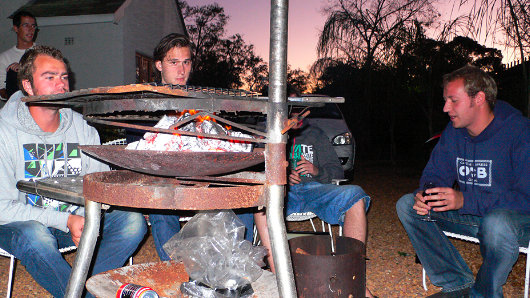
THE CUSACKIAN DICTIONARY OF the English Language defines the word braai thusly: “braai; S.Afr. [Afrikaans, lit. ‘to grill’.] n. and v. trans. and intr.; An out-door meal at which meat is grilled by the heat emanating from the embers of burnt wood.” The uncultured observer, when informed of a braai, often incorrectly equates it with a barbecue. The chief difference between a barbecue and a braai is that a barbecue tends to use either propane gas or ready-made charcoals, while the laboursome but worthwhile burning of wood is necessary to a braai. (more…)
Leeuwenhof
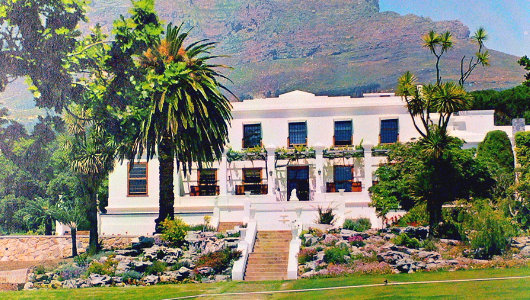
One of the better aspects of the job of Premier of the Western Cape is Leeuwenhof, the official residence that comes with the job. The estate on the slopes of Table Mountain dates from the days of the Dutch East India Company. That renowned governor of old, Simon van der Stel (after whom both Simonstad & Stellenbosch are named), granted the land to Guillaum Heems, a free burgher, to ‘clear, plant, plough, develop and work’. Heems christened the land Leeuwenhof — “Lions Court” — but sold it just two years later to Heinrich Bernhard Oldenland, Master Gardener of the Company’s Garden and Superintendent of Works for the Dutch East India Company.
Oldenland died just a few months after purchasing Leeuwenhof, and it passed into the hands of the fiscal Blesius, whose widow’s death put the estate under a series of masters until it was sold it for 14,000 guilders to Johan Christiaan Brasler, a Dane. Brasler enjoyed a good many years there in prosperity of late-eighteenth-century Cape Town, a period when the building of stately homes, townhouses, and government buildings became (as Cornelis de Jong put it at the time) “a passion, a craziness, a contagious madness that has infected nearly everyone”. This was the age of Thibault, Anreith, and Schutte — the true golden age of Cape Town’s stately finery. Inspired by the “madness” of which De Jong tells, the Dane Brasler converted the humble farmhouse of Leeuwenhof into the dignified abode we know today. (more…)
Die Koninkryk van die Swart Pelikaan
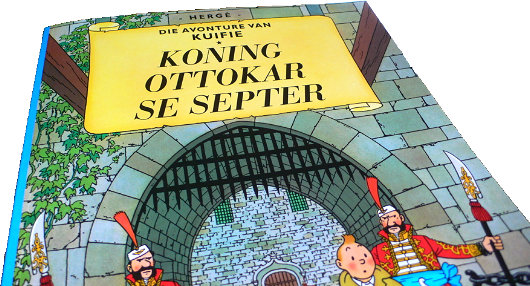
SYLDAVIA IS MY favourite country in the world. The buildings are old, the peasants are happy, and the king is ruling from his throne. Adding to my collection of Tintin books, the preponderance of which remain in New York, I know have three Afrikaans editions of Hergé’s works: Die Blou Lotus, Die Geheim van ‘De Eenhoorn’, and — my preferred among all the Tintin books — Koning Ottokar se Septer. Aside from Afrikaans, the rest of my copies are all either in French or English. I have a copy of the reprinted Tintin au Pays des Soviets and I just recently bought a copy of Tintin in the Congo, as I figured the European Union’s attempt to ban the book might make it harder to come by in years to come. I bought a copy of Le Sceptre d’Ottokar in a gas station in Brittany, one of the six special editions with a preface by Bernard Tordeur of the Hergé Foundation released in 1999/2000. Aside from Au Pays des Soviets & Le Sceptre, the only other French editions I have are L’Île Noire and Le Lotus bleu. (more…)
Search
Instagram: @andcusack
Click here for my Instagram photos.Most Recent Posts
- Brunel’s Unbuilt Capitol February 3, 2026
- Cricket at Fordham January 27, 2026
- Palacio Barolo Revisted January 14, 2026
- Learning to Love Liguria January 14, 2026
- Crux Alba No. 2 January 13, 2026
Most Recent Comments
Book Wishlist
Monthly Archives
Categories