About Andrew Cusack
 Writer, web designer, etc.; born in New York; educated in Argentina, Scotland, and South Africa; now based in London.
 read more
News
Blogs
Reviews & Periodicals
Arts & Design
World
France
Mitteleuropa
Knickerbockers
Argentina
The Levant
Africa
Cape of Good Hope
Netherlands
Scandinavia
Québec
India
Muscovy
Germany
Academica
Die Joodse nuwejaarsdag

Helen Zille looks bizarrely young in her official Rosh Hashanah greeting of 5769 (which is to say, last year).
Thérèse Takes Britain by Storm

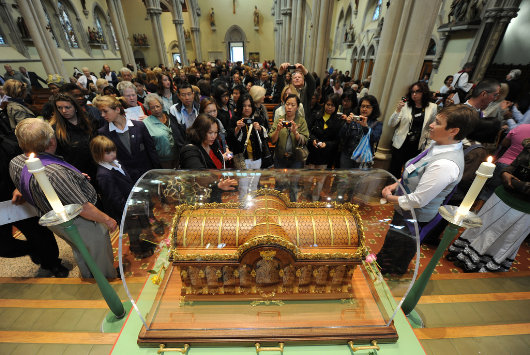
Relics of St Thérèse of Lisieux arrive in Britain for tour
The Guardian: Thousands wait at Portsmouth cathedral to see remains of St Thérèse
The Catholic Herald: The greatest saint of modern times
Thérèse of Lisieux portal
The Daily Telegraph: Relics of Carmelite nun St Thérèse on tour
St Thérèse of Liseux: who was she?
The relics and bones that bring us closer to God
BBC News: Saint’s remains arrive for tour
Reuters: Saint’s relics heading for Wormwood Scrubs
The Independent: Why are the relics of St Thérèse such a holy hit?
catholicrelics.co.uk
pray for us!
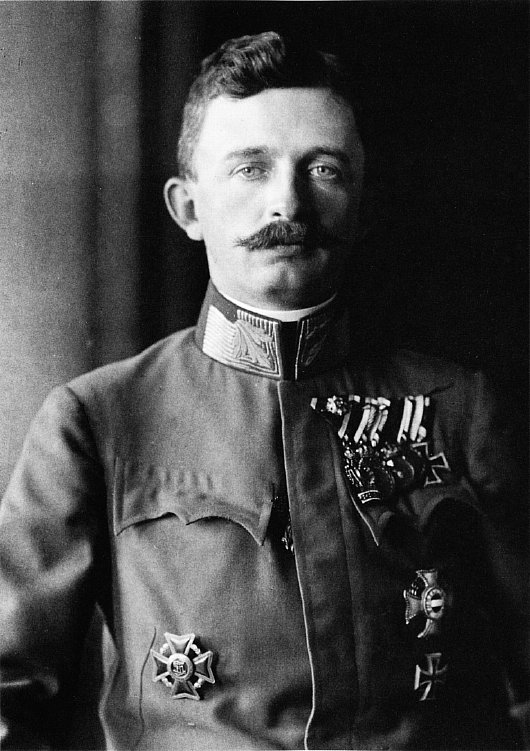
The Emperor in British Columbia

The Emperor & Empress of Japan in the Museum of Anthropology in Vancouver, on a recent visit to British Columbia.
The March Against Socialism
America: Has the Old Girl Got Some Life in Her Yet? Difficult to Say.

AMERICA CONTINUES TO surprise me. After eight horrible years of a Trotskyite policy abroad under Mr. Bush & co., Americans are now up in arms over Mr. Obama’s proposals to have a socialist domestic policy in addition to our revolutionary foreign policy. And rightly so! But one can’t help but wonder: why weren’t these folks protesting four years ago? Better late than never, I suppose. I still won’t be placing any bets on America — though if the bet is made in U.S. dollars, it won’t matter whether you win or lose as it’d be worthless all the same — but protests like these make me wonder if this country might have a future after all. (more…)
Leve de Koningin!
“Hoera! Hoera! Hoera!” — The Third Tuesday in September Beholds the State Opening of the States-General of the Netherlands
Previously: Prinsjesdag
Bloubergstrand
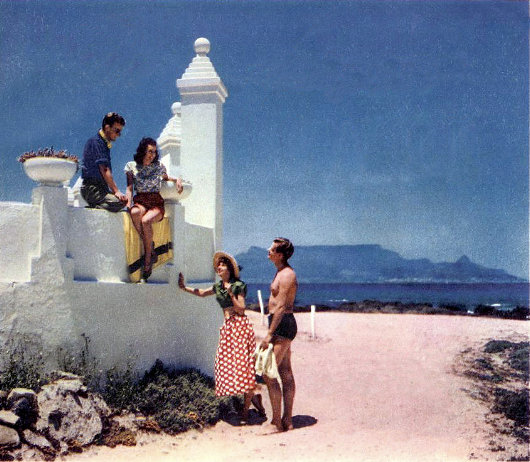
Bloubergstrand in the 1950’s, with a view towards Table Mountain in the distance.
Hey Washington
How’s that piss-off-the-Russians-no-matter-what-the-cost policy turning out for you? Oh? Not so good?
Beware disgruntled anthroposophists
Readers will be interested to learn that two friends of mine, Mr. Stephen Klimczuk and The Much Honoured The Laird Gerald Warner of Craiggenmaddie, have collaborated on a book that looks to be of great interest. Secret Places, Hidden Sanctuaries depicts in detail many of the world’s secret nooks and crannies, from mystical sites to enigmatic bolt-holes, debunking myths and positing plausible theories along the way.
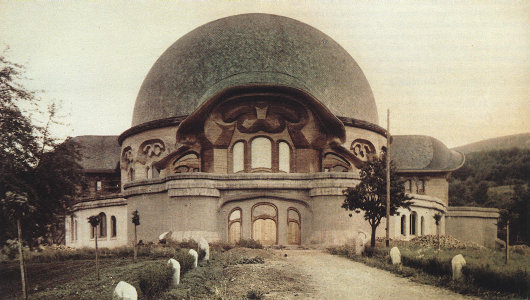
After taking an enticing gander at the book’s table of contents, it’s worth popping over to “Curated Secrets”, the blog through which the book’s two authors correspond with one another. The blog already features a picture of the first Goetheanum, the original world center of Rudolf Steiner’s movement that was burnt down by a disgruntled anthroposophist on New Year’s Eve 1922.
The Old Slave Quarters
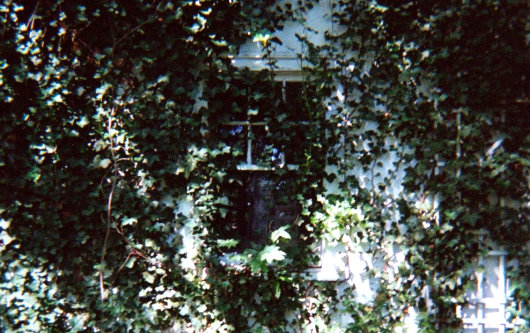
A child’s imagination can transform the humblest construction of pillows into a fortification to equal the Krak des Chevaliers. On the grounds of my old school, there was a shack in a state of advanced dilapidation which I decided was an old slave cottage. I knew there was absolutely no chance of this being factually accurate — it probably didn’t date from any earlier than the 1910s — but one could easily picture Aunt Jemima living an abject poverty within its slowly crumbling walls. The shack was in one of the more peaceful corners of the school grounds, and there was an old rope hammock nearby, to which I would occasionally repair for a brief nap after a lunch of particular vivacity.
Despite its advanced deterioration, I found it a charming little structure, and it always saddened me that every map and plan I shuffled through in the Headmaster’s Office featured the parenthetical “(to be demolished)” atop the building’s outline. Indeed, it may have been destroyed already. (more…)
St. Nicholas of the Seven Seas
 ONE OF OUR correspondents sends word that Russia is to name the fourth of her Borei-class ballistic missile submarines Николай Чудотворец, which is to say “Saint Nicholas”. The Borei-class vessels are the first series of Russian strategic submarines to be launched in the post-Soviet era. The previous subs in the class have been named the Yuri Dolgoruki (after Prince Yuri I, founder of Moscow), the Alexander Nevsky (after the Grand Prince of Vladimir & Novgorod venerated as a saint in the Eastern churches), and the Vladimir Monomakh (after the Grand Prince of Kievan Rus). The Saint Nicholas is of course not the first boat or ship to bear the name of New York’s patron saint. There was HMS St. Nicholas as well as a Spanish naval ship San Nicolas in the 1790s, eventually captured by the Royal Navy and commissioned as HMS San Nicolas. A Sealink (later Stena) ferry named St. Nicholas traversed the Harwich/Hook-of-Holland route from 1983 until it was renamed Stena Normandy in 1991 and transferred to the Southampton/Cherbourg route. Numerous merchant vessels took the saint’s name and patronage throughout the nineteenth century.
Beers We Have Known (and Loved)
“What’s your favourite beer?” one might very well ask, but it’s a difficult question to answer. Like wines, there are different beers for different occasions and what might be perfect for one situation might prove inappropriate in others. I loathe the disgusting lagers that the word “beer” represents for most Americans. I prefer the middle-to-darker range of beers, and a good bitter in the afternoon is heavenly.

Old Speckled Hen is one of my favourites, and I’ve found it goes very well with ham.

Lunch today was a perfect croque-monsieur & salad with side of Belgian fries at one of my preferred Manhattan eateries, served with a glass of De Koninck.
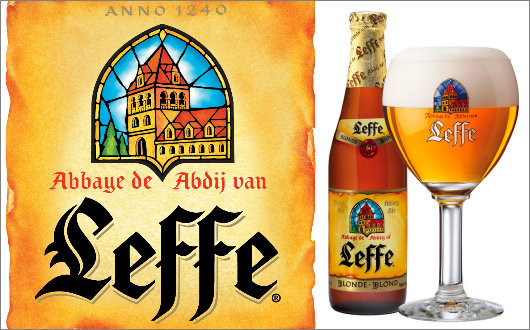
Leffe, in its blonde and brown varieties, is appropriate on most occasions.
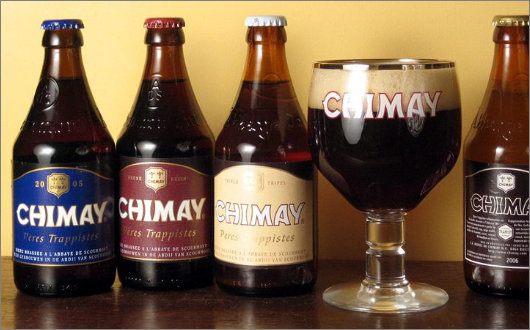
Chimay is great for a winter’s evening by the fire, if there’s no mulled wine available.

John Smith’s was our favourite tipple at university, where the Russell sold it in two-pint glasses until they realised my circle were the only ones drinking it and so replaced it with something more profitable.

Boddingtons is similar to John Smith’s and more readily available in the States.
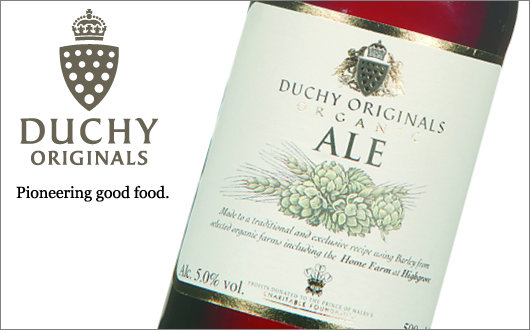
My favourite beer, however, is actually made by the Prince of Wales (of all people): the organic ale produced by the Duchy of Cornwall. (The ancient duchy is among the many titles traditionally held by the Sovereign’s heir, and the one immediately following Prince of Wales in precedence). To my continual surprise, I’m able to find it for purchase right in my home town. I wonder if they keg it for draught as well, though surely that would be impossible to find in America.

Nature diary
by ‘REDSHANK’
To many, the end of summer and onset of autumn brings melancholy thoughts but for us in the nature diarist community it has many consolations as the season unfolds, bringing all the traditional customs still observed in our part of the countryside.
Old Seth the wasp-keeper, last of a dying breed, has now celebrated the age-old custom of “telling the wasps”, when he gathers his vespine charges about him and confides, with their buzzing approval, all the notable events that are taking place in our neighbourhood: actual and grievous bodily harm, rape, fraud and the formation of new gangs of hooligans of ever-increasing ferocity.
 This is the season when late groups of water colourists invade our neighbourhood with their easels and brushes, under the aegis of the big ginger-haired old fellow who seems to hold them in a state of awe and even terror, making no secret of his utter contempt for their efforts.
“Now pay attention!” he can be heard roaring miles away. “First get control of your picture space. I well remember my old friend Jack Constable telling me that command of your picture space was half the battle, and you could forget all about composition, structure, tonal harmony, conceptual values and all the rest of the stuff you learnt at art school.”
His group of amateur artists, mostly pensioners and elderly people who have been advised by their psychiatrists to get something to do, and old ladies who seem unable to distinguish between paintbrushes and knitting needles, received his advice with reverence, positively elated that he should speak to them at all.
I felt rather sorry for them, but mindful of the belief, common among the village people, that any contact with these strange folk can bring misfortune, I did not intervene, even when a pathetic old pensioner with several hearing aids grasped my arm and begged me wordlessly for help.
The whole group disappeared over the brow of Mandelson’s Hill preceded by the ginger-haired leader, who is still shouting about “Bill” Monet and other eminent painters he had known, waving an outsized paintbrush, and I saw them no more.
Oddly enough, the country folk have great respect for him and seem to regard him as some kind of enchanter. Certainly they believe that all the creatures of the wild, from magpies to badgers, will come to his call. He lives in a big rambling old house with a large overgrown garden where he can be seen sitting and meditating on the secrets of nature. Old Frank the gamekeeper swears that once, peering through a gap in the garden wall, he saw him sitting amid the brambles and deadly nightshade with a huge Andean condor perched on his shoulder as he whispered his secrets to it.
The country folk call this enchanted garden “an European eco-habitat” and are agitating for an official warden with a degree in environmental studies.

Diary
I have been spending the past few days in a flat at the corner of Holland Park Avenue and Portland Road, in this verdant corner of the capital. The flat is clean, capacious, and handsome, but terribly modern. Indeed, it is so modern that it will soon be old; it will not exhibit the old age of the time-honoured and true, but rather the tawdry oldness of what had only recently been new. Pedantic students of interior design will study photos of it and discern “2008 I’d say… no! 2009!” But for now, it is still new, still fresh, and so, like a tomato fresh for the plucking, we will enjoy it while its moment is precisely appropriate.
Until now, I hadn’t much knowledge of this part of London, but find it a happy place to be in August. The weather has been mild and kind, and I spent part of the afternoon reading de Maistre — the St. Petersburg Dialogues — in the formal garden in Holland Park. The avenue itself is tree-lined, or rather tree-engulfed, such is the plentiful shade, and has a small selection of cafés: the Paul boulangerie which is becoming omnipresent, and the Valerie patisserie, both chains. Cyrano, at No. 108 Holland Park Avenue, is much preferred, and I decamped there for a light breakfast with a copy of the Scotsman from the local newsstand (the one on Ladbroke Grove, rather than the smaller one by the tube stop) while avoiding the miserable Irish cleaning lady who returns the modern flat to its pristine whiteness every Thursday morning.
Then to the Royal Academy, for the Waterhouse show. What an interesting artist! His earlier works so precise in detail and, for lack of a better word, academic. Yet in his later pieces, you can find a certain willingness to obfuscate, perhaps an admission that reality is not quite so precise and that the most accurate portrayal of reality requires a few lines to be blurred. Faces, and indeed all forms, remain clear throughout, but the architectural coldness of the earlier works on display gradually evolves to a more fluid depiction of Greek mythos and Keatsian tales. Waterhouse can vary in his details from the almost photographic to verging on impressionism in a single painting. Was that his intention? It was certainly the result.
My viewing companion — an old university friend — and I agreed that throughout all the themes portrayed by the artist one can’t help but feel an overwhelming Victorian-ness. Is this ex post facto because we know Waterhouse to be an High Victorian artist, or is there actually some inherent quality in the works that calls to mind that era? Very difficult to say, but those in London should not miss this exhibition of a popular yet under-appreciated artist — the Jack Vettriano of his day.
Who is in London in August anyhow? The text messages sent out, and their replies promptly received. “I’m in Geneva! Will be in Luxembourg next week if you’re on the continent.” I am not and will not be on the continent. “I have been unexpectedly called to Africa.” Well I’ve just come from there, though not the Sudan thank God. “You’re welcome to come to Gozo between the 5th and 15th for a pleasant, quiet holiday.” I will have returned to New York by then, alas. “Am up north in Lancashire; you’re welcome to come and visit, sample our recusant history!” Just haven’t got the time, alas.
But while many have escaped for the month, many yet remain. An afternoon drink at Rafe’s, with Fr. Rupert and Alex Williams. The Carlton is being refitted, so it was drinks at the East India Club instead with another university friend, during which we concur that office jobs are the absolute pits and we should have studied agriculture with the country girls at Cirencester rather than getting tawdry MAs in Scotland. There is no greater affirmation of the consequences of original sin than the omnipresence of the 9-to-5 office job.
Astute observers of this little corner of the web (if indeed we can use the plural for such a subset of the earth’s population) will recall an incident over two years ago now in which a certain Jack Russell terrier became rather more involved with my lower leg than I had envisioned was ideal. The dog, which goes by the name of Cicio Stinkiman, had noticed me playing with the only seeing-eye-dog in Scotland that knows how to genuflect and resented the attention I was paying to the bitch, to whom he obviously professed some attachment, ran up, and bit me in the calf.
You can imagine my surprise when I learnt that the beast in question is actually now not only living in London but actually residing in the Oratory. Indeed I saw the beast from a distance while waiting on Brompton Road for the Friday evening mass last week. His owner graduated from university (in Scotland, like all the wisest people) two years ago now but his mother banned poor Cicio Stinkiman from the German palace he might otherwise call home, perhaps informed along the voluptuous grapevines of Europe of the horrendous incident in which the beast had taken an unwelcome interest in my lower leg.
I am being far too unfair to poor Cicio, for he did apologise, and looked up at me with terribly apologetic eyes. Admittedly, that might’ve been because his master stood nearby holding a rolled-up copy of the Catholic Herald most threateningly. Still, pity the poor ignorant beasts. They have no conscience, and thus no real malice. Only we humans, with the freedom we abuse so easily, can claim that dubious achievement.
Good to be back
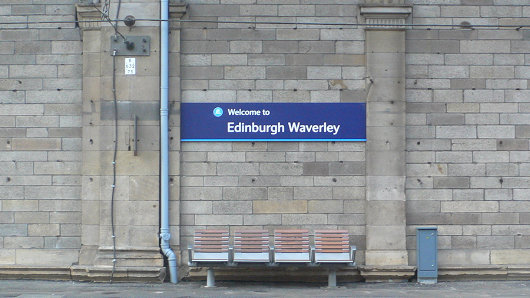
Sad to leave it. (I’m in London now).
From the Number 23 Bus
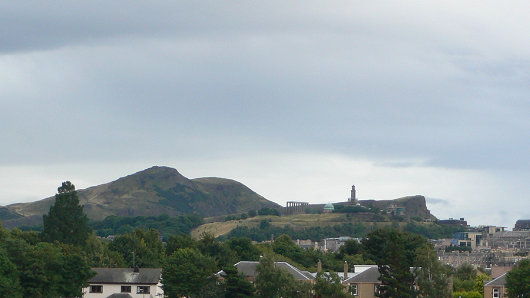
A view of Edinburgh from the top of the no. 23 bus. (more…)
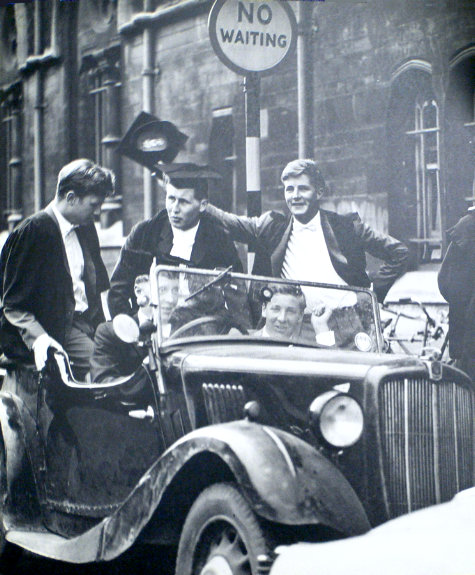
The End of the Affair
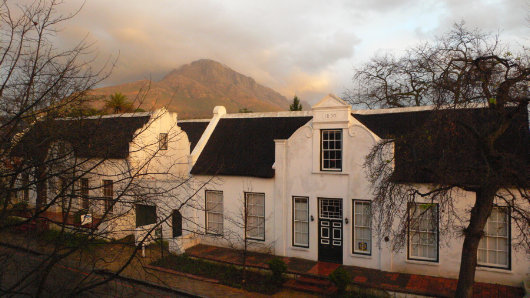
HOW CAN ONE possibly summarize a portion of one’s life? Those first warm breaths of African air as I stepped off the plane at Cape Town International. The stern-faced mustachioed driver who drove me to Stellenbosch, the town that became my home, on my first day on the African continent. My strongest memory is just pure sunlight. I had flown down from the deepest winter of the northern hemisphere, and the sun’s warm embrace was a welcome change. As we entered the valley of Stellenbosch, my solemn driver broke the silence and asked what business was taking me there. Learning that I came, at least in part, to study Afrikaans, his dour visage was suddenly enlivened, and he earnestly gave every assurance that I would enjoy myself in Stellenbosch immensely.
The town itself is handsome, full of white-washed walls and pleasant streets lined with old oak trees, some planted by that Dutch governor of old, Simon van der Stel. He gave the town both its name — Stellenbosch, van der Stel’s wood — and its other moniker, Eikestad, the city of oaks. The most remarkable feature of the town, however, is the beautiful range of mountains that flank it on either side. My window happened to look out on Stellenbosch mountain itself, and I admit a certain territorial feeling towards that berg has formed through the several mornings, noons, and nights it has stood watch over me.
But pleasures though there are in Stellenbosch — a stroll the Botanical Gardens, a pint at De Akker, dinner at Cognito where they know my “usual” Tanqueray-and-tonic — even more awaits the Stellenboscher who ventures further afield. I went as far as Lüderitz in Namibia, one of the furthest extremities of the old German empire. But nearby Cape Town itself provides enough to keep the ardent traveller intrigued. Table Mountain, whose looming presence over the city frames the moederstad perfectly. Further along to the pleasant sands of Clifton’s beaches, the port of Simon’s Town, and down to the end of the Cape itself — the end of Africa, where two oceans meet.
And across False Bay to Rooiels and Betty’s Bay, to the Kogelberg reserve where the hiker’s efforts are rewarded by the seclusion of a splendid little swimming hole. Floating to and fro in the little river pond, being sung to by fair Finnish maidens — there are worse ways to spend a summer’s afternoon. But it’s also glorious to be alone in Kogelberg; to hear the silence of the dead summer, outstretched arms floating along, grazing the tall grass and the heather beside the way. The open, breezy country and the quieter nooks lodged between, whose heat betrays their stillness of air. Barely any sound but the crunch of foot upon path, the wind rustling through the plants, and the odd chirp of insect here and there.
And where else? To Wupperthal, where the barefoot coloured children play happily in the eucalyptus-lined street leading to the old Rhenish mission. To Kakamas, where the farmer invites us to lunch with his family, and guides us around just a few of his 600,000 acres. To Hermanus, spending two glorious hours clearing invasive plant species from a field before breakfast — that damned Ficus rubiginosa! To Greyton for a winter’s lunch beside the fireplace, and to Genadendal, the “valley of Grace”, the queen of the Moravian missions.
And with whom? Ah, the easy acquaintances of a university town. Friends from class, friends from the pub, friends from the bistro, friends of friends, and friends of friends of friends, who all end up as friends. To the beach on Friday? The cinema tonight? The pub quiz on Tuesday? A coffee tomorrow afternoon?
The people, more than anything, make the deepest impression — both the South Africans and my fellow travellers. Good times shared and conversations enjoyed. Some surprising friendships spring forth from the unlikeliest of places and the most scant of connections. And stories are shared of varying experiences. Poor Ralf almost getting done in by that hippo in the Kalahari! The intervarsity match — another victory for die Maties. And the second test match against the Lions — Morne Steyn, that kick! A genial cup of tea in a well-kept house in Oranjezicht as the resident explains how many times she’s been burgled. The Kayamandi girl whose father disappeared long ago, whose stepfather abuses her every night, and whose mother is entrapped into acquiescence by poverty. A student dies from swine flu — a first in South Africa. Another is murdered by the obsessed friend of her older brother. The police beat the suspect so badly he cannot appear in court. The headline in the Eikestadnuus proclaims “Vyfteen weeks, vyfteen moorde” — fifteen weeks, fifteen murders in this pleasant little corner of the Cape. The latest exhausted statement from Kapt. Aubrey Marais of the Stellenbosch police. An email from the university rector: male students are reminded not to allow girls to walk home unaccompanied at night. In the face of all this, ordinary lives continue unintimidated.
This country has a tendency to seep into the veins, to get under people’s skin. There is no brief affair with South Africa. Her own sons and daughters dot the globe — thousands are in London alone — but they earn their keep abroad while they yearn for the land they left. (“They just miss having servants” half-jokes the farmer’s wife.) Some do leave forever, but many more come home after a few years. My time is up, I leave South Africa today, but I can’t help but think the affair is not over, even if it only continues from afar. It is difficult to escape the lure of this deeply troubled, deeply blessed land.
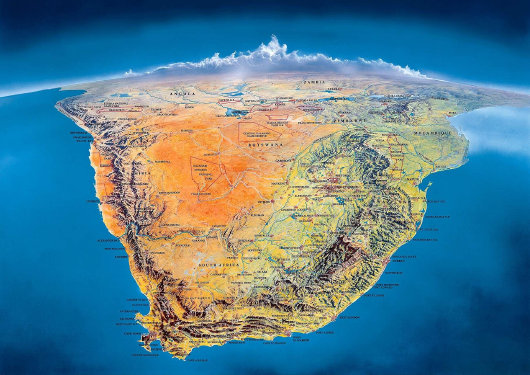
Posting will be light for the rest of August, as I will be in Edinburgh for next week and in London for the remainder of the month. I can be contacted, as per usual, at andrewcusack@yahoo.com.
Search
Instagram: @andcusack
Click here for my Instagram photos.Most Recent Posts
- Brunel’s Unbuilt Capitol February 3, 2026
- Cricket at Fordham January 27, 2026
- Palacio Barolo Revisted January 14, 2026
- Learning to Love Liguria January 14, 2026
- Crux Alba No. 2 January 13, 2026
Most Recent Comments
Book Wishlist
Monthly Archives
Categories