About Andrew Cusack
 Writer, web designer, etc.; born in New York; educated in Argentina, Scotland, and South Africa; now based in London.
 read more
News
Blogs
Reviews & Periodicals
Arts & Design
World
France
Mitteleuropa
Knickerbockers
Argentina
The Levant
Africa
Cape of Good Hope
Netherlands
Scandinavia
Québec
India
Muscovy
Germany
Academica
Canada’s Royal Standards
In anticipation of the recent visit of the Duke and Duchess of Cambridge to Canada, the government of that dominion unveiled new Canadian personal flags for the Prince of Wales and the Duke of Cambridge. The British Empire started out as a group of states and colonies united in the British crown, but as the Empire evolved into the Commonwealth, dominions were gradually recognised as sovereign entities of their own. Thus when, for example, Elizabeth II visits, say, Vancouver, it is not the ‘Queen of England’ who is visiting but the Queen of Canada exercising her functions in her own country. (This is a point frequently lost upon ideological republicans). Even when Elizabeth remains in London she puts on different ‘hats’ for different occasions. The only time I ever saw the Queen was at a Service for Australia at Westminster Abbey, thus it was the Queen’s Personal Flag for Australia which flew from the tower of the Abbey, not the British Royal Standard.
The Queen’s Personal Flag for Canada (above, top), often informally known as the Canadian Royal Standard, was devised in 1962 (the same year similar banners were created for Australia and New Zealand). Until 2011, the Queen was the only member of the Canadian Royal Family to have a personal flag for Canada, but now she is joined by her son and grandson, the Prince of Wales and the Duke of Cambridge respectively.

Some Finnish Words
We’ve been rather too neglectful of Finnish, the language so beloved of Tolkien. The South-African-born philologist and mythmaker described his introduction to the Finnish tongue as being “like discovering a complete wine-cellar filled with bottles of an amazing wine of a kind and flavour never tasted before. It quite intoxicated me.” Aside from Tolkein’s love of the Finnish language, Elias Lönrott’s Kalevala epic was a central influence on the creation of The Lord of the Rings, as numerous scholars have written about.
I mentioned kaupunkilaissuomenruotsalaiset on Facebook the other day, and Sara piped up with the remainder of the following list of Finnish words. (more…)
Catholic Ambassadors to the U.N.
Diplomats’ group hears Latin Mass at St Agnes
On Sunday 21 August 2011, the Church of St Agnes on 43rd Street in Manhattan was host to a group of Catholic ambassadors to the United Nations for the regular 11:00 Extraordinary Form Mass, offered by Fr. Richard Trezza OFM. (Fr. Cid, a recently ordained Franciscan priest was also in choro). The group included representatives from Grenada, Haiti, the Philippines, Korea, the United Kingdom, and Japan.
The informal gathering, formed just this year, is open to Catholic Permanent Representatives and Deputy Permanent Representatives — the first- and second-highest ranking diplomats at national missions to the U.N. — and has heard Mass at a number of different parishes around Manhattan. (more…)
Una Voce New York Symposium
presents its
Second Annual Dinner Symposium
Harvard Club of New York
35 West 44th Street
with
Christopher A. Ferrara, J.D.
President, American Catholic Lawyers Association
“Distributism: The Libertarian Caricature vs. the Reality”
John Médaille, B.A., M.Th.
Adjunct Instructor, University of Dallas
“Distributism and the Coming Crash or How to Rebuild the World”
Master of Ceremonies
John C. Rao, D. Phil. (Oxon)
Director, The Roman Forum
Una Voce New York’s second annual dinner symposium will feature an evening meal with like-minded Catholics followed by presentations by two well-known speakers. The cost is $75 per person, reduced to $65 for those who register by 16 September. (more…)
August Recess
Our little corner of the web will be taking a bit of a break for the month of August.
However — O tempora! O mores! — you can now follow our official ‘Twitter’ account, @cusackandrew, which features periodic ‘tweets’ by your humble and obedient servant, as well as ‘re-tweets’ from other twitterers so deemed worthwhile.
See you à septembre!
Reviving Manhattan’s Parisian Splendour
The new Ralph Lauren building at Madison & 72nd
“PRACTICALLY PERFECT in every way” was how the nanny Mary Poppins described herself in the Disney film, but fashion designer Ralph Lauren has given birth to an architectural grande dame on the Upper East Side that might justifiably make a similar claim. In this age of fashionable-today-dated-tomorrow starchitecture, the Bronx native has swum against the current and delivered for the people of New York a most welcome piece of architecture with his new store on the corner of Madison Avenue and 72nd Street.
Those familiar with the neighbourhood might be a bit confused: doesn’t Ralph Lauren already have a beautiful French chateau on that street corner? Worry not, the old Rhinelander mansion has not been demolished. Rather, its interior was recently given a ‘masculine makeover’ so shoppers can peruse and purchase any of Ralph Lauren’s men’s lines there.
Across the street, meanwhile, with his new women’s store, Ralph Lauren has reinvigorated Manhattan’s faded glory with a new injection of Parisian splendour. The unremarkable “taxpayer” two-storey on the site was razed and a completely new four-storey structure has risen in its place. Two smaller wings flank the middle, which is recessed above the ground floor’s triumvirate of skilfully curved arches. The two central storeys above are topped by a more reserved attic, with the facade clad in American-sourced limestone throughout. (more…)
Vatican Insider
Anyone remotely interested in the important affairs of the church and the world should make themselves aware of the new ecclesial news site, Vatican Insider. The site offers English translations of the significant journalistic output of the Italian newspaper La Stampa and includes commentary from Andrea Tornielli, John Allen, and others. V.I. already has an interview with Mons Georg Ratzinger and a look at church-state relations in mainland China, amongst other things. Definitely one to add to your daily perusing.
Cape Town’s ‘Nazi’ Street to be Renamed
Oswald Pirow Street will rechristened after Dr. Christiaan Barnard
The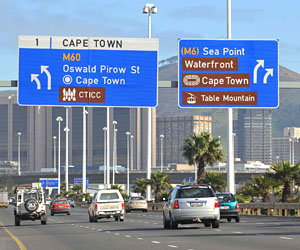 city of Cape Town has recently effected a small number of street name changes decided at the end of last year. The N2 route as it heads into the centre of the city, currently called Eastern Boulevard, will be renamed Nelson Mandela Boulevard. The open square between the opera house and the city offices will be renamed Albert Luthuli Place. Most significantly, Oswald Pirow Street on the Cape Town foreshore will be renamed Christiaan Barnard Street.
The renaming of streets and other places in South Africa has proved a controversial and unsettling task. Many streets named after leading figures associated with the 1948-1990 apartheid regime remain. In 2001, the New National Party (NNP) mayor of Cape Town, Peter Marais, attempted to rename Adderley Street and Wale Street after Nelson Mandela and F.W. de Klerk respectively. But Marais’s plan provoked a surprising public backlash, as well as opposition-for-opposition’s sake from the local ANC. The proposed ‘Nelson Mandela Avenue’ had already been renamed once: originally Heerengracht, the grateful citizens of Cape Town rechristened it Adderley Street in 1850, as a token of thanks to Charles Bowyer Adderley MP (later 1st Baron Norton) for his successful campaign against turning the Cape into a penal colony. (more…)
Salazar-plein / Salazar Square
Cape Town’s monument to a Portuguese friend of South Africa
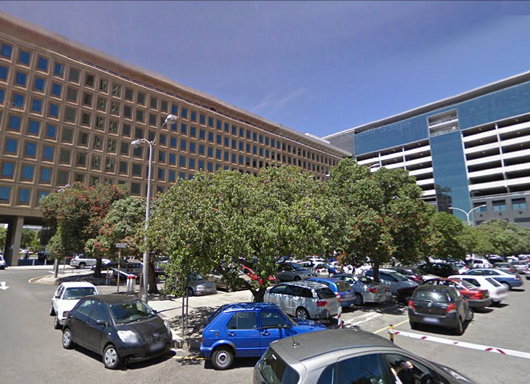
Doubtless there were once many streets, squares, and places named after António de Oliveira Salazar, Portugal’s longtime dictator — the Ponte Salazar being the one that springs immediately to mind. That bridge, like most other Salazarian toponyms in the Lusosphere, was renamed after Portugal’s Carnation Revolution, even though the dictator remains a reasonably popular figure (a poll for the RTP television programme The Greatest Portuguese he came out top with twice as many votes as the runner-up). (more…)
Winchester Mansions
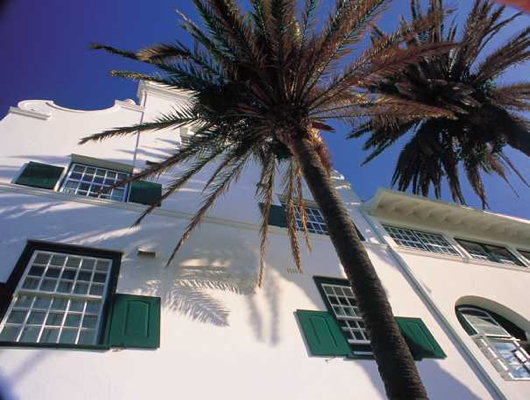
STARING ACROSS Sea Point Promenade towards the waters of the Atlantic in Cape Town, there sits Winchester Mansions. The hotel was built in 1922 in a style emblematic of the period’s revival of interest in the Dutch colonial age at the Cape. People often associate the 1920s with Art Deco, but the style was only just emerging in Paris at the time, and wasn’t even called ‘Art Deco’ until the 1960s. The ‘mother city’ has its fair share of Art-Deco and Moderne buildings, but architectural trends took a while to arrive in South Africa — though they tended to last longer then elsewhere. The Cape Dutch Revival emerged in the 1890s and perhaps reached its high-water mark in the 1900s and 1910s. Curiously, it is not associated with the simultaneous emergence of Afrikaans as a language and the rising consciousness of Afrikaner identity, but rather with a very Anglo and colonialist mindset. It was Dorothea Fairbridge and Milner’s ‘Kindergarten’ — respectively the social and political forces seeking to unite all of South Africa under the British crown — that promoted the adoption of the Cape Dutch as a national style. Thus the years leading up to Union in 1910 and its initial decade or two were the heyday of the Cape Dutch Revival as it was the favoured boustyl for the respectable Cape- and Rand-based imperialists.
Towards a Confucian Modernity
MY RESPONSE TO Samuel Huntington’s coming clash of civilizations concerns the desirability and necessity of a dialogue of civilizations. Hegel, Marx, and Max Weber shared an ethos that, despite all its shortcomings, the modern West informed by the Enlightenment mentality was the only arena where the true difference for the rest of the world would be made. Confucian East Asia, Islamic Middle East, Hindu India, or Buddhist Southeast Asia were on the receiving end of this process. Eventually, modernization with homogenization or convergence will make cultural diversity inoperative if not totally meaningless. It was inconceivable that Confucianism, or, for that matter, any other non-Western spiritual tradition, could exert a shaping influence on the modernizing process. The development from tradition to modernity was irreversible and inevitable. In the global context, some of the most brilliant minds in the modern West assumed this to be self evidently true, but nowadays it has turned out to be only part of the big picture. In the rest of the world, and arguably in Western Europe and North America, the anticipated clear transition from tradition to modernity never occurred. As a norm, traditions continue to make their presence in modernity, and indeed the modernizing process itself is constantly shaped by a variety of cultural forms rooted in distinct traditions. The eighteenth century recognition of the relevance of radical otherness to one’s own self-understanding seems more applicable to the current situation in the global community than the attention to any challenges to the modern Western mindset of the nineteenth century and the first half of the twentieth century. (more…)
Too moderate to defend the defenseless
Betty Ford was ‘a strong female voice for moderate Republicanism’
Over at Telegraph Blogs, Tim Stanley posts the following about Betty Ford, the First Lady of the United States who died recently:
Betty was a strong female voice for moderate Republicanism. It was the Republicanism of New England suburbs, Wall Street brokerage firms, golf clubs, yacht houses, East Coast fraternities, drunken bridge games and James Stewart. It was wrong on so many things, but it was gentle and sophisticated and meant well.
The suburbs, the Wall Street firms, the golf clubs, yes, but also the abortion clinics. Mrs. Ford was an ardent supporter of a woman’s right to kill her child. So many evils are easily excused because they were gentle, sophisticated, and meant well.
The American Drugstore

by Julián Marías
I REMEMBER MY ARRIVAL in Salt Lake City on a long shining train which had just crossed the endless plains of Illinois, Iowa, Nebraska, Wyoming, and now had entered the land of the Mormons. When I got off the train and began to walk down the long avenue, now slick with ice, which stretches from the station to the Mormon Temple, I asked myself what I had lost in Utah, in this place where I didn’t even know the name of a single person. Undoubtedly the blame was this time – as in so many other cases – Jules Verne’s. Do you remember his Around the World in Eighty Days? Phineas Fogg, the phlegmatic gentleman, and his roguish servant Passepartout; in their company I came to know Utah and its Mormons for the first time, in my early youth. But let’s not deceive ourselves: youth somehow remains with us; I had a date with Salt Lake City from the age of ten, and now I was keeping it, walking slowly through the snow along a deserted street, toward the Mormon Temple, which glowed in the distance, and which can only be entered by the faithful.
This enormous temple, brightly lighted, seemed to orient and give meaning to the city. Very close by, the mountains, which surround the city and are visible on all sides, creating in its midst the image of a wild West. Frozen and almost deserted streets. And suddenly, the drugstore! There, in Salt Lake City, I finally understood its meaning. Always open, day and night, in any weather, brilliantly lit up like a beacon in the middle of the night, sheltering and hospitable like a port, full of things … like a drugstore, for in no other place are there so many things. Twenty-five-cent books on revolving wire stands; children’s records; magazines and newspaper; cigarettes, cameras, candies, luggage, electrical appliances, chairs, pens, toys, glasses, perfumes, stationery fishing tackle … anything you can think of. Since it has everything, there are even drugs and prescriptions in the American drugstore. And there is, strangely enough, a large counter, lined with plastic-covered stools, where one can order, at any hour of the day or night, and for a few cents, a couple of eggs, a cup of coffee, a milk shake, a hamburger, or what they call, with wonderful inventiveness, a cheeseburger. (more…)
The Architecture of Immaturity
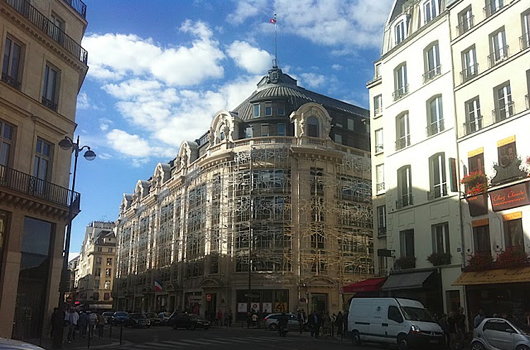
Have you ever come across the French Ministry of Culture on the Rue Saint-Honoré? It’s a perfect example of the architecture of immaturity. The government ministry was formerly strewn across nineteen different sites throughout Paris. The decision was made to consolidate their offices in one place, and the suitably central location near the Palais Royal was chosen.
The main building on the site is a handsome building from the late nineteenth-century or at the latest 1900s, with a modern 1960s office building stuck behind it. The Ministère chose architect Francis Soler to “unify” the buildings into one. At first, this was meant to be done solely through an interior reorganisation, but Soler decided to add a strange grille to the façade. (more…)
Decline of the Herr Professor
The Herr professor has been caught up in a whirlwind of protest, eventually to emerge as a humble guest on a television talk show.
No Nobel prize compensates for this loss of prestige at the apex of a crumbling pyramid.
His desperate references to the false problem of “academic freedom” sound not only hollow, but like the exchanges between pagan Roman priests at magical ceremonies in whose effectiveness they no longer believed.
Modern Age, Spring 1999
Senator Eugene McCarthy: A Kirkian Anecdote
Russell Kirk, the great St Andrean and American man of letters, relates this anecdote in his article “Will American Caesars Arise?” (Modern Age, Summer 1989):
The most interestingly complex of all recent aspirants to the presidency, [Senator Eugene] McCarthy obdurately called himself a liberal during years when that appellation was sinking swiftly in popular favour – although he abjured all forms of liberalism earlier than Franklin Roosevelt’s. (During the past few years, as he now remarks, he has employed the word ‘‘liberal’’ as an adjective merely.) In his political theories, actually, McCarthy has been a conservative: He declared long ago that Edmund Burke was his political mentor, and no one has more warmly praised Tocqueville. He has read seriously and written intelligently. In the White House – per impossibile – he might have turned the most imaginatively conservative of Presidents.
Or perhaps not. Once upon a time I had an assistant who was a graphoanalyst, an expert on handwriting. Having examined a specimen of Senator McCarthy’s handwriting, my assistant pronounced him rebellious, a hard master, and desirous of power. A touch of Caesar even in Caesar’s adversary? However that may be, McCarthy’s only considerable assertion of power was his unseating of President Johnson by running a good second in the New Hampshire primary of 1968.
A congenital no-sayer, Eugene McCarthy never ran with the hounds. He was candid and witty always. He and I first met as debaters before a large audience, in Boston. After this exchange, sponsored by the Paulist Fathers, a reception was held for us. Up to Senator McCarthy came a zealous young Paulist, inquiring, “Senator McCarthy, don’t you think that Jack Kennedy is the finest president this nation ever has had?” (This occurred during the first year of the Kennedy administration.)
“No,” said McCarthy, unsmiling.
Although taken aback, the Paulist returned to the charge: “But surely you agree, Senator, that President Kennedy has given this nation a new hope, a new vigor, a sense of moving forward toward great things?”
“No,” said Eugene McCarthy.
The Paulist persisted: “But of course you’ll agree with me when I say, Senator, that the Kennedy family have brought to our life a culture, a refinement, a meaningfulness, that we have not known before.”
“No,” said Eugene McCarthy.
“But – but Senator McCarthy, surely Jack Kennedy is a very nice man personally?”
Eugene McCarthy turned his back upon the Paulist and slowly walked away. He knew how to say no, he was not ensnared by cliché and slogan, and he had a poet’s attachment to truth.
Fra Freddy, Rest In Peace
Yesterday, I was very saddened to hear of Fra Freddy’s death. Fra Freddy was a legendary character whom I was introduced to in my first year at St Andrews. He was invited to speak to the Catholic students most years on some subject or another — an introduction to prayer or a lenten meditation. I was quite pleased when he was so taken with a poster I designed to advertise one of his talks that on his way back to Edinburgh he nipped out of the car at the last minute and grabbed a large copy. Fra Freddy was an old-fashioned stick-in-the-mud with a good sense of humour, but he also had the capability to surprise with a kind word when you least expected it.
Fra Fredrik John Patrick Crichton-Stuart was born September 6, 1940 to Lord Rhidian Crichton-Stuart (son of the 4th Marquess of Bute) and his wife Selina van Wijk (daughter of the Ambassador of the Queen of the Netherlands to the French Republic). He was raised in Scotland and North Africa (where his father was British Delegate to the International Legislative Assembly of Tangier) and was educated first at Carlekemp in North Berwick and then at Ampleforth. He joined the Order of Malta in 1962, later being named the Delegate for Scotland & the Northern Marches. In 1993 he was appointed Chancellor of the resurrected Grand Priory of England. Fra Freddy became Grand Prior himself when his cousin, Fra Andrew Bertie, died in 2008 and was succeeded by the then-Grand Prior of England, Fra Matthew Festing.
Fra Freddy was a devoted follower and promoter of the traditional form of the Roman rite. He joined Una Voce Scotland in 1996 and became secretary in 2000. Two years later he was named councillor and senior vice-president of FIUV, the International Federation ‘Una Voce’, and briefly served as its president in 2005.
Over the past year or so Fra Freddy had been varying ill but seemed to recover. I am told he was found dead yesterday morning, still clasping his breviary. He was well-known in Edinburgh and beyond, and he will be missed by his many friends as well as those who worked and volunteered with him or interacted with him in his charitable activities.
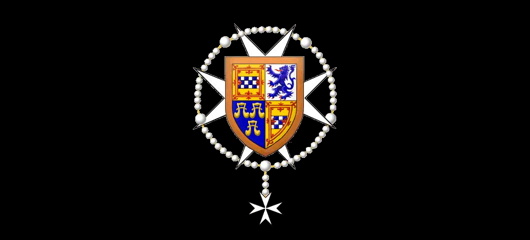
FREDERICK JOHN PATRICK CRICHTON-STUART
Grand Prior of England
of the
Sovereign Military & Hospitaller Order of St John
of Jerusalem of Rhodes and of Malta
6 September 1940 – 14 June 2011
Eternal rest grant unto him, O Lord,
and let perpetual light shine upon him.
May he rest in peace.
Amen.
Cooking with Sir Laurens van der Post
East and West Meet at the Cape
The Cape Malays came up with dishes that are all so a part of the South African way of life that they have become almost sacramental substances. Among them are bobotie, sosaties, and bredie. Bobotie, a kind of minced pie, is to South African what moussaka is to the Greeks. Sosaties, or skewered and grilled meats are what shashlyk are to the people of the Caucasus and shish kabob to the Turks. The stew called bredie is what goulash is to Hungarians.
A basic bobotie begins with minced lamb or beef, a little soaked bread, eggs, butter, finely chopped onion, garlic, curry powder and turmeric. All are mixed together, put in a pie dish with meat drippings, and baked in a low oven for a time. The moment the mixture begins to brown, the dish is taken from the oven and some eggs beaten up with milk are poured over the top; then the dish is put back into the oven and baked very slowly to a deep brown. The pace of the cooking is important: if the oven is too hot the bobotie will be dry, and that should never happen, for an ideal bobotie is eaten moist, over rice. (more…)
The Advent of Virgin Australia
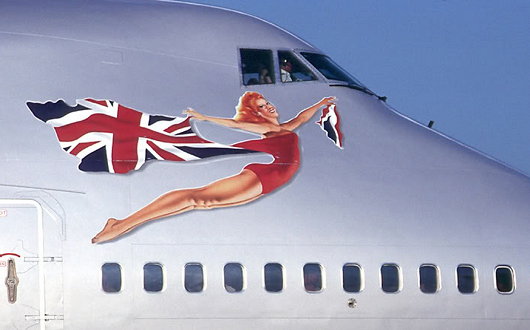
Virgin Atlantic Airways has always inexplicably attempted a fine balance between the crisply modern and the vaguely old-school. It is also unashamedly British. When the lumbering giants at British Airways were busy banishing the Union Jack from their aircraft livery — prompting Baroness Thatcher to cover the model of a BA 747 with a handkerchief — Sir Richard Branson said “We’re British: why don’t we fly the flag?” The Union Jack was added to every Virgin Atlantic plane and a flag design was later added to the wingtips. Virgin Atlantic now has a patriotic red-head (above) bedecked in the Union flag on the nose of each of its aircraft glamourously advertising their national origins in this hyperglobalist age.
Virgin Group has not restrained itself from expanding beyond the trans-Atlantic flightpath. In 2000, they established Virgin Blue in Australia, originally flying only between Brisbane and Sydney, but gradually expanding within the country, especially after the 2001 collapse of the major domestic carrier Ansett Australia. In 2003, Virgin started Pacific Blue Airways out of New Zealand, operating trans-Tasman routes, followed by the founding of Polynesian Blue in 2005 running flights between New Zealand, Australia, and Samoa. Finally, V Australia was started operations in 2009 running long-haul flights out of Australia. (more…)
Les fondements de notre civilisation occidentale
« Les fondements de notre civilisation occidentale sont chrétiens ; le respect du christianisme est une condition sine qua non d’une droite qui veut conserver non seulement la prospérité économique, mais ce qui est au fondement de toute prospérité durable : le souci du bien commun, le respect de la loi naturelle, le sens de la justice. »
The latest issue of Égards, the premier journal of traditional conservatism in Quebec, contains an interesting analysis of the current situation faced by the various streams of the centre-droit spectrum in the province. I am, however, very much against the perpetual organisation-founding that goes on in political circles. There seems to be a belief that, when in doubt, start a new organisation, but this is precisely what the author, M. Décarie, proposes.
Search
Instagram: @andcusack
Click here for my Instagram photos.Most Recent Posts
- Brunel’s Unbuilt Capitol February 3, 2026
- Cricket at Fordham January 27, 2026
- Palacio Barolo Revisted January 14, 2026
- Learning to Love Liguria January 14, 2026
- Crux Alba No. 2 January 13, 2026
Most Recent Comments
Book Wishlist
Monthly Archives
Categories