About Andrew Cusack
 Writer, web designer, etc.; born in New York; educated in Argentina, Scotland, and South Africa; now based in London.
 read more
News
Blogs
Reviews & Periodicals
Arts & Design
World
France
Mitteleuropa
Knickerbockers
Argentina
The Levant
Africa
Cape of Good Hope
Netherlands
Scandinavia
Québec
India
Muscovy
Germany
Academica
Druze Stirrings
The secretive sect that helped topple Assad
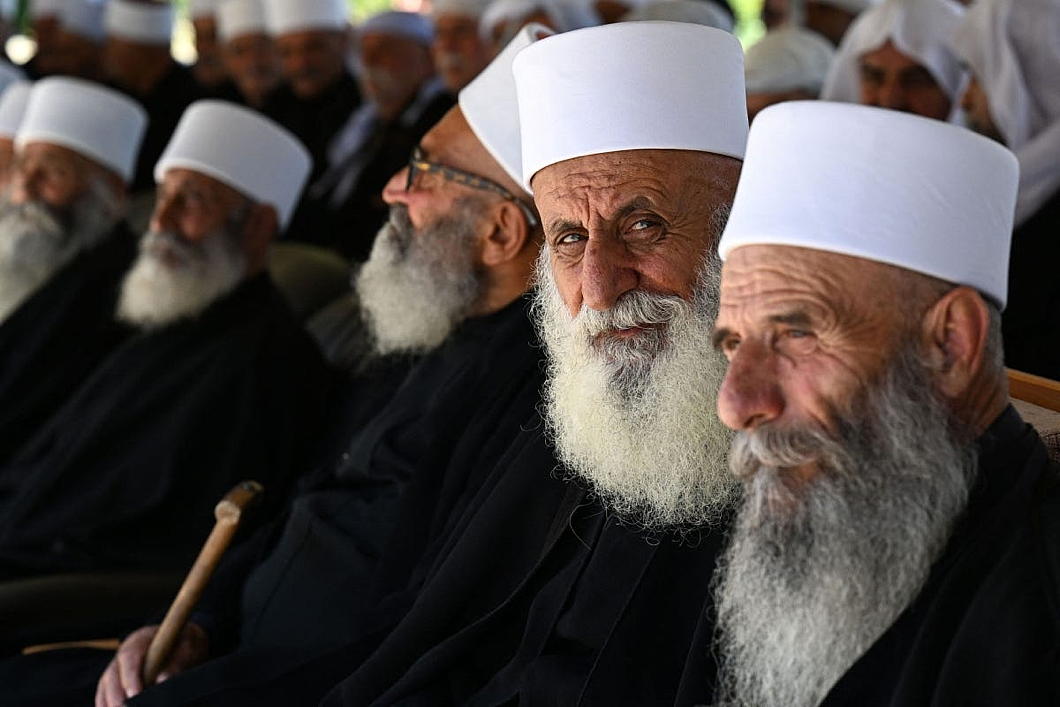
The Druze are an elusive people. During the few summers I spent in Lebanon I met Maronites, Melkites, Sunni, Shi’a, Armenians, and many others but I only recall knowingly meeting one Druze — and that’s a story for another day.
Druze beliefs are as secretive as they are distinct. Most file them as (for lack of a less judgemental word) a schismatic branch of Islam that emerged out of Isma’ilism; others argue that they are gnostics who took up the Islamic mantle to avoid oppression. Naturally they do not call themselves Druze, but muwaḥidūn, which more or less means ‘monotheists’ or ‘singularists’ — believers in the singularity of God. Ethnically, they are Arab, and migrated to the Lebanese mountains and Jabal al-Druze from south Arabia before the advent of Islam.
Christians have traversed the four corners of the globe in order to share the Gospel, but the Druze are completely at odds with this mentality. They are not bothered if you are uninterested in their religion: In fact, altogether they very much prefer you don’t ask too many questions because, frankly, they don’t want you to know. Since the closing of the daʿwa — the call to belief — in AD 1043, no converts may be accepted, nor can rituals or worship take place in public, and all marriage outside the community is prohibited.
There is only one famous Druze in the world: the perennial survivor of Lebanese politics, Walid Joumblatt. He ascended to the political headship of Lebanon’s Druze in 1977, succeeding his father Kamal as the leader of the Progressive Socialist Party — whose name elides the sectarian tribal nature of the entity as the outlet for political Druzism in the Lebanon — and maintained his leadership throughout the devastation of the fifteen-year civil war.
Joumblatt is an educated and entertaining fellow, sharing his holiday snaps on the Nile with pith helmet and parasol, mockingly comparing himself to Hercules Poirot.
Red Crosses That Weren’t
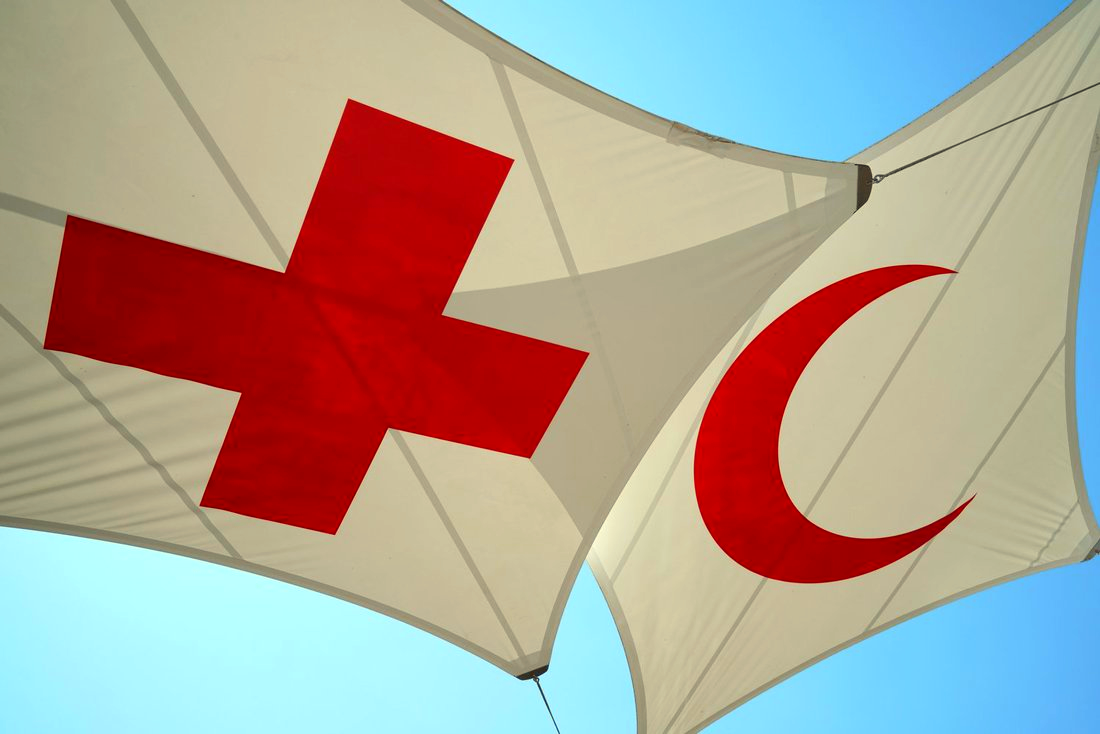
Rejected emblems of the Red Cross and Red Crescent societies
MANY MOONS AGO in South Africa, we had an assignment in Afrikaans class to do a presentation on an organisation or entity that was an example of sosiale bewustheid — “social awareness”.
The perfect exemplar held up by our delightful instructress was the Red Cross which was founded by Henri Dunant in the aftermath of the Battle of Solferino — or DIE SLAG VAN SOLFERINO in Afrikaans (it sounds much deadlier in the language of the Cape).
Strictly speaking, the Red Cross is the International Committee of the Red Cross, which was founded in 1863 to help care for wounded soldiers and to agree protections for medics and field hospitals as well as the afflicted persons they looked after.
A symbol was needed to act as a clear designation to warring parties of combatants and it was decided to adopt a red cross on a white background. Field hospitals would be identifiable by flags and signposts of the red cross on white, and medics would stand out by wearing white armlets with the red symbol.

The Red Cross
Dunant suggested that each country set up its own national voluntary society to look after wounded soldiers. They did so in great numbers, with the initial seven national societies being set up within the first year of the Geneva Convention being agreed in 1864.

The Red Crescent
In 1876, however, the Ottoman Society for Relief to Military Wounded and Sick unilaterally decided to adopt the red crescent on white as its emblem, simultaneously declaring that it would continue to respect and uphold the protections on those facilities or personnel bearing the red cross in line with the agreements Turkey had acceded to.
The International Committee of the Red Cross was quite miffed about this. The red cross was not meant to be interpreted as a religious emblem but a single universal signifier (allegedly inspired by being the inverse of the flag of neutral Switzerland) that could be instantly recognised and respected.
From Geneva, the ICRC wrote to its constituent national societies informing them of this development, while also highlighting its irregularity:
We must, however, draw your attention to the fact that the Ottoman Society for Relief to Military Wounded and Sick has adopted the red crescent on a white flag and armlet as the distinctive sign of neutral personnel.
This substitution of the red crescent for the red cross, in accordance with the proposals of the Sublime Porte to the States signatories to the Geneva Convention, places the Ottoman Society in an irregular position so far as its relations with the other Societies for relief to the wounded are concerned.
While entertaining formal reservations on the substitution of the red crescent for the red cross and the adoption of the former by the Porte before the States signatories to the Geneva Convention have agreed to it, we believe the Ottoman Society can render useful service to the cause of humanity.
Headquarters in Geneva didn’t grant official status to the symbol of the red crescent until 1929 when the Geneva Convention was amended.
Meanwhile, the national societies of almost every majority-Muslim country today use the red crescent instead of the red cross. The major exception, oddly, is Indonesia — the largest Muslim country in the world by population — which has a Red Cross Society. (Perhaps another lingering remnant of the Dutch empire?)
There’s also the matter of which way the red crescent faces. Almost all the Red Crescent societies have it facing rightwards. The exceptions today are the societies of Turkey and Tunisia which both have the crescent facing left. During the days of the Soviet Union, a left-facing crescent was also used by each of the national societies for each of the traditionally Muslim republics of the USSR.

The Red Lion and Sun
The other major exception was the Empire of Persia, which adopted the name of Iran in 1935. Since the 1900s, the Persians had used a red version of their national emblem, the lion-and-sun, for their field medicine and the Red Lion and Sun Society was founded in 1922.
When the Shah was toppled and the ancient empire reduced to an Islamic Republic, the mullahs moved to adopt the Red Crescent in line with other Muslim countries. The Iranian society has always, however, maintained the right to use the Red Lion and Sun and have opposed any attempts to withdraw recognition for the symbol even though it is not actively used.

Magen David Adom (“the Red Shield of David”)
The next most significant emblem to enter the arena was the Magen David Adom, literally the “Red Shield of David”, consisting of what in English we usually call the Star of David. The Jewish medical support organisation was founded in Mandatory Palestine in 1930 with a single branch in Tel Aviv.
The name and emblem, however, date back to the Transvaal during the Anglo-Boer War when Ben Zion Aaron founded a Jewish ambulance corps under the name and symbol Magen David Adom. Paul Kruger, the President of the South African Republic, gave permission for Aaron’s medics to use the symbol and the name in the assistance they rendered to wounded Boer forces.
In May 1931, just a year after Magen David Adom was founded, it was proposed that the red Star of David be added as a protected symbol. The ICRC, however, noted that the Society of the Red Shield of David did not constitute a national society as it did not represent an independent state, this part of the Holy Land being under the British Mandate of Palestine. It also noted in its reply that the adoption of a unique and distinct emblem would harm its future chances of being recognised by the International Committee in the event an independent Jewish state in Palestine was created.
In 1947 the United Nations voted to partition Mandatory Palestine between two states— one Jewish, one Arab — and the following year the State of Israel was founded. The nascent Jewish state acceded to the Geneva Conventions without any reservation, but nonetheless tabled requests for the Magen David Adom to be recognised as a protected symbol. These proposals were continually rejected for fear of symbol proliferation.
At the time, the conciliatory Dutch proposed a compromise whereby every Red Cross society would adopt an upturned red triangle — as a harsh, angular representation of a human heart — but the national societies rejected this suggestion.
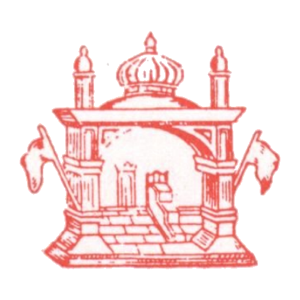
Mehrab-e-Ahmar, or Red Archway (Mehrab)
In the mean time, officials in Geneva has been in touch with the government of Afghanistan encouraging them to start a national society. In 1935, the Afghans founded the Mehrab-e-Ahmar, or Red Archway Society, and applied for recognition from the International Committee.
On the basis of the 1929 Convention, the ICRC suggested to Afghan ministers that they adopt the name Red Crescent Society instead, but the Afghans objected, claiming that the already recognised crescent and lion-and-sun emblems were national in origin and not religious symbols.
At a 1935 meeting, the ICRC rejected official recognition for both the Mehrab-e-Ahmar and Magen David Adom. Three years later, the Afghans conformed and renamed their Mehrab-e-Ahmar to the Red Crescent Society of Afghanistan. (In its early years it used a red crescent facing upwards — just to throw something into the mix.)
Magen David Adom would have to wait until 2006 for its symbol to be recognised via a compromise: the Red Shield of David would be recognised within Israel but any of MDA’s activities outside of Israel would require the emblem to be displayed within the neutral red crystal emblem.

The proposed Cypriot emblem.
The British Crown Colony of Cyprus was home to a section of the British Red Cross. In the 1950s the island — with its Greek Christian and Turkish Muslim communities — was moving towards independence and the British Red Cross was keen to elevate the status of its existing branch to a national society of the ICRC.
As a nod to the two sections of the island’s population, the British Red Cross proposed creating the Red Cross and Red Crescent Society of Cyprus, but the ICRC rather pedantically rejected the proposed combined emblem under the usual grounds of wariness towards symbol proliferation.

The Red Chakra
India’s Red Cross Society was founded just after the First World War and recognised by the ICRC in 1929. After independence in 1947 there was a drive to replace all emblems that were viewed as being British in origin, and the Red Cross reminded some nationalists of the St George’s Flag and the Union Jack.
Some thought was given to introducing a red version of Ashoka’s chakra, India’s national emblem, but the concept never gained momentum.

The Red Lion and Sword
In Ceylon, a Red Cross Society has been founded in 1949, but (like their Indian neighbours) nationalist Ceylonese associated the emblem with Great Britain and with Christianity.
In 1957 a red swastika was proposed as being common to both Buddhism and Hinduism but, as François Bugnion has noted, the proposal wasn’t followed up “for obvious reasons”.
In 1965 there was a plan to incorporate other aid and assistance bodies into the existing Red Cross Society and to adopt a red lion holding a glaive — the Ceylonese national emblem. Once again, the ICRC rejected the proposal.
Other countries which discussed or even proposed new protected emblems include:
■ Syria — where a red palm was proposed in opposition to the cross (deemed too French) and the crescent (viewed as redolent of Turkish domination)
■ Siam — where Queen Saovabha Phongsri founded a society for assistance to the wounded called the Sabha Ka Chad Syam, or Society of the Red Flame (or Unalom)
■ Sudan — the colonial chapter of the British Red Cross was joined by a local section of the Egyptian Red Crescent; a red rhinoceros was proposed but eventually the crescent was adopted
■ Lebanon — the Lebanese Red Cross was founded in 1945 but ran into some resistance from the Muslim section of the population; a red cedar tree was discussed as an emblem but never formally proposed
From 1929, the revised Geneva Convention recognised exclusively the Red Cross, the Red Crescent, and the Red Lion and Sun as the only approved emblems of the movement.
These restrictions survived until 2005 when Protocol III was agreed, creating a totally neutral emblem, the Red Crystal (sometimes referred to as the Red Diamond or the Red Lozenge).

The Red Crystal of the ICRC
This protocol clarified that within its own territory, any national society could use an indicative emblem and the protections for medical personnel would apply, but that when it was operating outside its national territory, it must use either one of the previously approved three emblems or its own distinct emblem combined with the form of the Red Crystal.
This agreement has finally allowed Magen David Adom to be granted full status as a national society of the Red Cross.
The Red Cross has been wise to be wary of new symbols, but once it conceded the point of the Red Crescent it was difficult not to allow further proliferation. With 190-something independent states across the face of the planet, it is remarkable that the number of approved symbols are still so few. (And, given recent events, let us hope for the day when the Red Lion and Sun is deployed once more.)
The legacy of each of the national societies varies widely. During the Second World War, the German Red Cross was thoroughly penetrated by the ideology of National Socialism, leading to its disbandment once the Allied Powers occupied the defeated Germany. The American Red Cross has become notorious for its success at raising money for the relief of suffering and spending it on bureaucracy instead. In Gaza, hospitals and other medical sites are routinely used for military purposes by Hamas undermining the protections the Red Crescent is meant to convey.
There will always be debits and credits, but Henri Dunant’s project for the protection of the wounded and the relief of suffering is more honoured today than offended against today: The Red Cross (or Red Crescent, or Red Crystal, or…) deserves some justified praise.
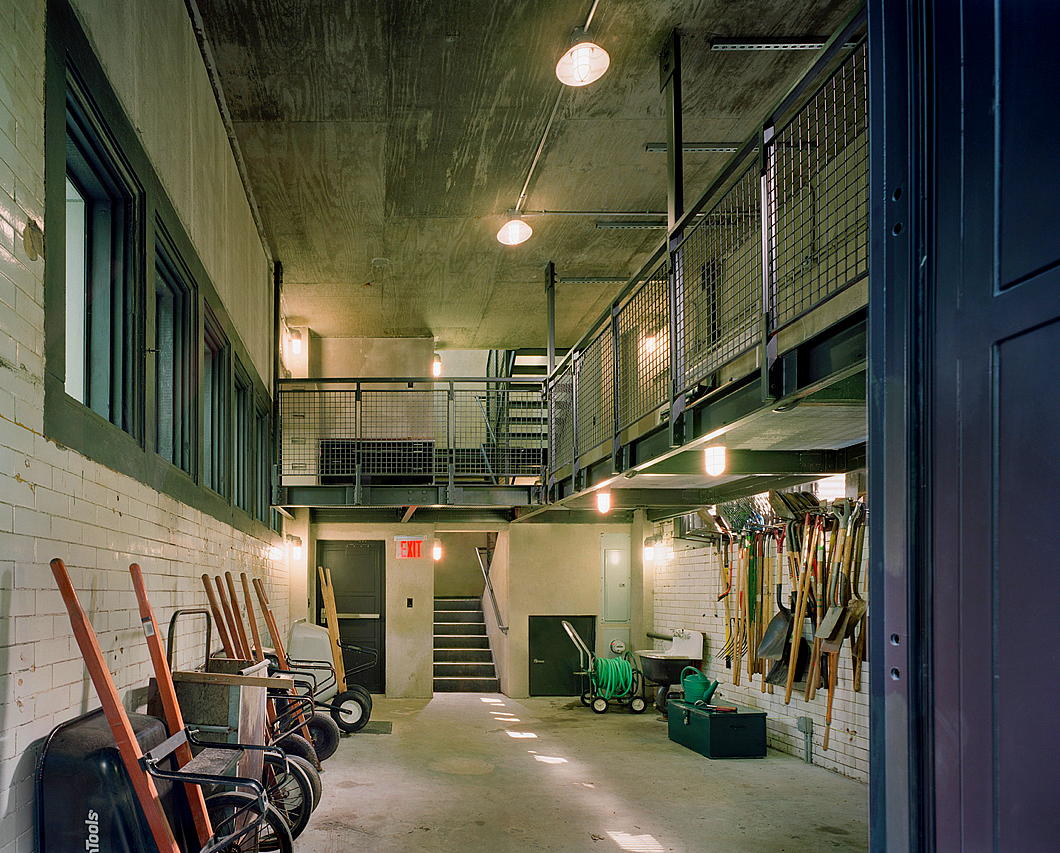
Riverside Park Volunteer House

Manhattan’s Riverside Park is one of the jewels of the island, with four miles of rustic beauty spilling down to the Hudson River (with, alas, the Henry Hudson Parkway in between).
These riparian grounds are under the charge of the Parks Department of the City of New York and entrusted to the care of the Riverside Park Conservancy.
Aside from their own employees, these make use of numerous volunteer gardeners to take care of the many trees, flowers, and other plants that grace this shoreline.
The nineteenth-century structure in which much of the equipment for these volunteers was stored — just inside the park at 107th Street — proved too small and unwieldy for ongoing use.
Expanding it outwards risked the need for felling trees, so in typical New York fashion the Conservancy decided the only way was up.
In 2003, the Peter Jay Sharp Volunteer House was opened: an elegant and multipurpose construction that triples the usable space of the previous derelict building.
We have Jeffrey Murphy of MBB architects to thank for this elegant building which fits effortlessly into its surroundings (and Peter Aaron for these photographs).


Articles of Note: 5 June 2025
Depending on which writer you are speaking to, this can be an insular and tiresome subject — but Vargas Llosa does not disappoint.
The full list of Paris Review interviews can be found here.
■ At school my Latin teacher Dr Kernell used to describe a certain caste of individuals who cannot stand anything being different, fun, interesting, or enjoyable. He ascribed these people the moniker of “the Monotony Monitors”.
Amongst the many things the Monotony Monitors writhe in seething hatred of is Easter, primarily because it is the feast of Christ’s resurrection but also because its date is determined according to a formula based on the lunar calendar. This means it (and its dependent feasts) float through the year rather than being standardised in a monotonous way.
Eliot Wilson writes about the Easter Act 1928 which attempted to overthrow all the work of the Synod of Whitby and fasten the date of Easter in England’s civil calendar.
(It’s bad enough the Pagan English under their genial leader Harold Wilson effectively abolished the Whitsun holiday in 1965 by moving the Whit Monday day-off to the last Monday in May. This now bears the prosaic name of ‘Second May Bank Holiday’ or ‘Spring Bank Holiday’; not to be confused with the first Monday in May which is the ‘Early May Bank Holiday’.)
■ Lebanon is a beautiful land with ingenious inhabitants. Yasin Atlassi reports on how a divided country not much larger than Delaware managed to start its own space programme.
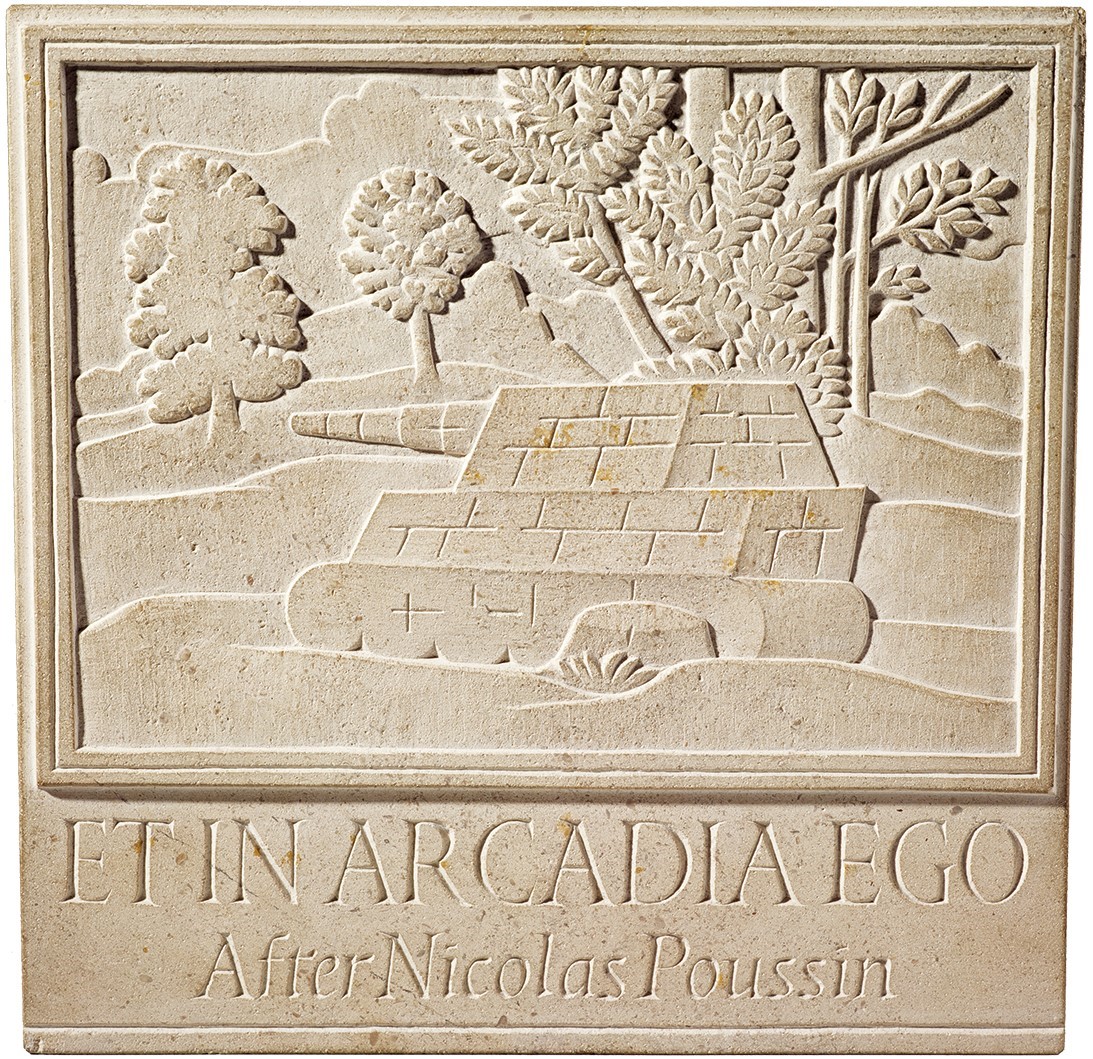
■ On the centenary of his birth, The Spectator recalls Ian Hamilton Finlay: the poet, sculptor, and gardener who maintained a private militia.
■ In Modern Age, Prof. Robert Whaples examines the dichotomy between David Copperfield and Holden Caulfield and concludes we are — alas — living in the age of the latter.
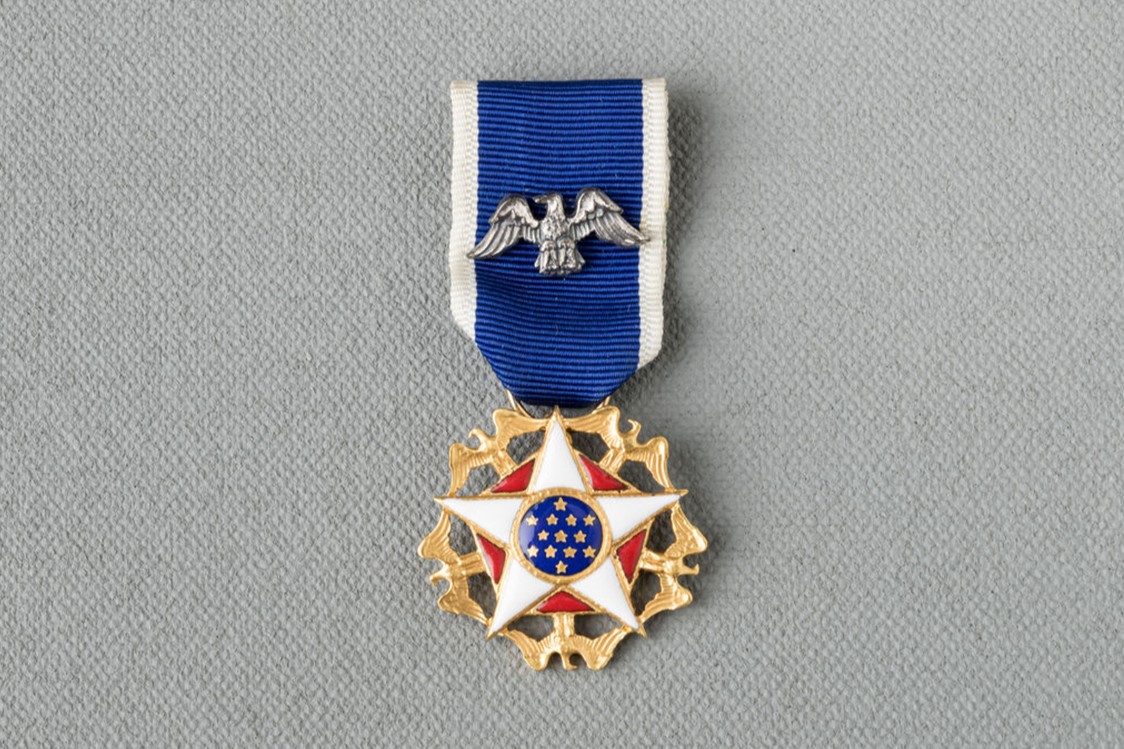
■ The United States of America does not have an honours system — except it does. Elijah Granet and I share many of the same obsessions, and he has penned an engrossing read on the quest for an American honours system.
Mamarazza, R.I.P.
She had a sharp eye, and will always be remembered for one of my favourite photographs.
May her soul and the souls of all the faithful departed rest in peace.

Our Lady, Protectoress of Bavaria
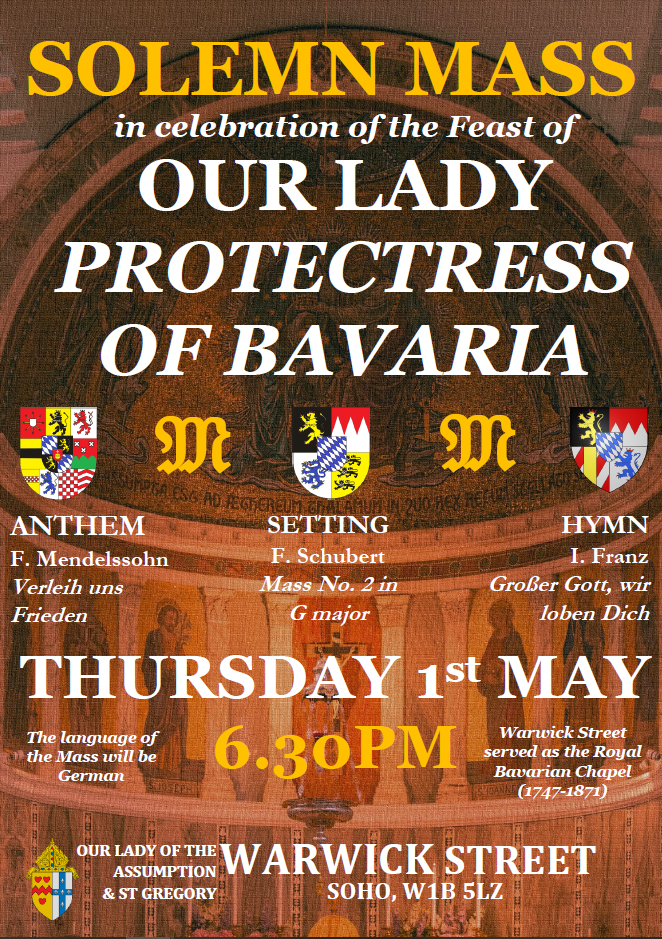
Our Lady, Protectress of Bavaria
including music by Mendelssohn, Schubert, and Franz
Thursday 1 May 2025
6:30pm
Church of Our Lady of the Assumption & Saint Gregory
Warwick Street
Soho, London W1B 5LZ
How to Make a Pope
Argentina is a strange place partly because it is simultaneously so familiar and yet completely different.
It is a world of its own but with deep echoes of the world outside; like someone you instantly recognise as a cousin even though you’re meeting them for the first time.
The world’s most famous Argentine died this week which provoked me to ponder about the country and time that formed him.
From the age of 10 until he was 19, young Jorge Mario Bergoglio lived in Perón’s Argentina.
■ Over at my Substack I wrote a little bit about the early life of the late Pope Francis and his Argentine upbringing. Read it here.
Faithful Shepherd of the Falklands
Monsignor Daniel Spraggon, Apostolic Prefect in Stanley

The anniversary of the Argentine invasion of the Falkland Islands is a time to recall one of the archipelago’s most faithful shepherds: Monsignor Daniel Spraggon, the apostolic prefect of the Falklands, South Georgia, and South Sandwich Islands.
Born in Newcastle in 1912, Daniel’s parents died during his childhood, leaving him to be raised by Daniel and Kitty Anderson who taught him the skills of the butcher’s trade. At the age of 22, Daniel joined the Mill Hill Missionaries and studied throughout the Second World War, finally being ordained on the feast of Sts Peter & Paul in 1945.
The Mill Hill Fathers assigned him to Buea in the British Cameroons (today a component of the Anglophone part of Cameroun) where, in addition to caring for souls, he also raised pigs. Having impressed the local colonial officials, they successfully requested the Mill Hill Fathers assign Spraggon as a military chaplain to the Gold Coast Regiment of the Royal West African Field Force.
When the Gold Coast became the first of Britain’s West African colonies to achieve independence in 1957, Spraggon was retired with the rank of Major and honoured with an MBE. He maintained close and friendly contacts with several Ghanaian Army officers — “good men” in his words — some of whom were later involved in the overthrow of Ghana’s chaotic dictator Kwame Nkrumah in 1966.
To the South Atlantic
After years attending to mission appeals in Great Britain and North America, Father Spraggon was appointed to the Falklands in 1971 with the right of succession to the apostolic prefect Msgr James Ireland, who stood down in 1973. While still only a priest, Msgr Spraggon had all the authority of an ordinary bishop over the Falklands, South Georgia, the South Sandwich Islands, and the British Antarctic Territory.
Spraggon took to his task with vigour, encouraging the farmers to allow their children and farm workers to be educated, particularly when it came to matters of religion. As the Dictionary of Falklands Biography notes:
“Hospital visiting was a daily event even on a Sunday — not only were Catholic families visited but those of other denominations. This also held good on the ecumenical side. Many joint services were conducted in a warm and friendly spirit, though when he had to be firm he was.”
Pigs had been his department in Africa, but in the Falklands Msgr Spraggon turned instead to cattle. As the DFB relates:
“His cutting up of a quarter or half was a joy to behold — and his handling of the carcass showed a robust frame but belied a none too healthy body which he managed to hide so well. Sausages, brawn and soups were also his forte.”
The Argentine airline LADE began regular flights to Port Stanley in 1972, which brought Msgr Spraggon into contact with their officers and staff, by numbers overwhelmingly Catholic in religion.
In conversation, the Monsignor very frankly relayed to the LADE officials that the Islands were British, the Islanders were British, and that they would do everything in their power to remain British while also hoping to be as friendly as possible to their Argentine neighbours.
Invasion
The quiet pastoral life of the Falklands was rudely interrupted on 2 April 1982 when an overwhelming Argentine force invaded and seized the British territory.
The Argentine forces took the capital Port Stanley where the governor of the Falklands, Rex Masterman Hunt CMG, ordered them to depart the islands immediately and return to Argentina. The next day it was announced the invading occupiers were going to remove the Governor from the Falklands, flying him to Argentina where he could then return to London.
Hunt decided to don his full civil uniform — feathery cap and all — and march down the street to reassure islanders that Britain would be back. Spraggon, long since become a good friend to the administrator, ran up to take hold of him to bid farewell — for now.
“The Islanders will need you now more than ever, Monsignor,” Hunt told him. “I know you’ll do your best from them.” Spraggon embraced the Governor: “And I know you’ll be back.”
Sir Rex wrote later in his memoirs that Spraggon “universally liked and respected… was to prove a tower of strength during the occupation”.
Seeing Hunt in his full uniform, the cleric determined there and then that he would wear his full monsignor’s kit for the duration of the occupation — however long it lasted — to keep the Islanders hopes alive.
As prefect apostolic, Msgr Spraggon was not just a clergyman but the representative of the Holy See — a sovereign state in international law — on the Islands.
In his first interaction with the Argentine commanders, Msgr Spraggon echoed the Governor’s advice that they should leave the Falklands immediately, otherwise everyone “even the penguins” would depart.
As it happened, the Monsignor did everything in his power to make sure the Falklanders stayed put and were looked after. He crisscrossed the islands calling in on farmers and families, talking to islanders and calming them with his reassuring presence — again, in his full garb as prelate.
Dealing with the “Argies”
The Argentine military-civilian liaison officer on the island was a Commodore Carlos Bloomer-Reeve — an acquaintance of the Monsignor’s from the Argentine’s previous role with LADE airlines — assisted by Argentine naval captain (later vice admiral) Barry Melbourne Hussey. Spraggon and Bloomer-Reeve’s pre-existing relationship proved useful across the Argentine occupation as the Monsignor often had to advocate on behalf of individual islanders.
The only policeman on the island, PC Anton Livermore, initially tried to make do after the invasion in helping keep some civil order and preventing harm. Major Dowling of the Argentine Army was made the head of civil policing but when Dowling ordered Livermore to arrest a civilian, the constable refused. “They didn’t like that and threatened me, but Monsignor Spraggon sorted that out,” Livermore said. “I have a lot to thank Monsignor for.”
The invading forces were an odd lot. Most — not all — the Argentine officers had a decent reputation for gentlemanly conduct with the Islanders but they often showed an utter contempt for their own enlisted men. In contrast to the well-fed officers, the drafted Argentine enlistees were poorly nourished and sometimes begged or stole food from islanders.
“After the curfew they shot at anything that moved,” Spraggon reported. “They didn’t know one end of the gun from the other.” One evening a nervous conscript opened fire on the Monsignor’s house. Spraggon marched down to Comodoro Bloomer-Reeves’ office first thing the next morning and forced him to come and count the twenty-seven bullet holes in the priest’s house.
Two bullets had breached the lavatory at a potentially lethal angle. “Look at that!” he shouted at the Argentine with his thick Geordie accent. “If I’d been answering the call of nature, you’d now be answering to God!” Years later Spraggon showed Rex Hunt his thick copy of Moral and Pastoral Theology (Volume V) which a bullet had torn through: “They got through it quicker than I did!”
Throughout the occupation, the Monsignor never lost his confidence in an eventual British victory. He sensed that — once the British naval task force had been assembled — the Argentines on the island also suspected they would lose.
Mass continued to be offered in the Catholic church to mixed congregations of Islanders and occupiers. The Sunday following the Queen’s Birthday included a particularly lusty rendition of God Save the Queen, to the sheepish embarrassment of the Argentines.
Liberation and Life
When it came, the day of liberation was a source of great joy. The Islands’ old governor — and the Monsignor’s good friend — Sir Rex Hunt was flown back in triumph.
In his memoirs he recalls returning to Stanley:
“The two victorious commanders, Sandy Woodward and Jeremy Moore, welcomed me back but, before I could take the General Salute, I was engulfed by the crowd. Normally not renowned for displaying emotions, even the miserable weather couldn’t dampen their spirits. In that sea of faces I saw Syd and Betty Miller, crying this time from joy, not sorrow, and Monsignor Spraggon, in all his finery still and beaming goodwill and happiness.”
The Governor and the Prelate — Rex and Daniel — both stayed on in their roles following the liberation. There were many dead bodies scattered across the islands to deal with, and the Argentine government at that time refused to repatriate their own war dead.
The Falklands authorities decided to dedicate a plot of land for the enemy dead, consecrated by Monsignor Spraggon — saddened that so many lives had been lost so uselessly. “We looked after the poor buggers a lot better dead than their officers did alive,” he said.
For his efforts during the occupation, Monsignor Spraggon was awarded an OBE which he travelled to Buckingham Palace to receive in 1983.
The priest was no longer young, and the bad luck of an aneurysm saw him detained in the Islands’ King Edward Memorial Hospital on the fateful evening in April 1984 that a serious fire erupted.
With such a small population, in Stanley a fire is a matter of all-hands-on-deck — even the Governor. Again Sir Rex Hunt’s memoirs relay the scene:
When I got back to the west entrance, someone said that all the patients were out of the hospital and safely accounted for, but over in the nurses’ block they told me that this was not so – Monsignor was still inside, and Teresa and her baby, and perhaps others.
I dashed back to the west entrance and tried to make my way through the smoke to Monsignor’s room, but after a few yards I was coughing and spluttering and realised that, without breathing apparatus, it was hopeless. I returned to the door and waited anxiously, feeling utterly frustrated and helpless.
Suddenly figures emerged from the smoke wearing breathing apparatus and carrying a body. ‘It’s Barbara Chick’, said one, in a voice which I recognised as Marvin’s. ‘She’s dead, but there are more in there.’ They put her down in the entrance and went back into the smoke.
I tried to lift her, but she was too heavy for me. Helping hands appeared and we managed to lay her to one side of the main entrance. Apart from a blackened face, she was unharmed and indeed looked quite serene.
Out of the gloom for the second time loomed three figures, carrying another body. ‘It’s the Monsignor’, said Marvin, ‘He’s still alive.’ Four of us took him from the firemen and, as we did so, he groaned. It was music to my ears.
As we carried him across to the nurses’ quarters, his pyjama trousers slipped and I found myself holding him by one leg and a bare bottom. Alison was in the nurses’ quarters and quickly put him on oxygen. His face was absolutely black, but he was breathing.
As the life-giving oxygen filled his lungs, his eyes opened and he recognised me through the oxygen mask. Kneeling beside him, I said ‘Well, Daniel, I never thought I’d hold a Monsignor by the right buttock!’ His eyes twinkled and I knew that he was going to be all right.
Hunt had feared the Islands would lose their beloved Monsignor, but he was still going strong later that year.
On the evening of Christmas Day 1984, Hunt had Spraggon round for a glass, sitting by the peat fire in the small drawing room of Government House.
They discussed how long they might each continue in post. “I want to stay until you go,” the Prelate told the Governor, “and then I’ll go”.
The End
Spraggon made it to his friend’s final convening of the Executive Council of the colony in September 1985. He promised to see the Governor off before he left the Islands for good, scheduled for some weeks time.
Ten days later, the Governor returned to his office following his normal weekly briefing with HQ British Forces Falkland Islands when Father Monaghan, the Monsignor’s assistant, arrived “so overwrought that he could barely speak”.
Monsignor Spraggon had suffered a burst aorta and died just minutes earlier.
The Governor’s wife took Father Monaghan through to the drawing room while Sir Rex used the new satellite telephone link to ring through to the headquarters of the Mill Hill Fathers in London.
“I got through to the Superior General, Bishop de Wit, immediately,” Hunt wrote. “He promised to tell Daniel’s family and without a moment’s hesitation said that he would come down for the funeral. He caught the first available aircraft and arrived in my office with Daniel’s nephew, Edward Spraggon, six days later.”
On 3 October 1985, the six-foot-seven-inch-tall Dutch bishop presided at the funeral, speaking good English “in a deep resonant voice that seemed to come all the way up from his boots”.
Staying at the bullet-ridden priest’s house and looking out onto the ships in the harbour, the bishop spotted the name of HMS Endurance and chose this as the theme of his funeral oration, reflecting on this characteristic of the Monsignor’s life.
The Governor and the Bishop escorted Sproggan from the church to his final resting place in Stanley’s cemetery, where Sir Rex Hunt bid his friend farewell for the final time.
“For once the wind was not blowing on that bleak hillside,” Hunt reported, “and all was calm and serene.”
Monsignor Daniel Martin Spraggon MHM — requiescat in pace.
In thanksgiving for the lives and struggles of all clerics who have faithfully guided and guarded their flocks in difficult circumstances throughout the centuries.
Articles of Note: 8 April 2025

In Smithsonian magazine, Chris Heath has a rifle through the archives alongside the historian, who tells us about his first job with the New Brunswick Daily Home News:
In March 1959, Caro was diverted into what might have been a whole other career. Instead it turned into a pivotal life lesson. His newspaper was so enmeshed with the local Democratic political establishment that, come election time, the paper’s chief political reporter routinely took a leave of absence to write candidate speeches. This particular year, the reporter fell suddenly ill, and Caro was deputed to fill in. Suddenly, he was in politics. Caro supplied the required speeches, and even a campaign song—65 years later, he can still sing part of it to me—setting the names of the five Democratic candidates to the tune of the 19th-century standard “MacNamara’s Band.” Every so often, the campaign manager and city attorney Joseph Takacs would pull out a wad of $50 bills, peel off a few and hand them to Caro. It was more money than he had ever been paid.
It seemed like a dream job. But on Election Day, in mid-May, Takacs, who seemed to have taken a liking to Caro, invited him on his tour of the polling stations. At each stop, Takacs would have a cozy conference with the police overseeing the polls. Then, at one stop it was explained that there had been some trouble that was being dealt with, and Caro watched as Black protesters were herded into a police van. As Caro tells it, this was a moment of decision. At the next traffic light, he reached for the door handle. “I just got out of the car without saying anything,” he says.
And much more about his early days in the newspapers as well as his writing method. It inspired me to finally pick up a copy of The Power Broker.
■ Granny killing is the biggest political issue in the UK at the moment, though the attention it has received from the front pages is less than in real life, the group chats, and online.
The original legislation establishing the National Health Service tasked it to “secure improvement in the physical and mental health of the people of England… and the prevention, diagnosis and treatment of illness.”
Kim Leadbeater’s bill legalising and providing for assisted suicide, however, would require altering this.
In Compact, Dan Hitchens describes how assisted suicide will destroy the NHS.
■ Camille Paglia is a phenomenon whose reputation is having a second wind thanks to her breathless interviews and discussions on intellectual chat shows now shared on social media.
I don’t mean to dampen with faint praise but she’s probably the best thing ever to have come out of SUNY Binghamton.
Ella Dorn examines her own devotion to the cult of Camille Paglia for the Spectator.
■ Jews are a miniscule proportion of the global population but there are currently three Jewish heads of state.
At Engelsberg Ideas, Elijah Granet explores how Jewish leaders have defied the political odds to come out on top in the past century.
■ London is, alas, an increasingly undignified place to live.
Ellen Pasternack writes in this month’s issue of The Critic how you have to surrender a bigger and bigger chunk of your take-home salary to rent ever smaller accommodation that itself is often cramped and belittling.
The trends aren’t heading in the right direction.
■ There is a mischievous air to Fred Sculthorp. Whenever I see him he looks like he’s up to something, and he usually is.
The other day I ran into him (or rather he ran into me) on Victoria Street and he told me he was working on a piece on Dagenham.
He writes for Unherd about how this spectrum of far London and near Essex has been abandoned by the political establishment and is turning to Reform. “Bring back Rupert Lowe!”
■ Can Russians and Americans be friends? Richard Nixon has the answer.
Can Russians and Americans be friends? pic.twitter.com/0l8mzuyCbt
— Richard Nixon Foundation (@nixonfoundation) March 28, 2025
The Richard Nixon foundation is doing yeoman’s work on social media lately and well worth a follow.

Proportionality Destroys Representation
After the Jenkins Commission on the voting system presented its report to Parliament in 1998, the House of Commons had a chance to debate its findings and proposals.
In his contribution to the debate, Benn attacked the modish support for proportional representation, arguing instead that “direct representation is the delicate thread that links the people with their government”:
When we discussed the subject in the Labour party’s national executive a few years ago, when Neil Kinnock was leader, I said to Neil that I had a feeling that if we had a party list system my hon. Friend the Member for Bolsover (Mr. Skinner) and I would be at the bottom of the list. He laughed, but in a funny sort of way. That is the direction in which politics is going.
No doubt, all hon. Members will go to their constituencies this weekend. Every person whom we meet in our constituencies is our employer — the bus driver, the street sweeper, the home help, the policeman — and has the power to remove us. Our constituents expect to be represented. They decide whether they agree with our views and whether we have done a decent job.
Any element of proportionality, which destroys that link, could lead to people being governed by a Government whom nobody had voted for, because nobody would know the basis of the coalition on polling day. At least the coalitions of the parties are transparent: people can see them developing and know what they are voting for and what their own Member thinks.
I do not intend to waste much time on the Jenkins report because, candidly, I do not think that it has a cat in hell’s chance of succeeding. The idea that the parliamentary Labour party would go through the Lobby to destroy fifty of its own Members, to redraw all the constituencies and to introduce a new group of piggy-back Members is ludicrous. I heard it said by one cynic that the Labour party is so loyal that, if chimney boys were brought back in the name of modernisation, we would all go through the Lobby; but turkeys do not vote for Christmas. I do not honestly think that this is a serious plan.
The real issue is one that Jenkins neither considered nor was asked to consider the power that people have over the government of their country. This is the beginning of a debate about democracy generally. Unlike almost every other country, we have no vote over the head of state. We have no vote over the second Chamber. If my right hon. Friend the Prime Minister reintroduces Edward I’s method of appointing peers — when peers began in 1295, they were not hereditary — we will be modernising ourselves back to the feudal period. There will be absolutely no popular control.
The House of Commons has very limited power. After all, the Prime Minister derives his legislative majority from the people, but most of his executive power from the Crown. That is why the Prime Minister has put a spin doctor into Buckingham palace. If the Crown is not popular, the Prime Minister might lose the power to appoint bishops, judges, commissioners, peers and so on. That is how the system works.
It amazes me that the British people put up with that system. What is it about our training and breeding that makes us think that we are not fit to elect the second Chamber or the head of state? Jenkins does not deal with that, because he is an Asquithian Liberal. We have to be very careful.
People ask whether the proposals would lead to a coalition; but they are all about getting a coalition. Those who advocate the proposals favour a coalition. I do not want to be too political in a debate of this character, but it is worth noting that there is a big Labour majority and the leader of the Liberal party is on a Cabinet Committee, but I am not. I met him voting against the lone parents provisions last December. I was threatened with disciplinary action, but he knew that he would be at the Cabinet Committee the next day. There is already a broad perspective of views. For example, the right hon. Member for Henley (Mr. Heseltine), the former Deputy Prime Minister, has been given a job and the former Chancellor has been given a job. The former chairman of the Conservative party is in Northern Ireland, clearing up the RUC and David Mellor is in charge of football. When we talk about inclusiveness, I just wish some of us were part of it.
In future, unless we are clear about stopping it, all candidates will be vetted by the party machines. That is not about the power of the Prime Minister, but the power of the party leader. All the European candidates have been vetted and put on a list, as have all the Scottish candidates. My hon. Friend the Member for Falkirk, West (Mr. Canavan) was left off, because he was thought less suitable to be a Scottish candidate, although the hon. Member for Leominster (Mr. Temple-Morris) has suddenly given the Labour voters there a Member of Parliament by changing sides. Candidates for the Welsh Assembly will also be vetted. So the language of devolution is accompanied by the centralisation of power.
I do not wish to overdo the point, but as a Minister I visited the Soviet Union and Brussels many times. In the Soviet Union, we used to meet the central committee, which had not been elected. We met the commissars, and they had not been elected. I went to Brussels and met representatives of the central bank, and that had not been elected. I met the commissioners, and they had not been elected. The truth is that capitalism and communism have one thing in common: they do not want the people to have a choice of system, only a choice of management. That is the problem that we face. I have not heard anybody suggest that it would be a good idea for the Governor of the Bank of England to be elected, even by first past the post, and he has more power than any of us here. He is appointed, so he depends, like the bishops and the judges, on patronage.
We must face the problem that government now is less about representation and more about management. I get my fax from the party headquarters every morning, with quotations already attributed to me — “Mr. Tony Benn welcomes compulsory homework for pensioners”, or whatever it is, and I am supposed to put it back in the fax machine to send to the Derbyshire Times. I feel less and less like a representative and more and more like an Avon lady, who is told what to say when she knocks at the door. If the Liberals had joined the right end of the Labour party, we might have had a progressive party, but the trouble is that they joined the wrong end of the Labour party. I will not go into that now.
Direct representation is the delicate thread that links the people with their Government and the basis of it is that they elect a man or woman they know, can argue with and can get rid of. Do not think that minorities remain minorities for ever. After all, ten years ago, the environmentalists were bearded weirdos, but it will not be long before Swampy is in the House of Lords. The Dunblane massacre led to the previous Government changing their policy and apartheid ended by popular pressure. Democracy is not what somebody does to us if we vote for them but what we do where we live and work, and Parliament then gets the message. After forty-eight years here, I can say that Parliament usually gets the message last. We must listen to the people and not try to impose on them a pattern that will provide a permanent coalition and remove real choice from the electors.
Rising on a point of order, the hon. Member for Aldershot (Mr Gerald Howarth), inquired:
On a point of order, Mr. Deputy Speaker. The right hon. Member for Chesterfield (Mr. Benn) was so interesting and entertaining. May we vote for extra time for him?
Mr Deputy Speaker instead called upon the hon. Member for South Norfolk to continue to the debate. …
Sag Harbor Cinema
For a film fan, to grow up in an American town with a small cinema is to win the lottery of life.
In my childhood, we had the advantage of two little movie houses within walking distance: the three-screen Bronxville Cinema and just a little bit further afield by foot the single-screen Pelham Picture House.
Fittingly, these two are now run together as the somewhat pretentiously titled but no-doubt quite useful ‘Picture House Regional Film Center’.
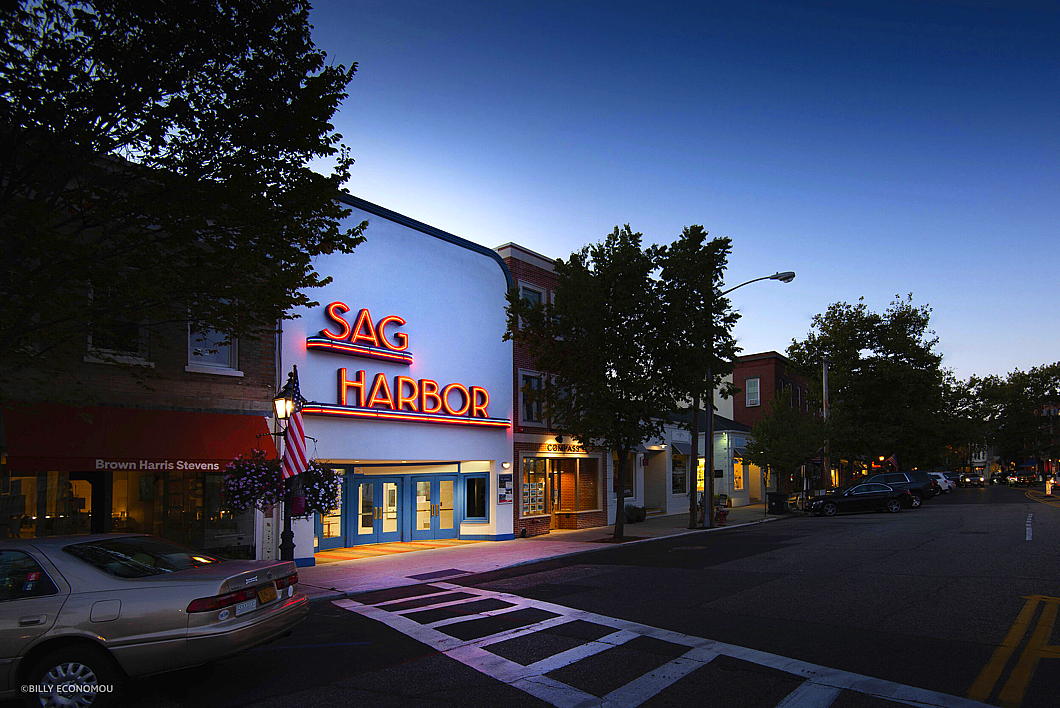
Way out on the South Fork of Long Island, the old whaling village of Sag Harbor has the perfect little small-town American movie theatre.
There is something just right about this cinema on the village’s Main Street — as Variety put it: “beloved for not only its obscure programming but also its 1930s red neon sign with the village name”.
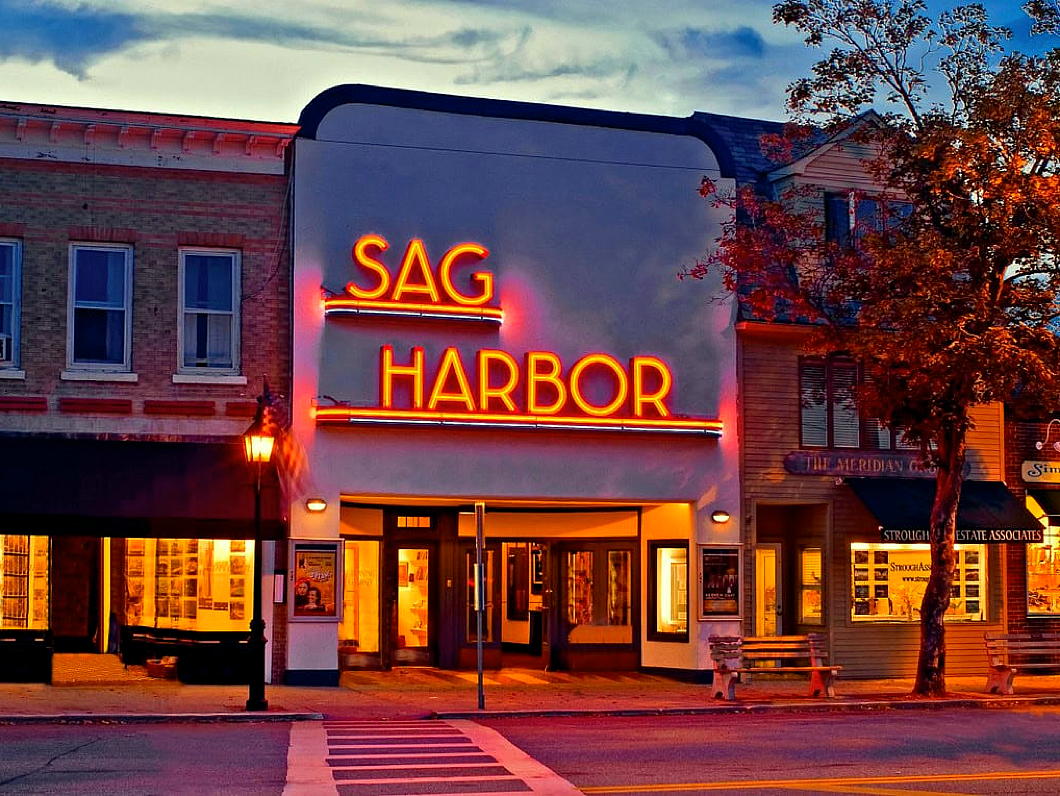
The single-screen cinema first graced the main drag of the village in 1936, the creation of architect John Eberson whose ‘atmospheric’ movie theatres are dotted across the United States and even as far as Australia.
Eberson designed two of greater New York’s five Loews ‘Wonder Theatres’: the Loew’s Paradise on the Grand Concourse in the Bronx neighbourhood of Fordham and the Loew’s Valencia in Jamaica, Queens.
This cinema was purchased by Gerard Mallow in 1978 who for nearly four decades preserved the Sag Harbor Cinema as an arthouse movie theatre with an eclectic offering.
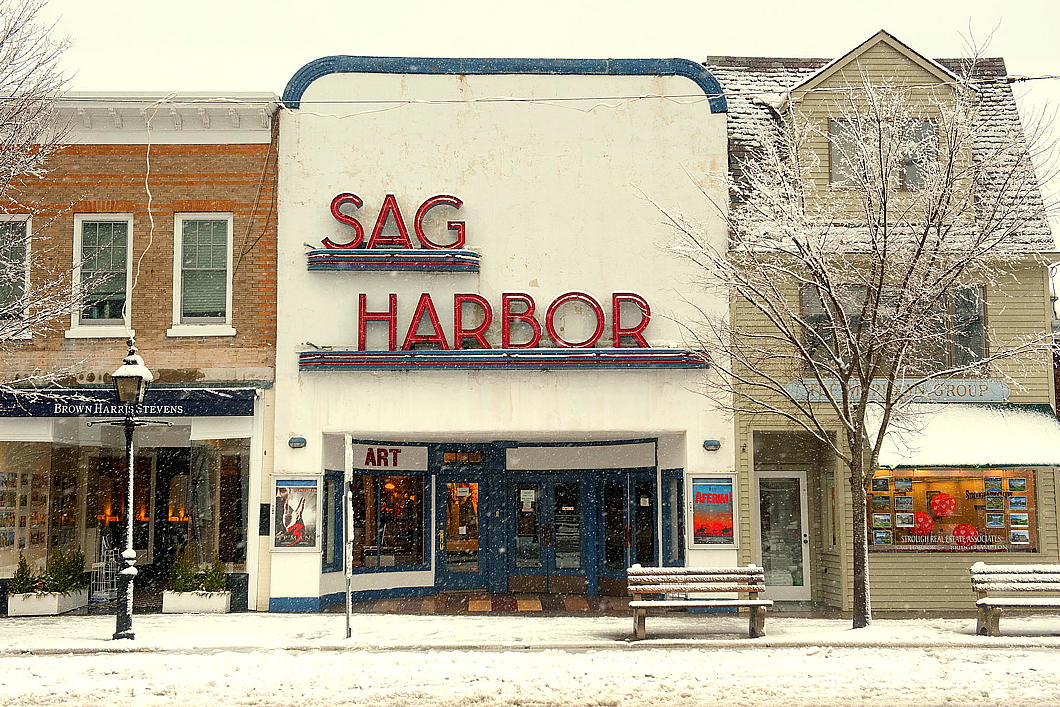
In December 2016, the cinema suffered a devastating early morning fire that destroyed most of the structure.
The iconic neon signage was salvaged by Chris Denon of North Fork Moving and Storage and the sculptor and ironworker John Battle.
Meanwhile, a community partnership that was already in discussions to purchase the institution from Mr Mallow came together to raise funds and oversee the rebuilding, including several improvements.

The main hall was divided between a large screening hall and a smaller one, along with a new screening room on the first floor (that’s second in American English) behind the iconic façade.

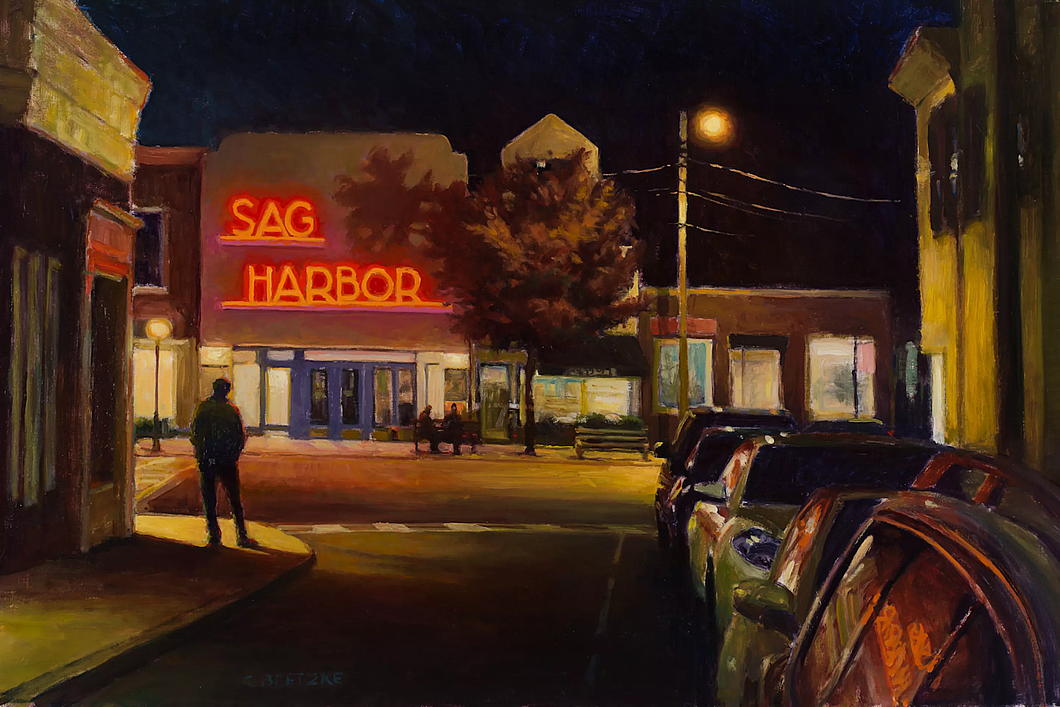
The artist Carl Bretzke captured Sag Harbor’s cinema in plein-air painted form.
Encouraged by the Grenning Gallery, Bretzke offered limited-edition prints of his painting, the proceeds of which helped to pay for reconstructing the movie theatre.



NK Architects also created a new bar and lounge, two roof terraces, an art gallery, and educational space within the original footprint of the cinema.
Following coronavirus-related delays, the new facility finally re-opened in June 2021.





Given the improvement in the facilities, it seems like the Sag Harbor Cinema’s fire was the best thing to ever happen to it.
It is reassuring to know this little movie theatre will be gracing Sag Harbor’s Main Street for many moons to come.
Teutonic Takeover
What is going on in Chile? They’re having a presidential election later this year, and the latest poll figures are out.
The top three candidates are all right-wingers descended from German immigrants, but with very different family backgrounds.
How their ancestors ended up in the Andean republic on the Pacific reflects the varieties of experience in the German diaspora in South America.
■ Read more over at my Substack.
Katalin Bánffy-Jelen, R.I.P.
I have the poet Ben Downing to thank for putting me on to the great Hungarian writer Miklos Banffy. I will always be grateful.
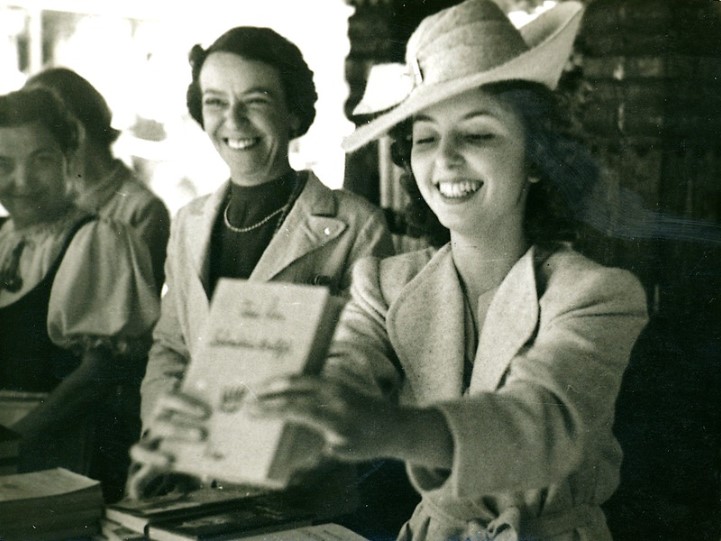
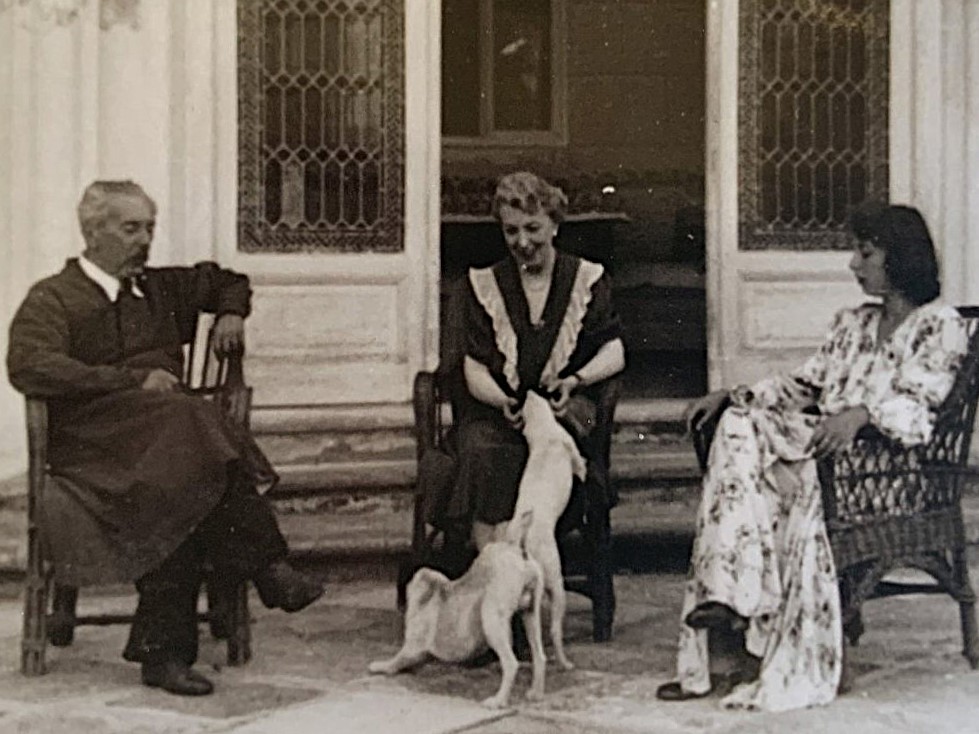
But the one to whom I should be even more grateful is the writer’s daughter Katalin Bánffy-Jelen who died last month, 100 years old.
She, along with Patrick Thursfield (d. 2003), translated the great Transylvanian trilogy from Hungarian into English.
There were obituaries in The Times and the Daily Telegraph.
After the war, Katalin married a US naval officer and they settled in Tangier, still then a free port under a sort of multinational administration.
I wonder if she would have known Fra’ Freddy’s father when he was British delegate to the International Legislative Assembly of Tangier.

Substack Cusackiensis
For my sins, I have started a little “substack”, despite my objections to the entire medium. If you are the sort of person who is on Substack, you can find it here.
It is important to claim the territory to prevent any of the other Andrew Cusacks out there from nabbing it. A pre-emptive “substack”.
Theoretically it could inspire one to write more, though these days I prefer to write for people who pay me to.
In the Courts of the Lord

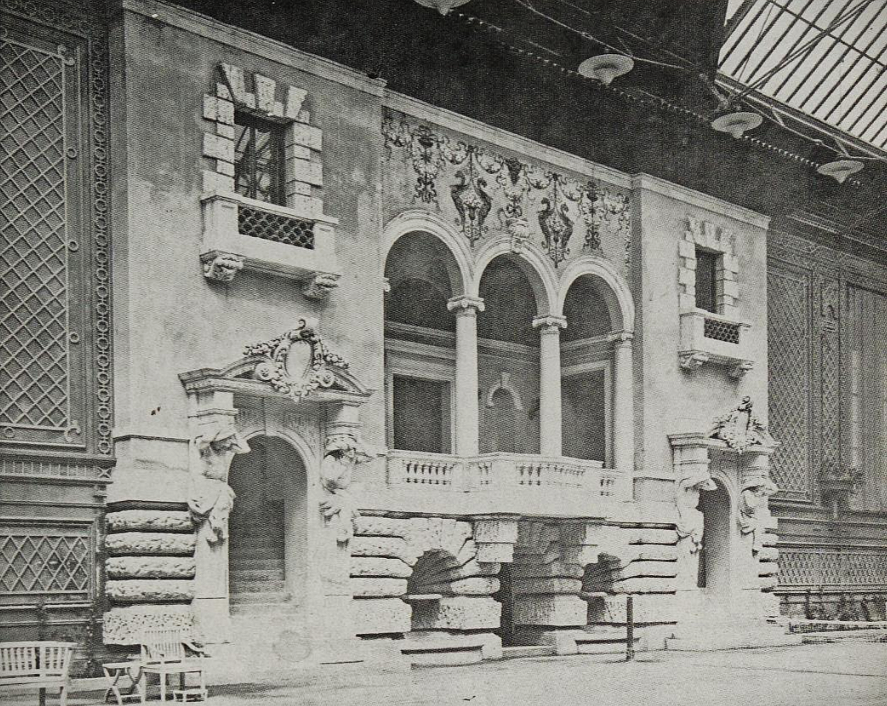
Well, not quite a lord, but a Vanderbilt — which in America is much the same. The indoor tennis courts at “Idle Hour” in Oakdale, L.I., were some of the grandest ever built in the United States.
The house itself, designed by Richard Howland Hunt for William Kissam Vanderbilt and completed in 1901, is unremarkable and not on the finer end of the spectrum. To me, it has all the glamour of a railway station serving a mid-sized town.

Just a year later, however, W.K. commissioned the architectural partnership of Warren & Wetmore — later famous for Grand Central Terminal — to design an extension that featured an indoor tennis court with adjacent guest quarters in a somewhat extravagant style.
As the polymathic Peter Pennoyer pithily put it in his The Architecture of Warren and Wetmore:
“The heavily rusticated stone of the gallery wall, exuberantly carved with atlantes and fanciful over-door sculpture and painted with scrolling frescoes, created a sculptural backdrop so surprising and original that it overwhelmed the vast open space of the court. For an ancillary building, the scale and energy of the architecture were tremendous.”
One can certainly imagine enjoying a refreshing summery gin-and-tonic on that loggia.
William Kissam Vanderbilt died in 1920. After a spell as an artists’ colony, in 1938 the estate was purchased by a cult called the Royal Fraternity of Master Metaphysicians, founded by a rogue named James Bernard Schafer who claimed he could raise an immortal child. (They also bought the old Gould stable on West 57th Street.) Schafer was jailed in 1942.
The National Dairy Research Laboratory took over the property and split the former tennis courts into lab space. Long Island’s Adelphi College bought Idle Hour in 1963 as an overflow campus which they later spun off into an independent institution, Dowling College, which shut in 2016.
For another indoor tennis court from the same period, see the old Astor place in Rhinebeck in the Hudson Valley.
American Exuberant

I have seen far too little of California, which is a shame because the confident freehand of American architecture between the wars reaches its greatest exuberance in the Golden State.
William Gayton began his eponymous Gaytonia Apartments in Long Beach, Ca., in 1929 and they were only midway complete before, as the characteristically colloquial style of Variety put it, Wall Street ‘laid an egg’ with the stock market crash.
This is a deliciously free California Gothic, unbothered by the pretensions of historicist verisimilitude. (A contrast to our still-much-appreciated academic friends on the East Coast.) Indeed, despite its castellar appearance it is mostly constructed of artfully handled stucco on wood disguising itself as stone.
And, true to the apartment house form, there’s even underground parking.

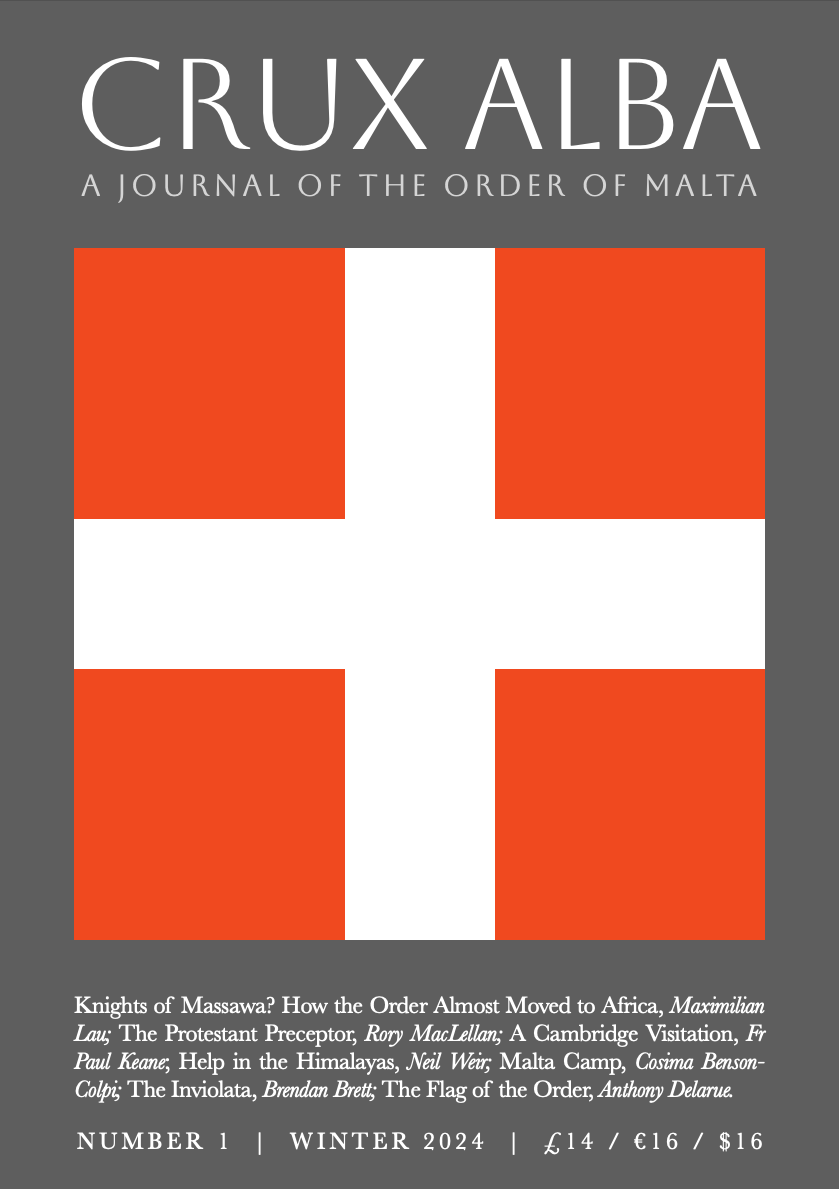
Crux Alba Journal Launch

You are cordially invited to the launch of
This new journal is devoted to
the history and activities of the Order of Malta.
Please join us for a drink to celebrate the launch of this venture.
6:30pm to 9:00pm
Tuesday 18 February 2025
St Wilfrid’s Hall, Brompton Oratory, Brompton Road, London SW7 2RP
Copies will be available for purchase at £14
Please RSVP by 14 February to:
journal@gpesmom.org
Please share this invitation with others who might be interested in attending.
See also the Crux Alba website, Instagram, and Twitter.
The Year in Film: 2024
I love a trip to the cinema and since 2021 we’ve had an Everyman cinema here in God’s Own Borough of Southwark, smack dab in the heart of Borough Market — a great boon for us locals.
We already have the BFI (and its IMAX) next door on the South Bank, but the comfort and quality of an Everyman is well worth the price of the ticket. (Sadly, this website is not yet sponsored by the Everyman corporation, but we are open to such possibilities.)
I thought a brief overview of most-but-not-all the films I managed to see on the big screen in anno domini 2024 was worthwhile, so here goes:
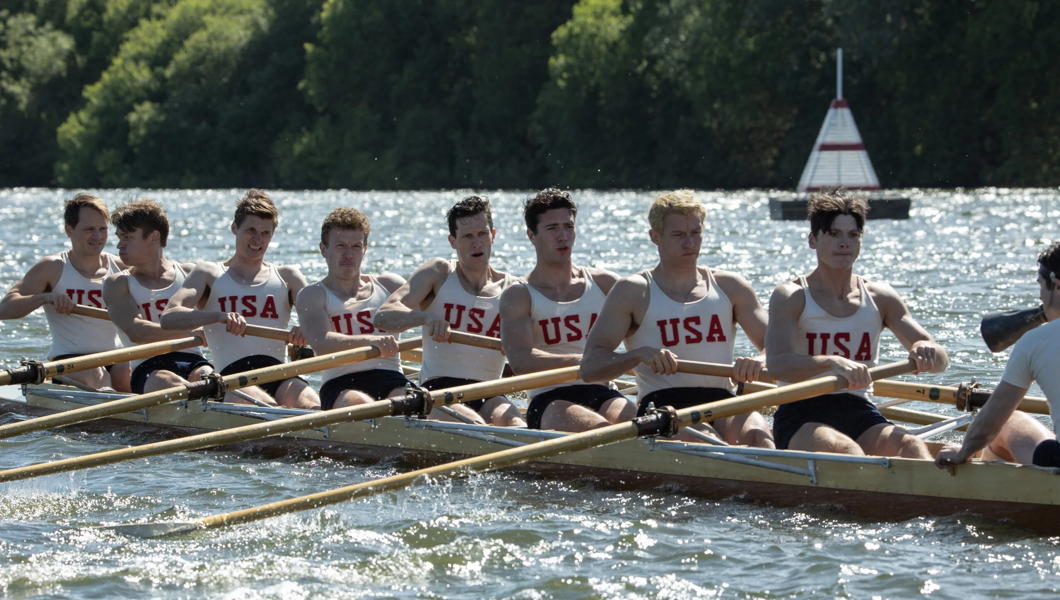
The Boys in the Boat (USA, 124 min) — Who can say no to a good old-fashioned American feel-good film? And a rowing film, at that. Excellent recreation of the 1930s and a nice beat-the-Nazis true story. (Caveat: In a brief moment, they got the name of Jesse Owens’ university wrong.)

The Holdovers (USA, 133 min) — It’s been a while since we had a decent New England boarding school film. A pupil neglected by his parents is forced to stay at school over the Christmas holiday, with an equally forced teacher resenting his presence.
Teenager Dominic Sessa is excellent in his first film role — he was allowed to audition as they were filming at his school, Deerfield — but the real star is Da’Vine Joy Randolph as the school cook.

Interstellar (USA, 169 min) — This 2014 film from director Christopher Nolan is vast in its vision. BIG. An intriguing reflection on the love of a family and the fallen nature of even the bravest individuals that revives the neglected genre of cosmic dread. Ideal for IMAX which it was re-released on for its tenth anniversary. Nolan doesn’t disappoint.
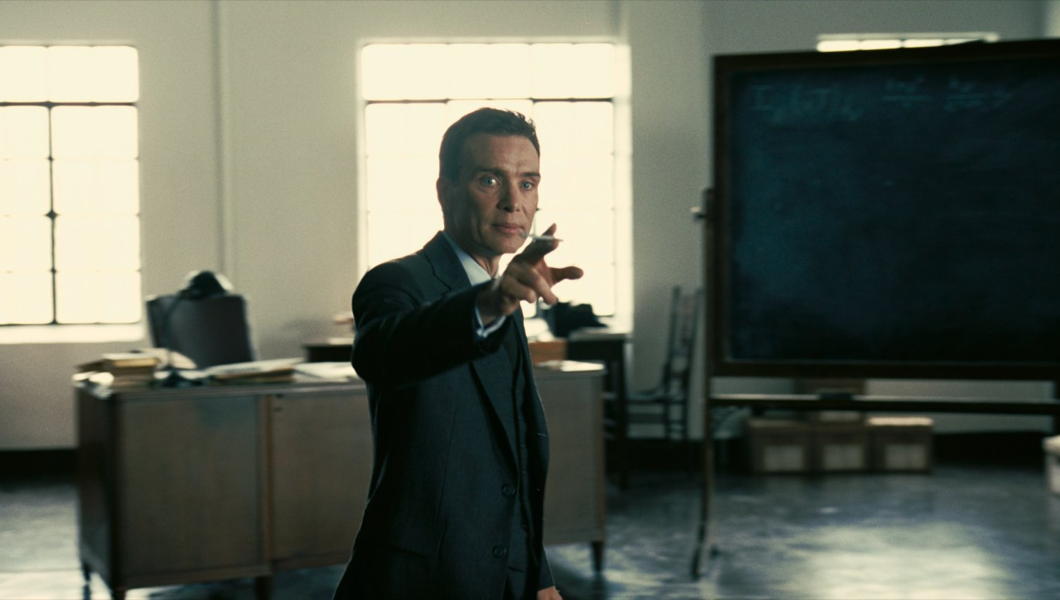
Oppenheimer (USA, 180 min) — Nor did Nolan disappoint here. This film didn’t feel nearly as long as it was, but it was beautifully captivating. I was surprised that my filmgoing companion, who has the attention span of a small child, was seeing it for her second time; I was even tempted to give it a second viewing myself (but didn’t). Top-notch film score from Ludwig Göransson, as well. ‘Oppenheimer’ was serious without being tiresome.
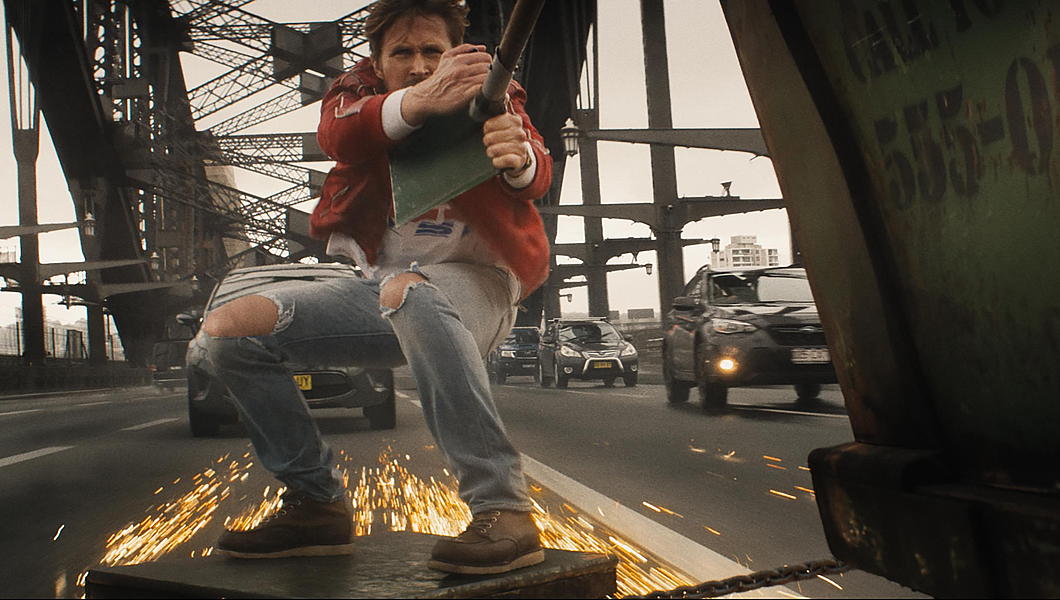
The Fall Guy (USA, 126 min) — A stunt double in love with his beautiful colleague is unwittingly embroiled in a conspiracy to cover up an accidental death on the set of her directorial debut.
The light-hearted framework of an incredibly charming romance nonetheless has some cracking action scenes. Anyone who’s ever been in love should enjoy this film. Emily Blunt was brilliant but Hannah Waddingham is the surprise of the show.
This one I did see twice in the cinema — a first since the film-of-the-decade ‘Top Gun: Maverick’. We need more films as delightful as this.

Fly Me to the Moon (USA, 132 min) — An advertising executive (Scarlett Johansson) and the NASA launch director (Channing Tatum) are forced fake the moon landings — just in case — by shadowy forces of the state (Woody Harrelson). Silly and fun.
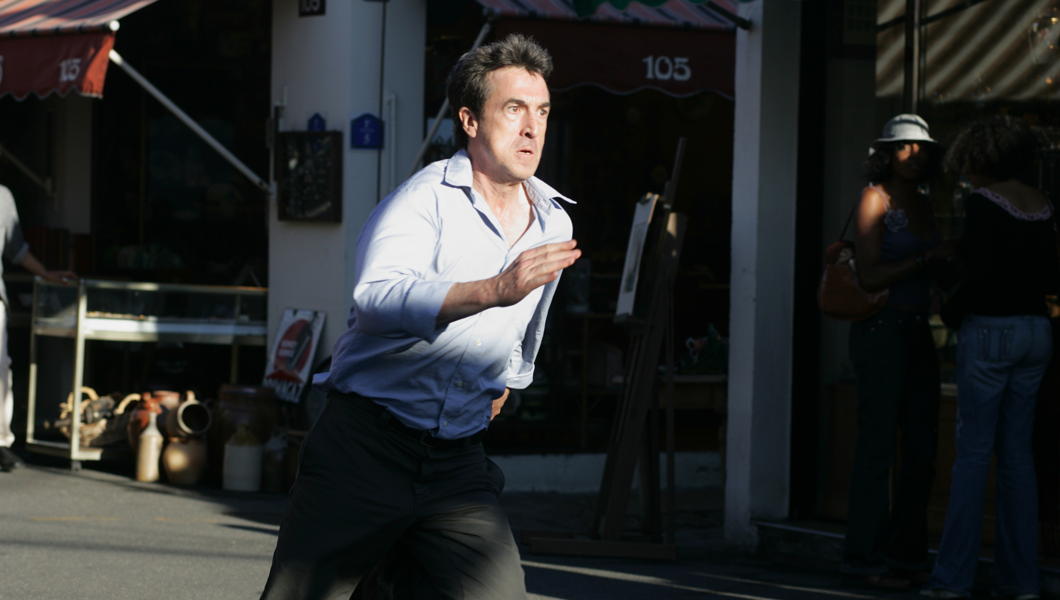
Ne le dis à personne / Tell No One (France, 131 min) — This might be my favourite film and I probably watch it every year or so. A doctor whose wife was murdered eight years previous may finally be implicated in her murder — until a cryptic email arrives in his inbox suggesting she might still be alive. He must move heaven and earth to evade the police, find his wife, and prove his innocence.
Released in 2006, ‘Ne le dis à personne’ is the perfect blend of thriller, action, intrigue, romance, and it has Kristin Scott Thomas. What more could you want? It gratuitously adds to that with performances from François Cluzet, the amazing Jean Rochefort (RIP), Nathalie Baye, and André Dussollier.
While based on a book by Harlan Coben, the director Guillaume Canet changed the ending: the writer said the director’s conclusion was better than his. Not a perfect film — there were one or two things I would have done slightly differently — but an expertly crafted one all the same.
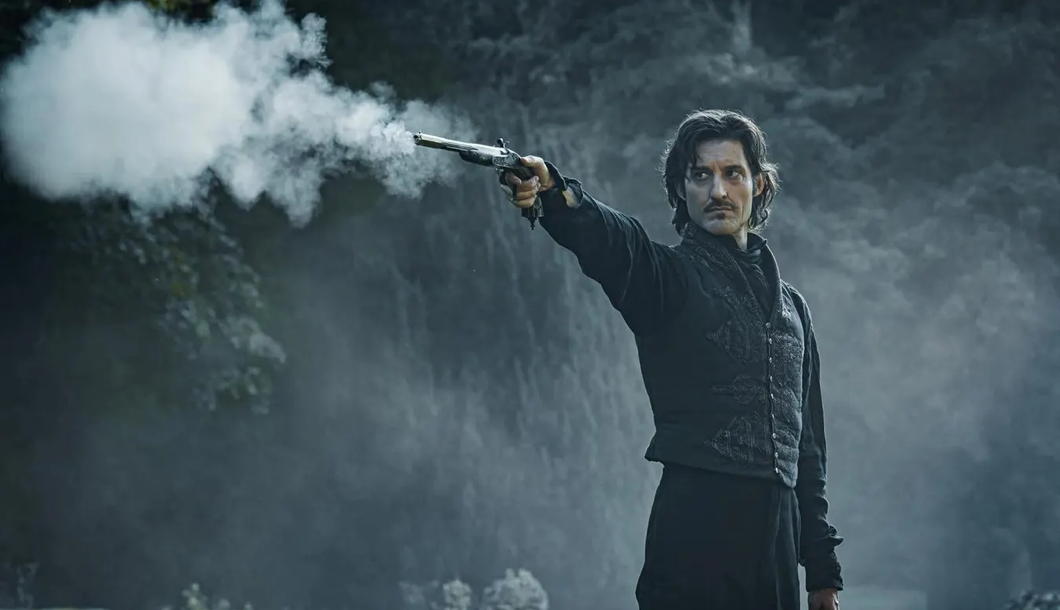
The Count of Monte Cristo (France, 178 min) — I’ve read the book three times and each experience has hit differently. This adaptation was watchable but flawed. The main actor lacked gravitas and it’s a tad overproduced.
The 1998 Depardieu miniseries remains the standard. Apparently we’re getting an Italian-French co-produced miniseries sometime this year but it looks disappointing, too.
Might be time to read the book again.

Ghostbusters (USA, 105 min) — What a delight this film is. Impossibly silly, deeply enjoyable, and — from the opening scenes at Columbia University and the New York Public Library — one of the most New Yorker films ever. (“Ghostbusters, whaddya want.”) It even features a cardinalatial nod of approval.
A film like this is always best in the cinema. I think ‘Ghostbusters’ may have been the first movie I ever saw in a cinema: in the movie theatre in Edgartown on Martha’s Vineyard when I was a very small boy but it was already on revival. Glad to see it again on the big screen in London.

Juror No. 2 (USA, 114 min) — Clint Eastwood is well into his 90s and still knocking it outta the park with a well-crafted film like this.
A moral thriller in which a recovering alcoholic with a newborn is called for jury duty in a murder trial and slowly begins to think he may be the one responsible for the victim’s death.
There’s a lot of layers in this film but never too much to handle. This one will get you thinking.

Point Break (USA, 122 min) — Big California vibe! Surfing, skydiving, bank-robbing, and the Feds. Kathryn Bigelow’s 1991 film became a minor cult classic and made $83.5 million on a $24 million budget. Enjoyed it.
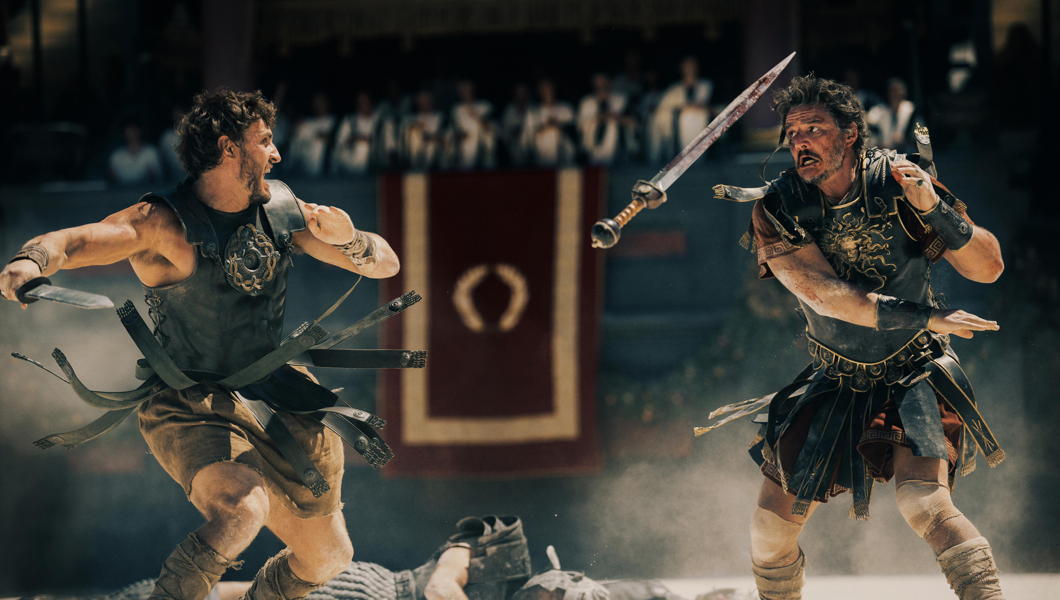
Gladiator II (USA/UK, 148 min) — I went in with drastically low expectations but left the cinema pleasantly surprised.
Main actor Paul Mescal was a bit of a dud — tá brón orm, a chara! — but Denzel Washington stole the screen whenever he was on it. Reprises from Derek Jacobi and Connie Nielsen were strangely heartwarming, like the return of old friends.
The Twin Emperors were DEEPLY creepy and Pedro Pascal’s acting matures like a fine wine. There was even a role for our old Mossad friend Lior Raz (of ‘Fauda’) and Tim McInnerny (‘Blackadder’, etc.) played a hapless senator.
Far from the classic status its predecessor enjoys, but enjoyable all the same.
Articles of Note: 27 January 2025

Recently we welcomed the Latin Patriarch of Jerusalem, Cardinal Pizzaballa, to London on a visit of several days. He has what must be one of the most difficult jobs in the world, caring for Latin-rite Christians and their neighbours in Israel, Palestine, Jordan, Cyprus, and I think possibly the Sinai as well.
We first met in Jerusalem in 2023, so catching up with him for a second (and then third!) time to hear about the situation in the Holy Land was illuminating, if a bit depressing.
At First Things, Cole Aronson meets the Patriarch and explores his unique and demanding role.
■ The Pantheon in Paris, where secular heroes are entombed either physically or symbolically, presents one of the most intriguing aspects of France’s civil religion.
On the eightieth anniversary of the liberation of Strasbourg, President Macron announced that the academic, army officer, and father of the Annales school of historians Marc Bloch would be elevated to the Pantheon.
In the American Conservative, Luke Nicastro explores France’s newest hero.
■ Along with Frankfurt and Potsdam, Budapest has undergone one of the most comprehensive programmes of urban repair in recent years.
The Financial Times’s architecture critic Edwin Heathcote reports informatively, despite his simplistic conceptual error of slagging off rebuilding as reaction.
I’ll say it again: it’s not turning the clock back — it’s choosing a better future.
■ Candlemas is fast approaching but there’s still a few days left before the Christmas season ends properly.
The old-school Irish Protestant ‘Laudable Practice’ provides an excellent critique of a First Things piece: Old High Christmas Cheer, or Why the Oxford Movement Did Not Save Christmas.
Much good came from the Oxford Movement, but there is a tendency today to underestimate the levels and layers of cultural continuity in England across the centuries.
Laudable gets this right, pointing to how the Georgians celebrated Christmas. Nicholas Orme has written on how the feast of the Incarnation was kept in mediaeval England.
■ Finally, Lord Sumption peeks into the world of espionage in the Middle Ages.
Spooks’ Crown
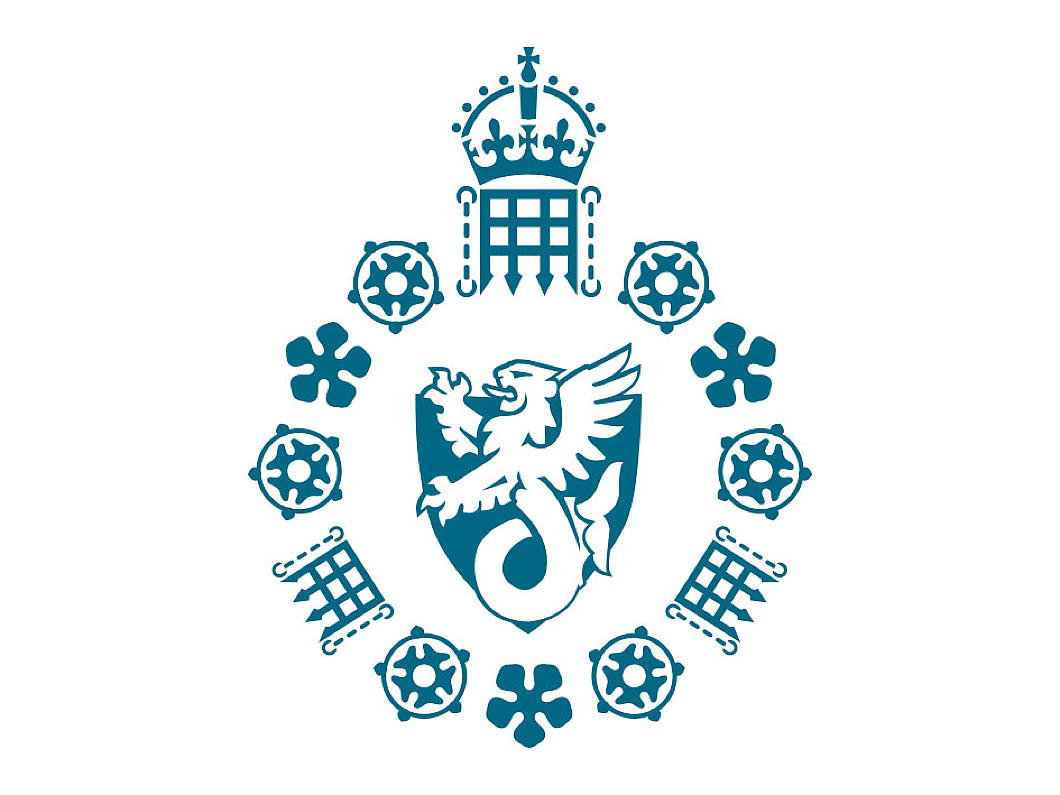
The Security Service, better known as “MI5” has changed its badge to incorporate the change from the St Edward’s Crown to the Tudor Crown that King Charles III has adopted.
The badge was designed by Lt-Col Rodney Dennys who himself had worked for the Security Service’s more glamorous rival, the Secret Intelligence Service (MI6). Dennys had started out in the intelligence game at the Foreign Office and was posted to the Hague before the war. When the Germans rolled in he was on one of the last boats to make it to Britain.
The MI5 emblem was approved by Garter King of Arms in 1981 but (like MI6) the Security Service was still so secret that it did not officially exist, so it was added to the secret roll of arms kept under lock and key in the depth of the heralds’ college in the City of London.
In 1993, after the Service’s existence was formally acknowledged, the badge became known and a flag bearing it often flies from the top of Thames House.

GCHQ has likewise adopted the Tudor Crown, but SIS has not publicly acknowledged any official emblem. (Perhaps it has its own entry in the heralds’ secret roll?) As such, MI6 uses a government version of the royal coat of arms, but theirs has yet to swap crowns.

Search
Instagram: @andcusack
Click here for my Instagram photos.Most Recent Posts
- Brunel’s Unbuilt Capitol February 3, 2026
- Cricket at Fordham January 27, 2026
- Palacio Barolo Revisted January 14, 2026
- Learning to Love Liguria January 14, 2026
- Crux Alba No. 2 January 13, 2026
Most Recent Comments
Book Wishlist
Monthly Archives
Categories